
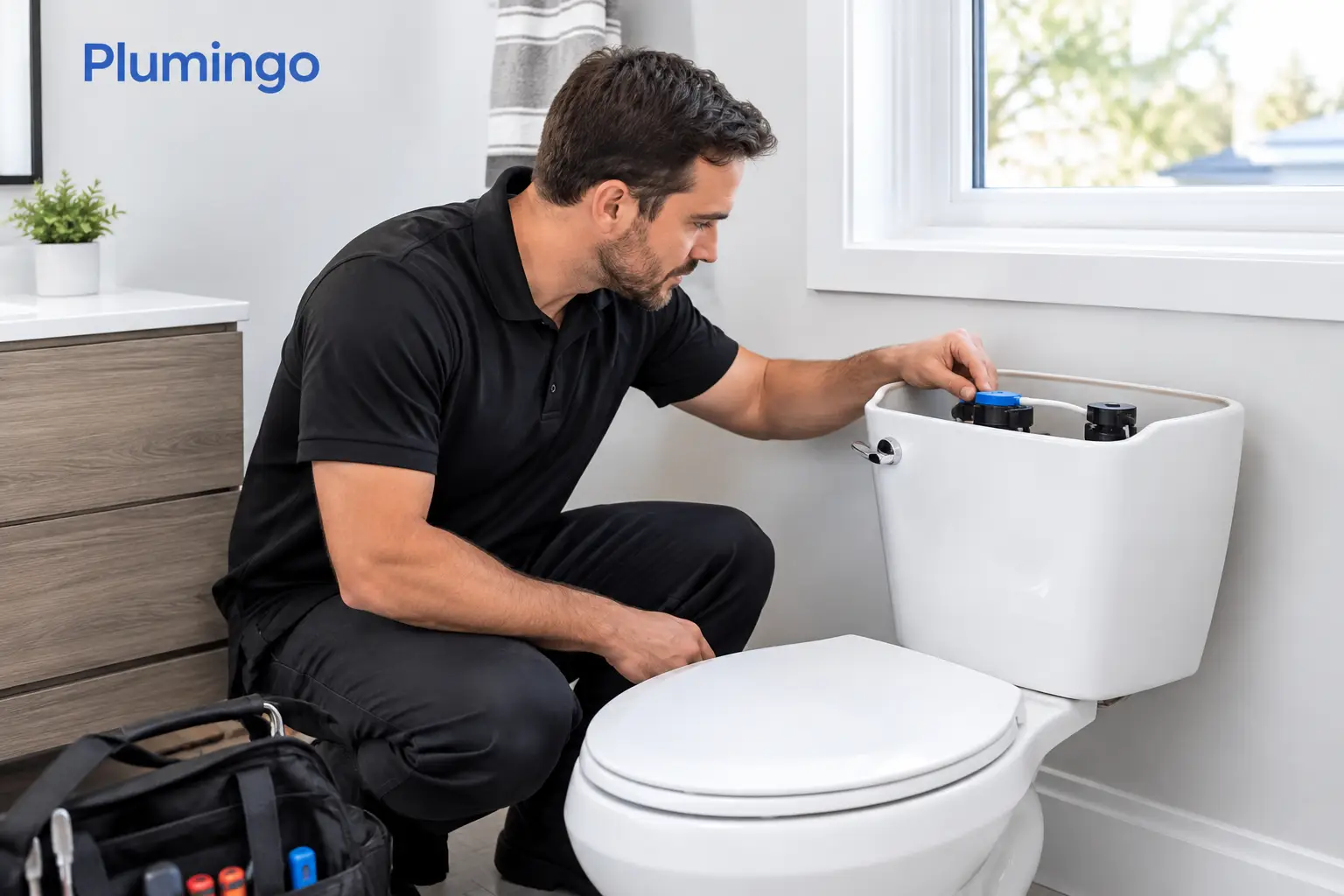
A toilet that keeps refilling after the flush is more than an annoying sound. It can waste a surprising amount of water, raise utility costs, and point to a worn internal part that is no longer sealing or shutting off correctly. If you are asking, “why does toilet keep running?” the answer is usually inside the tank, and the cause is often repairable without replacing the entire fixture.
Why Does a Toilet Keep Running?
A toilet runs when water continues moving from the supply line into the tank, then either leaks into the bowl or spills into the overflow tube. In a properly working toilet, the fill valve stops once the tank reaches its set water level, and the flapper forms a watertight seal over the flush valve opening.
When either part fails to do its job, the toilet cycles on and off or runs continuously. The sound may be constant, or it may return every few minutes after the tank appears full. That difference can help narrow down the issue.
The most common causes are a leaking flapper, a misadjusted or failing fill valve, a chain that is too short or tangled, or water rising into the overflow tube. Mineral buildup can also affect moving parts, especially in areas with hard water.
Start With a Quick Tank Check
Remove the tank lid carefully and place it on a stable surface. Porcelain lids can crack easily. Then flush the toilet and watch what happens as the tank refills.
Look for three things: whether water keeps flowing into the overflow tube, whether the flapper closes fully after flushing, and whether the water level sits above the marked fill line inside the tank. These observations often identify the failed component without taking anything apart.
If water is visibly entering the overflow tube, the fill valve is usually the issue. If the tank fills to the correct level but water quietly drains into the bowl, the flapper or flush valve seat is more likely responsible.
Test for a Leaking Flapper
The flapper is the flexible rubber or silicone piece at the bottom of the tank. It lifts during a flush, then drops back into place to hold water in the tank.
A flapper can leak when it becomes warped, stiff, coated with mineral deposits, or simply worn from years of use. To test it, add a few drops of food coloring to the tank water. Do not flush. Wait about 15 to 20 minutes, then check the bowl. If colored water appears in the bowl, water is leaking past the flapper.
Before replacing it, check the chain. A chain that is too tight can hold the flapper slightly open. It should have a small amount of slack when the flapper is closed. If the chain is caught under the flapper or wrapped around another tank component, reposition it and test the flush again.
If the chain is properly adjusted but the flapper still leaks, replacing the flapper is usually a sensible repair. Bring the old part or a clear photo of the flush valve setup when selecting a replacement, since sizes and attachment styles vary.
Check the Fill Valve and Float
The fill valve controls water entering the tank after a flush. As the water rises, a float tells the valve when to shut off. On older toilets, the float may be a ball attached to a metal arm. Newer models often use a compact vertical float built into the valve assembly.
If the tank water is above the fill line or flowing into the overflow tube, try lowering the float adjustment slightly. Most modern fill valves have an adjustment screw or sliding clip. Make a small adjustment, flush, and confirm that the valve shuts off below the overflow opening.
A fill valve that hisses, refills inconsistently, or continues running despite a correct float setting may have internal wear or sediment buildup. Cleaning can help in some cases, but replacement is often the more reliable repair when the valve no longer closes consistently.
Less Obvious Reasons a Toilet Runs
Not every running toilet has an obvious failed flapper or high water level. A few less visible issues can create the same symptom.
A damaged flush valve seat can prevent a new flapper from sealing. The seat is the plastic or brass ring beneath the flapper. If it is cracked, rough, or heavily scaled, water can pass into the bowl even when the flapper appears closed.
A loose refill tube can also cause trouble. This small tube should be clipped to the top of the overflow tube, directing a modest stream of water into it during refilling. If it is pushed too far down inside the overflow tube, it can create a siphoning effect that slowly pulls water from the tank. Reattach it so the end remains above the top of the overflow tube.
In buildings with hard water, mineral deposits may interfere with the flapper, fill valve, or flush valve seat. Repeated staining around fixtures, reduced water flow, and scale on faucet aerators can indicate broader water-quality concerns. A water softener assessment may be useful when mineral buildup is repeatedly shortening the life of plumbing components.
When a Simple Repair Is Enough
Many running-toilet repairs are straightforward when the issue is limited to a chain adjustment, a replacement flapper, or a fill valve set too high. Turn off the shutoff valve behind or beside the toilet before removing parts. Flush the toilet to empty most of the tank water, then follow the replacement instructions for the specific component.
Take care not to overtighten plastic fittings. A snug connection is generally enough, and excessive force can damage a tank fitting or valve thread. After the repair, turn the water back on slowly and flush several times. Watch for leaks around the supply connection and confirm that the tank stops filling at the proper level.
It depends on the age and condition of the toilet, though. If several tank components are failing at once, the toilet is older, or the flush valve itself is damaged, a professional repair can prevent repeated trial-and-error purchases.
When to Schedule Professional Plumbing Service
A running toilet deserves professional attention when basic adjustments do not stop the water loss, when water is leaking outside the tank, or when the shutoff valve does not fully close. It is also wise to schedule service if the toilet rocks at the floor, has recurring clogs, or shows a crack in the tank or bowl.
For property managers and commercial operators, one continuously running toilet can become a recurring maintenance issue in a high-use restroom. A technician can inspect the internal components, confirm the fixture is matched to its usage level, and identify related concerns such as inconsistent water pressure, worn shutoff valves, or scaling.
Plumingo provides expert plumbing support for homeowners and facilities that need a clear diagnosis and appropriate repair. The goal is not to replace a fixture unnecessarily, but to restore reliable operation with the right service for the cause.
How to Reduce Future Toilet Repairs
A toilet does not need extensive maintenance, but occasional checks make small issues easier to catch. Listen after flushing. The tank should stop refilling within a short period, with no intermittent cycling later. Check that the water level remains below the overflow tube and that the flush handle does not stick.
Avoid dropping chemical cleaning tablets directly into the tank unless the toilet manufacturer specifically approves them. Some products can degrade rubber and plastic components over time. Bowl cleaners used as directed are generally the better choice for routine cleaning.
If you are leaving a property vacant for an extended period, inspect toilets before departure and after return. A quiet leak can continue unnoticed in an empty home or unit. Where freezing temperatures are a concern, proper seasonal plumbing preparation also helps protect supply lines and fixtures.
A running toilet is often a small mechanical problem with a practical fix. Address it early, test the repair carefully, and bring in professional support when the cause is unclear or the issue keeps returning. That approach protects water, avoids unnecessary replacement, and keeps one of the home’s most-used fixtures working as it should.
Need this done in your home?
Plumingo handles this work across Kitchener, Waterloo, Cambridge and Guelph. Read how we do it, or call us and we will give you a price before we start.
Learn about toilet installation and repairNeed a plumber in Kitchener-Waterloo?
Licensed, insured and upfront about pricing. Call us or book online in under a minute.