
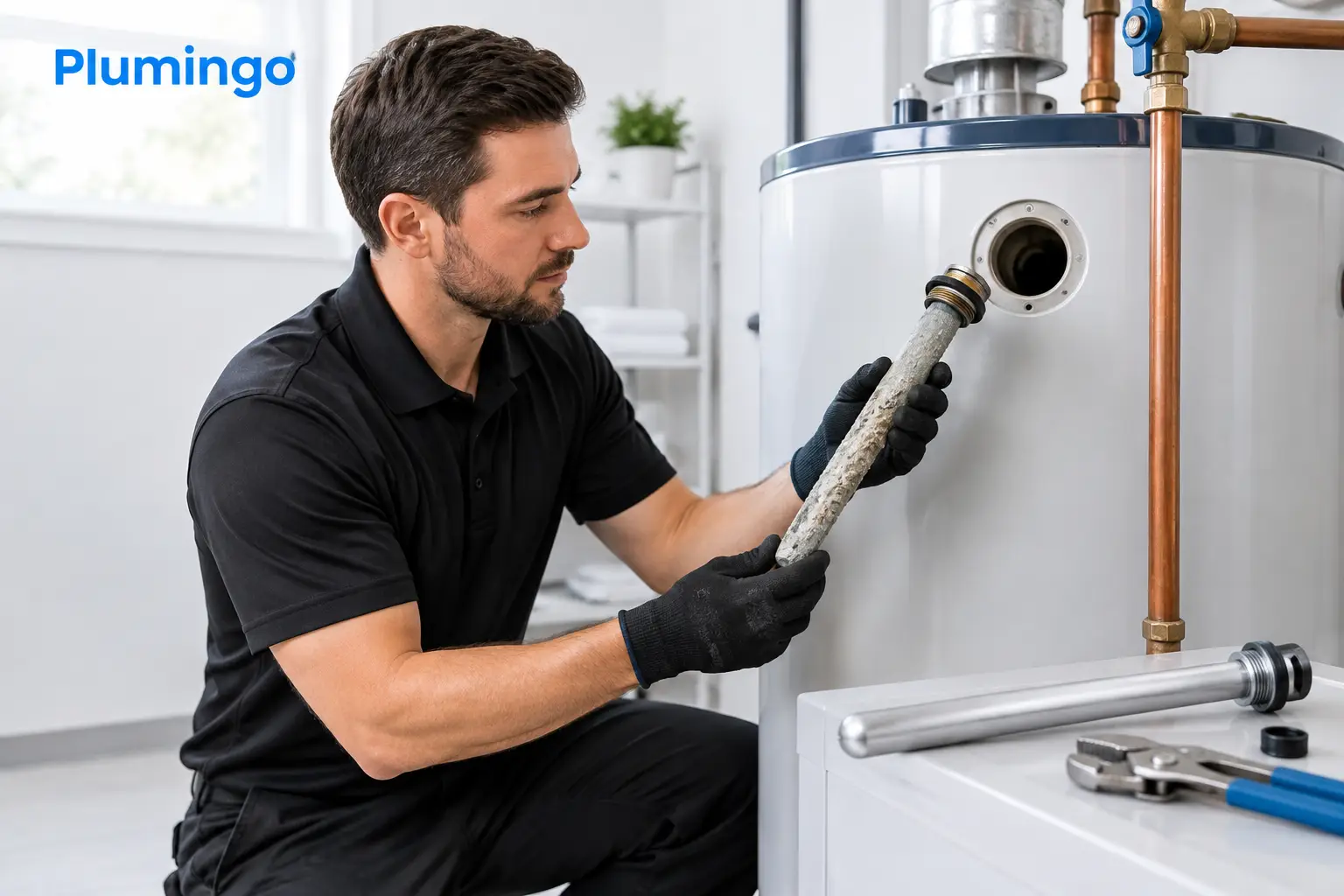
A water heater can look perfectly normal from the outside while its tank is slowly losing protection on the inside. The part doing much of that protective work is usually a simple metal rod. This water heater anode guide explains what that rod does, how to recognize when it needs attention, and why timely service can help you get more dependable life from your water heater.
What a Water Heater Anode Rod Does
Most conventional tank-style water heaters have a steel tank lined with glass or porcelain enamel. That lining reduces corrosion, but it is not flawless. Small gaps, cracks, and areas around fittings can expose metal to water over time.
An anode rod is installed through the top of the tank to take on corrosion before the tank steel does. It is often called a sacrificial anode because it gradually breaks down as it protects the tank. When the rod has been largely consumed, the tank becomes more vulnerable to rust and internal deterioration.
This is one of the most practical maintenance items on a water heater because replacing an anode rod is generally far less disruptive than replacing a leaking tank. The right timing depends on water conditions, household hot water use, and the rod material already installed.
Why Water Quality Changes the Timeline
There is no single replacement schedule that fits every property. A family with high hot water use may wear through an anode rod sooner than a lightly used guest suite. Water chemistry also matters. Mineral-rich water, softened water, and certain well-water conditions can change how quickly the rod is consumed.
Hard water creates a separate issue: sediment can accumulate at the bottom of the tank. That sediment does not necessarily mean the anode has failed, but it can reduce efficiency, create popping or rumbling sounds during heating, and make it harder to assess the overall condition of the system.
Water softeners deserve a little extra attention in this conversation. Softened water can be easier on fixtures and appliances in many ways, yet it may cause some anode materials to deplete faster. In some homes, the interaction between softened water and a standard magnesium rod can also contribute to a sulfur-like hot-water odor. The solution is not automatically to remove the anode rod. A plumbing professional can determine whether a different rod material or a water-treatment adjustment is the better approach.
Common Types of Anode Rods
The material matters because each type responds differently to local water conditions.
A magnesium anode rod is common and offers strong corrosion protection. It is often a good choice where water conditions are moderate, but it may be used up faster in some systems. Aluminum or aluminum-zinc rods usually last longer in more aggressive water conditions and are sometimes considered when odor is a concern. However, the best option depends on the heater manufacturer, water chemistry, and household needs.
Powered anode rods work differently. Rather than sacrificing metal over time, they use a small electrical current to help control tank corrosion. They cost more upfront, but they can be a useful option for certain properties, especially where repeated rod replacement or persistent odor has been an issue. They also require a nearby electrical connection and should be selected for the specific heater and installation conditions.
The best choice is not always the longest-lasting option. Compatibility, water quality, odor concerns, and the current condition of the heater should all be considered before changing materials.
Signs Your Anode Rod May Need Attention
An anode rod cannot be evaluated accurately from the outside of the water heater. Still, a few symptoms can indicate that it is time for an inspection.
Rust-colored hot water can point to corrosion inside the tank, although it may also come from old piping or other plumbing components. A rotten-egg or sulfur smell that appears mainly when using hot water may be connected to the anode rod and naturally occurring bacteria in the system. Reduced hot-water performance, unusual tank noises, or visible moisture around the heater also justify a professional assessment, though each has multiple possible causes.
A leak from the tank body is more serious than a worn anode rod. Once the steel tank itself has rusted through, replacing the anode will not restore it. That is why inspection before visible damage develops is valuable.
When to Inspect a Water Heater Anode Rod
For many homes, an initial inspection around three to five years after water heater installation is a sensible starting point. After that, the inspection interval can be adjusted based on what is found. A rod that is noticeably depleted may warrant annual checks, while a lightly worn rod may have more remaining life.
Property managers and commercial operators may benefit from incorporating anode inspections into a broader water-heater maintenance plan. Systems with heavier demand can experience faster wear, and a planned service visit can reduce surprises during busy operating periods.
The water heater's age matters too. If a tank is already nearing the end of its expected service life, the decision to replace an anode rod should consider the condition of the tank, connections, valves, burner or heating elements, and local water conditions. Repair is often worthwhile when the tank is sound. Replacement becomes more practical when the tank shows corrosion, has an active leak, or has multiple significant issues.
Can You Replace an Anode Rod Yourself?
Some homeowners can replace an anode rod, but the job is more demanding than it appears. The rod is threaded into the top of the tank and can be difficult to loosen after years in place. Clearance above the heater may be limited, particularly in closets, utility rooms, or finished basements. Flexible anode rods can help in tight spaces, but correct installation still matters.
Before any work begins, the fuel or power source must be shut off appropriately, water pressure must be managed, and the water heater must not be operated in an unsafe condition. Gas water heaters and electric water heaters have different shutdown considerations. An electric unit should never have its elements energized when the tank is empty or insufficiently filled, as the elements can be damaged.
There is also a diagnostic question behind the repair. If hot water has an odor, if the tank is making noise, or if water appears discolored, replacing the rod without checking the broader system may not solve the underlying cause. Professional service can confirm whether the anode is the issue and identify sediment, valve concerns, water-treatment factors, or early tank deterioration.
The Water Heater Anode Guide for Better Maintenance Decisions
A practical maintenance plan usually combines anode inspection with other tasks that protect hot-water performance. Checking for small connection leaks, testing the temperature-pressure relief valve as appropriate, reviewing temperature settings, and evaluating sediment buildup all provide useful context. Water treatment equipment should also be reviewed when hardness, odor, scale, or filtration concerns are affecting the plumbing system.
For homes and businesses in Kitchener, seasonal shifts in demand can be a good reminder to review water-heater performance. Before colder weather increases hot-water use, a service visit can identify worn components and help prioritize repairs based on the actual condition of the equipment.
Plumingo can assess tank-style water heaters alongside water quality and treatment concerns, providing clear recommendations rather than a one-size-fits-all answer. If a replacement rod makes sense, the goal is to protect a sound tank. If the tank itself is failing, you deserve a straightforward explanation of the next practical step.
A small anode rod is easy to overlook, but it can make a meaningful difference in how long a tank remains reliable. Scheduling an inspection before corrosion becomes visible gives you more options and a clearer path forward.
Need this done in your home?
Plumingo handles this work across Kitchener, Waterloo, Cambridge and Guelph. Read how we do it, or call us and we will give you a price before we start.
Learn about all Plumingo plumbing servicesNeed a plumber in Kitchener-Waterloo?
Licensed, insured and upfront about pricing. Call us or book online in under a minute.