
A slow drain rarely tells the full story. The visible symptom may be limited to one fixture, while the cause sits farther down the sewer line, out of reach and out of sight. This sewer camera inspection guide explains how professionals inspect underground drain lines, what the footage can reveal, and how to use the findings to make a practical repair or maintenance decision.
For homeowners, property managers, and commercial operators, a camera inspection replaces guesswork with a clear view of the pipe's condition. It can help separate a routine blockage from a damaged line, recurring root intrusion, or an installation issue that needs more than drain cleaning.
What Is a Sewer Camera Inspection?
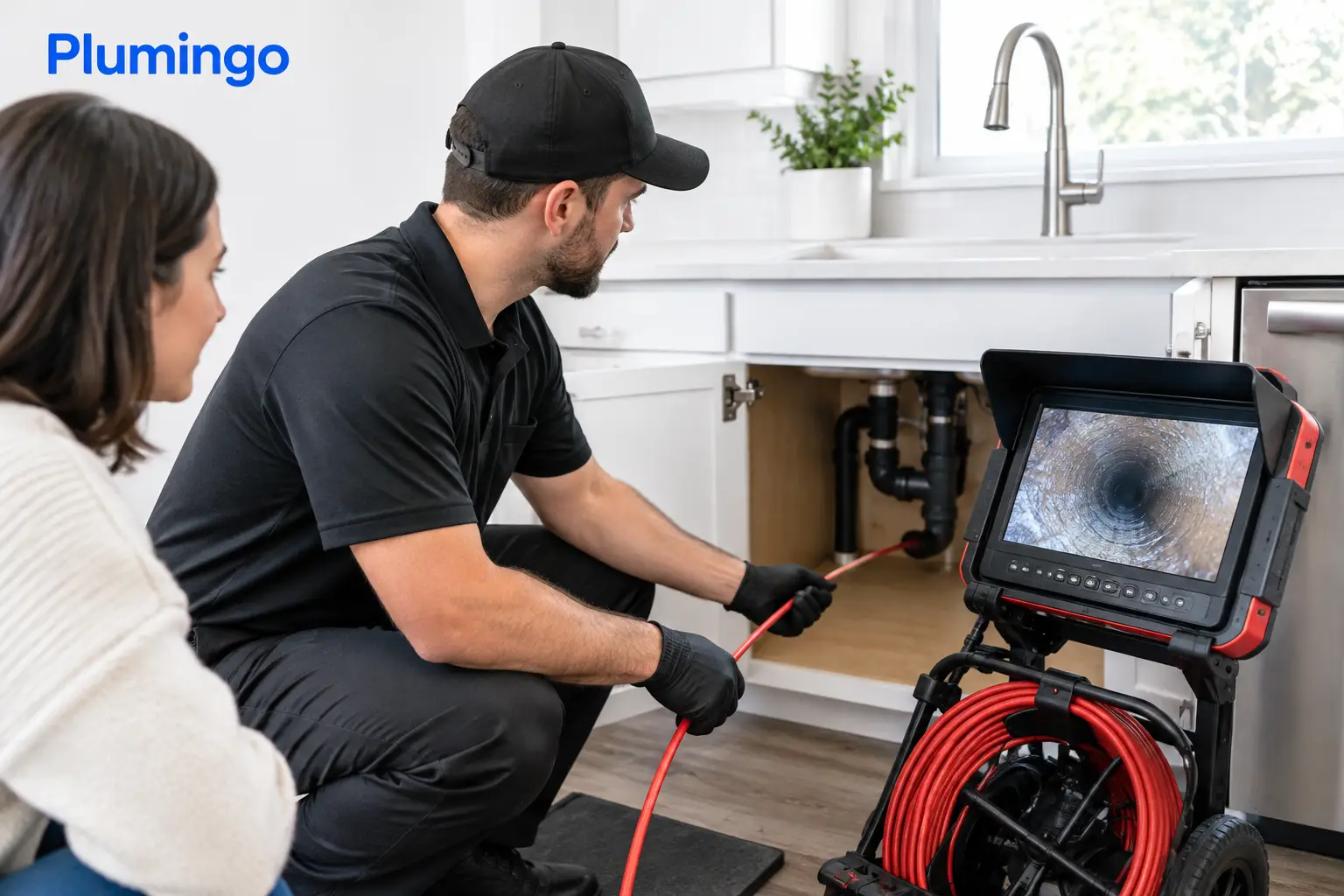
A sewer camera inspection uses a waterproof, high-resolution camera attached to a flexible cable. A trained technician feeds the camera through an accessible drain opening or cleanout and guides it through the sewer line. Real-time video shows the interior condition of the pipe as the camera moves toward the municipal connection or septic system.
The camera head typically includes a light, allowing the technician to see debris, joints, standing water, cracks, offsets, and other concerns inside a dark pipe. Many systems also use a locating device above ground. This helps identify the camera's location and depth, which matters if a repair is needed beneath a driveway, landscaped area, floor, or parking lot.
A camera inspection is diagnostic work. It does not clear a blockage on its own, although a technician may recommend cleaning the line before or after the inspection if buildup prevents a useful view.
When a Camera Inspection Makes Sense
Not every slow sink requires a sewer camera. A single bathroom sink that drains slowly may simply need localized cleaning or a minor trap repair. A camera becomes more valuable when the issue is recurring, affects multiple fixtures, or involves the main drain line.
Consider an inspection when you notice repeated backups, gurgling toilets, water appearing in a floor drain, unpleasant drain odors, or multiple fixtures draining slowly at the same time. These signs can point to a restriction in the building drain or sewer lateral rather than a problem at one fixture.
It is also a sensible step before purchasing a property with an older sewer connection, particularly where mature trees, previous renovations, or unknown pipe materials are involved. For commercial properties, inspections can support maintenance planning in facilities with high washroom use, kitchens, floor drains, or long underground runs.
A camera inspection can be especially useful after a drain has been cleared more than once. Repeated clogs are often a signal to investigate why material keeps collecting in the same area instead of treating each backup as an isolated event.
What the Sewer Camera Inspection Process Looks Like
The appointment generally begins with a discussion of the symptoms. Details such as which fixtures are affected, when the issue started, whether it returns after drain cleaning, and whether work was recently completed on the property all help narrow the inspection approach.
1. Accessing the line
The technician identifies the most suitable access point, often a cleanout. Depending on the property and plumbing layout, the camera may also be introduced through a drain opening after the appropriate preparation. Using the correct access point protects fixtures and provides a more direct route into the main line.
2. Sending the camera through the pipe
The camera cable is advanced carefully through the sewer line. The technician watches the live feed and notes distances as the camera passes pipe joints, bends, and branch connections. If there is standing water or a heavy obstruction, visibility may be limited until cleaning is completed.
3. Locating significant findings
If the footage shows a crack, root intrusion, sag, or blockage, the technician can use locating equipment to mark the approximate position from above ground. This step turns video evidence into a repair plan with a more accurate location.
4. Reviewing the results
A professional inspection should end with a plain-language explanation of what was found, how serious it appears, and what options are appropriate. Some findings call for immediate action, while others can be monitored or addressed through scheduled maintenance. The right next step depends on the pipe material, severity, access, recurrence, and the property owner's plans for the building.
What a Sewer Camera Can Reveal
Camera footage can identify a wide range of conditions, but interpretation matters. A small amount of residue may be normal. A large buildup that narrows the pipe, on the other hand, may explain repeated drainage problems.
Common findings include grease accumulation, wipes and foreign objects, scale buildup, root intrusion, cracked pipe sections, separated joints, shifted or offset pipe connections, and bellies where a section of pipe has sagged and holds water. In older properties, the inspection may also reveal deteriorating cast iron, clay tile joints, or aging pipe materials nearing the point where repair should be considered.
The video can also show whether a previous repair appears to be holding up or whether a recently cleared line has a structural issue that cleaning alone will not solve. This distinction is valuable. Clearing roots may restore flow, for example, but recurring roots usually indicate an entry point at a joint or crack that should be evaluated for a longer-term repair.
What a Camera Inspection Cannot Tell You
A camera is highly useful, but it is not a complete substitute for professional judgment or additional testing. Heavy debris, murky standing water, or a fully blocked line can prevent the camera from reaching the area of concern. In those cases, drain cleaning may be required before the pipe can be properly evaluated.
A camera also cannot always confirm the exact condition of the exterior of a pipe or surrounding soil. If there are signs of a sewer leak, settlement, or a concealed break, locating, excavation, or other diagnostic methods may still be needed.
Depth readings and distance counters are useful guides, not guarantees. Pipe bends, access points, and site conditions can affect measurements. A qualified technician should explain the confidence level of the findings rather than presenting every observation as absolute.
How to Prepare for the Appointment
You do not need to dismantle plumbing or attempt chemical treatments before a camera inspection. In fact, avoid using harsh drain chemicals, especially if a technician may need to work on the line soon afterward. These products can remain in standing water and create an unnecessary safety concern.
If possible, make the affected fixtures accessible and note the pattern of the issue. Let the technician know whether there have been backups, recent renovations, prior drain cleaning, tree removal, or sewer repairs. For commercial sites, provide access to mechanical rooms, cleanouts, washrooms, and any areas where drainage problems have been reported.
Property managers can make the visit more efficient by gathering tenant reports in advance. Knowing whether the problem affects one suite, one stack, or several areas of a building helps determine whether the inspection should focus on a branch line or the main sewer connection.
Turning Findings Into the Right Next Step
The best result from a sewer camera inspection is not always a major repair. In many cases, the footage confirms that professional drain cleaning, routine maintenance, or a minor localized repair is the sensible choice. When the pipe is structurally sound, preserving it is often preferable to replacing it.
If the camera identifies a damaged section, ask for a clear explanation of the repair scope. Important questions include where the issue is located, whether it is affecting flow now, whether it is likely to worsen, and whether repair can be completed without replacing the full line. Options may range from cleaning and monitoring to spot repair, trenchless repair methods where suitable, or targeted excavation.
For Kitchener property owners, seasonal ground conditions and site access can influence scheduling and repair methods. A transparent assessment should account for the actual pipe condition, not assume that one solution fits every property.
A sewer line is easy to ignore when it is working properly. A camera inspection gives you the information to keep it that way, with decisions based on what is inside the pipe rather than what is assumed from above ground.
Need this done in your home?
Plumingo handles this work across Kitchener, Waterloo, Cambridge and Guelph. Read how we do it, or call us and we will give you a price before we start.
Learn about drain cleaning and sewer serviceNeed a plumber in Kitchener-Waterloo?
Licensed, insured and upfront about pricing. Call us or book online in under a minute.