
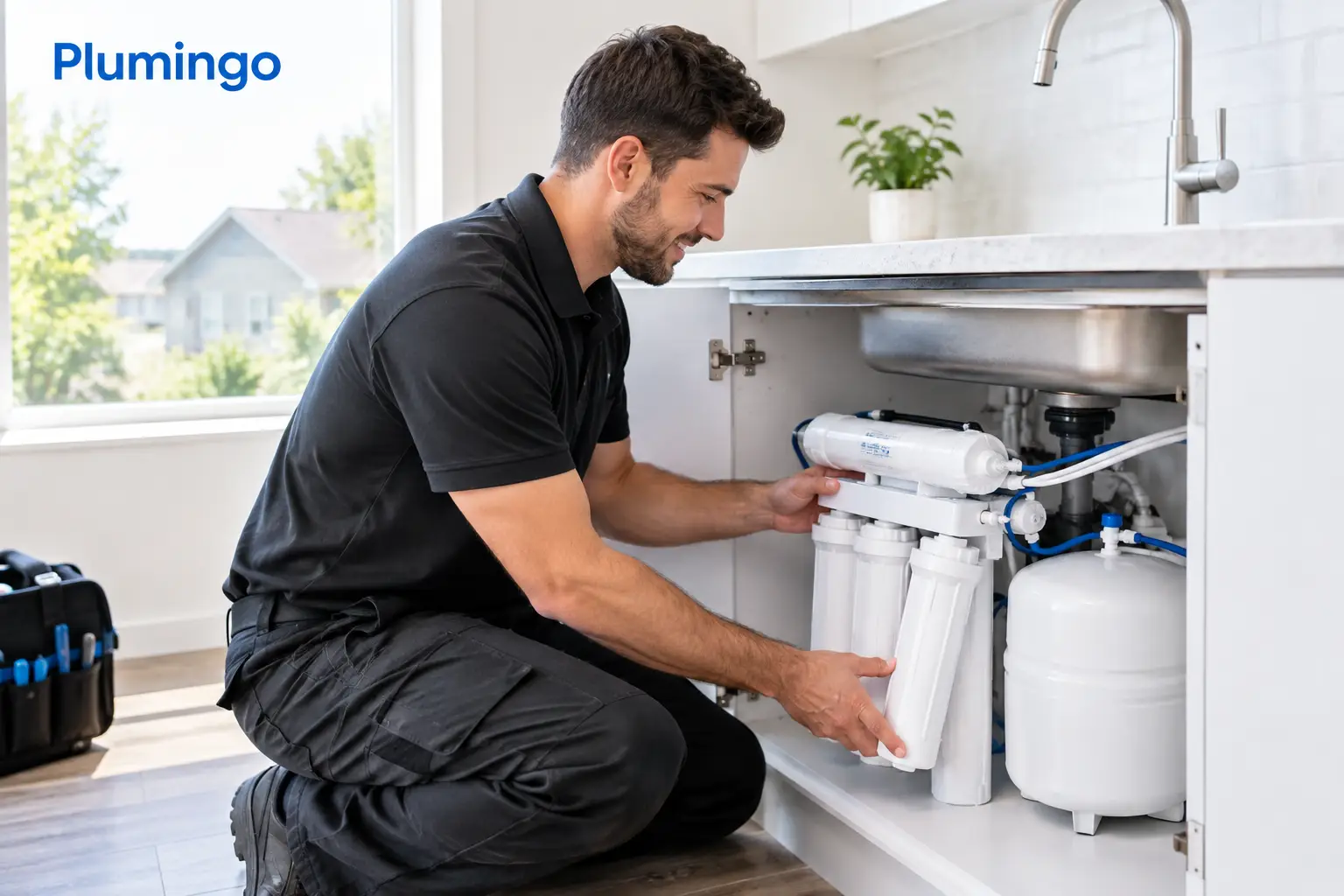
A reverse osmosis system can make a noticeable difference at the kitchen tap, but its performance depends on more than the unit installed beneath the sink. Filter condition, water pressure, membrane health, drain flow, and correct installation all affect the water it produces. For homeowners, property managers, and commercial operators, understanding those basics makes it easier to protect water quality without replacing equipment that may only need service.
What Reverse Osmosis Systems Actually Do
Reverse osmosis, often called RO, is a point-of-use water filtration process. Incoming water is pushed through a semipermeable membrane that reduces many dissolved contaminants, including certain salts, minerals, and impurities that standard sediment or carbon filters may not address. The filtered water is stored in a small pressurized tank or delivered directly through a tankless system.
Most residential units use several treatment stages. A sediment prefilter catches particles that could clog downstream components. Carbon filters help reduce chlorine and improve taste and odor, which is particularly important because chlorine can damage many RO membranes. The membrane performs the core separation work, and a final carbon filter often polishes the water before it reaches the dedicated faucet.
The process also creates reject water. This is the portion of water that carries concentrated dissolved material away from the membrane and into a drain line. That is normal operation, not a leak. The amount of reject water varies by system design, incoming water conditions, and whether the unit includes a pump or efficiency features.
Why Maintenance Matters More Than the System Brand
An RO system is not a set-it-and-forget-it fixture. Its filters protect the membrane, and the membrane protects water quality. When a prefilter becomes loaded with sediment or a carbon filter reaches the end of its service life, water flow can drop and membrane performance can suffer.
Replacement timing depends on the model and the water entering the system. A household with high sediment, hard water, or heavier water use may need attention sooner than a home with lower demand and favorable source water. Commercial locations also need maintenance schedules based on actual usage, not simply the calendar. A break room system serving a few employees has different needs than one supplying a busy office, café, or client-facing facility.
The membrane usually lasts longer than standard filters, but it is not permanent. Its condition can be assessed through water testing or total dissolved solids readings, combined with a review of flow rate, pressure, and service history. A poor reading does not always mean the membrane is the only issue. An exhausted postfilter, low incoming pressure, a worn tank, or an installation concern can produce similar complaints.
Common Signs Your RO System Needs Attention
A slow faucet is one of the most common signs, especially if the system previously filled a glass quickly. Slow flow may be caused by clogged filters, low tank pressure, a partially closed valve, low incoming water pressure, or a membrane that is no longer performing efficiently.
Changes in taste or odor also deserve a closer look. Drinking water can pick up an unpleasant taste when the final carbon filter is due for replacement, although the source may also be the incoming supply or the faucet itself. If water looks cloudy only when first poured, small air bubbles are often the cause and usually clear within a moment. Persistent cloudiness should be evaluated.
Other service indicators include a system that runs constantly, water around connections, an unusually full drain flow, or a tank that does not seem to hold enough water. These are not reasons to assume a full replacement is necessary. In many cases, targeted repairs, filter changes, pressure adjustments, or valve service can restore normal operation.
Choosing the Right Setup for Your Property
The right RO system starts with the water need, not the largest unit available. A conventional under-sink system with a storage tank is often a practical option for a household that wants filtered drinking and cooking water from one faucet. Tankless RO systems can save cabinet space and provide water on demand, but they typically rely more heavily on consistent water pressure and electricity.
For larger households or commercial settings, capacity and recovery rate matter. A system that cannot keep pace with demand can lead to slow dispensing and frustrated users, even when the filtration itself is working properly. A professional assessment should consider the number of users, daily water volume, available installation space, drain access, electrical requirements, and local plumbing conditions.
Hard water is another consideration. Reverse osmosis can reduce dissolved minerals in drinking water, but heavy hardness can put additional strain on equipment over time. Where appropriate, a water softener or other pretreatment can help protect the RO system and other plumbing fixtures. This is not required for every property, which is why water conditions should guide the recommendation.
Residential and Commercial Service Needs Differ
At home, the focus is usually on reliable drinking water, reasonable filter intervals, and keeping the installation tidy under the sink. Homeowners may also want help identifying whether a faucet issue is tied to the RO unit or to the household plumbing.
Commercial properties need a broader view. Filter service records, predictable scheduling, sanitation practices, and minimal disruption are all part of system care. Property managers also benefit from clear documentation when a unit serves tenants, staff, or customers. A properly maintained system helps support day-to-day operations without creating unnecessary maintenance calls.
What Professional RO Service Should Include
Quality service is more than changing cartridges. A technician should inspect the filter housings and connections, verify feed-water and tank pressure where applicable, examine the drain configuration, and check for leaks or worn components. The system should also be assessed for actual performance rather than treated as a one-size-fits-all replacement job.
Transparent recommendations matter. If a unit needs filters and a small repair, that is often the sensible path. If repeated failures, poor performance, obsolete parts, or changing water demands make replacement more practical, the reasons should be explained clearly before work begins.
For systems in Kitchener homes and businesses, local water conditions and building layouts can influence installation and maintenance decisions. An experienced water treatment provider can coordinate RO service with related plumbing work, helping ensure shutoff valves, drain connections, and supply lines are functioning as they should.
Simple Habits That Protect Your System
Keep the area beneath the sink accessible and avoid storing items that press against tubing or valves. If you notice moisture, reduced flow, or a change in taste, address it early rather than waiting for the next scheduled filter change. Keeping a record of filter replacements also makes it easier to identify patterns in system performance.
Do not use the RO faucet for water that may contain unusual contamination from a plumbing repair, flooding event, or suspected supply issue without first consulting a qualified professional. RO units are designed for normal treated supply water and require proper evaluation when conditions change.
A well-serviced RO system should be quiet, dependable, and easy to use. Regular filter care and informed repairs help it stay that way, giving your property a practical source of better-tasting water without turning a simple glass of water into a maintenance concern.
Need this done in your home?
Plumingo handles this work across Kitchener, Waterloo, Cambridge and Guelph. Read how we do it, or call us and we will give you a price before we start.
Learn about reverse osmosis and water filtrationNeed a plumber in Kitchener-Waterloo?
Licensed, insured and upfront about pricing. Call us or book online in under a minute.