
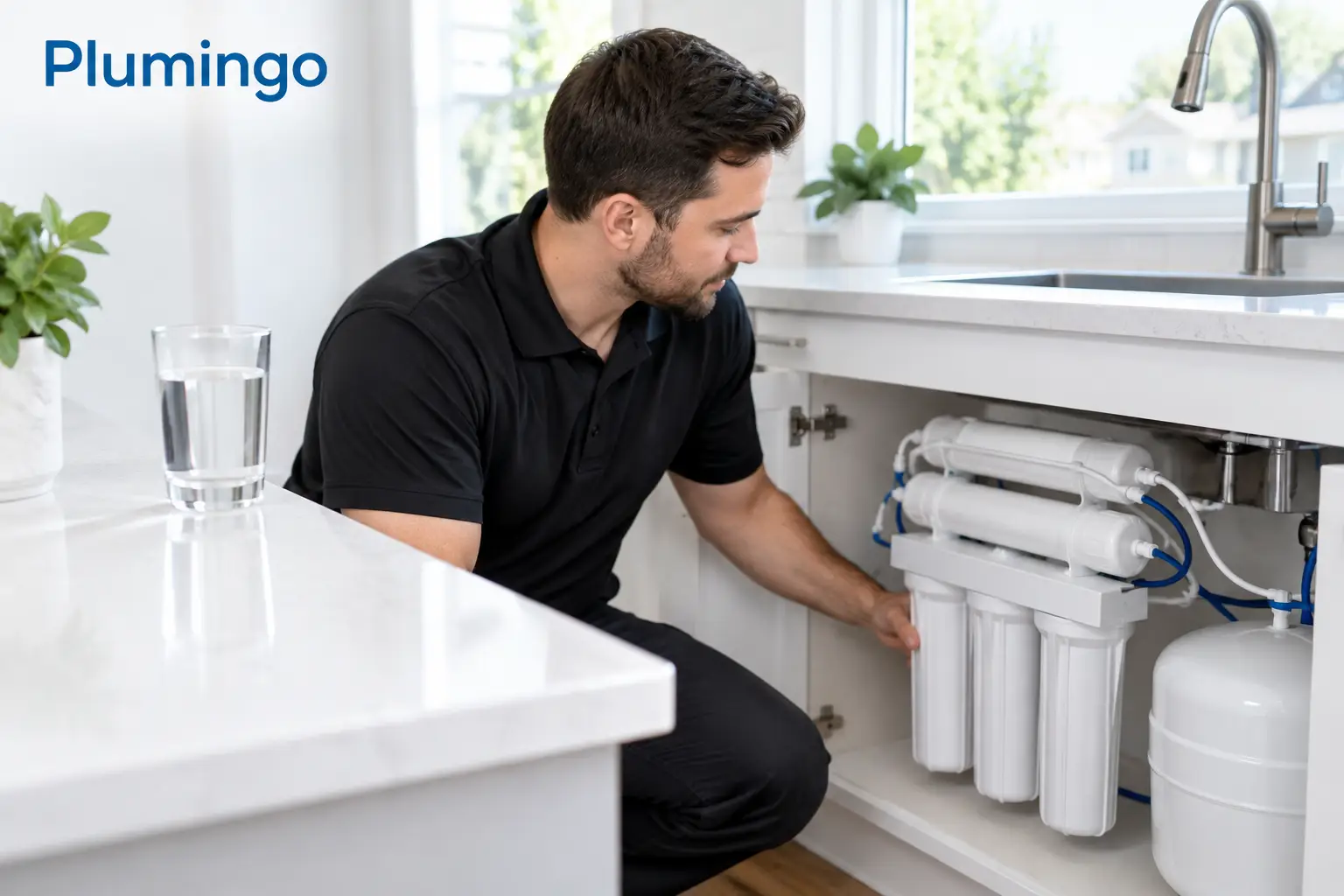
A clear glass of tap water does not reveal much about its dissolved mineral content. For homeowners considering reverse osmosis fluoride reduction, the real question is not whether water looks clean. It is whether the filtration system is designed, installed, and maintained to reduce fluoride consistently at the point where drinking water is used.
Reverse osmosis, often called RO, is one of the more effective household treatment methods for reducing fluoride. But performance depends on the membrane, water pressure, incoming water quality, system condition, and regular filter service. An RO system is not a fit-and-forget appliance, especially in a busy household or commercial setting.
How Reverse Osmosis Fluoride Removal Works
Fluoride is a dissolved substance, which means it passes through many basic sediment and carbon filters. Those filters can improve taste, capture particles, and reduce certain chlorine-related odors, but they are not typically relied on for meaningful fluoride reduction.
An RO system works differently. Water is pushed under pressure through a semipermeable membrane with extremely small pores. The membrane separates a portion of dissolved contaminants from the water stream, sending the concentrated reject water to a drain while collecting treated water in a storage tank or delivering it directly through a compatible system.
Because fluoride ions are larger than water molecules, a properly functioning RO membrane can reduce them substantially. Many quality residential systems are rated to reduce fluoride by roughly 90% or more under laboratory conditions. Actual results in a home can be lower or higher depending on operating conditions, so performance claims should be treated as a starting point, not a guarantee for every installation.
RO treatment is generally installed under the kitchen sink for drinking and cooking water. Whole-home reverse osmosis is possible, but it is a much larger and more specialized project. It requires careful design around water demand, drain capacity, pretreatment, storage, and ongoing maintenance. For most homes, point-of-use treatment provides the practical balance of performance and cost.
What Affects Fluoride Reduction in an RO System?
The membrane is central to reverse osmosis fluoride removal, but it does not work alone. Incoming water conditions and the rest of the system determine whether the membrane can do its job.
Water pressure matters. RO systems need sufficient pressure to move water through the membrane effectively. Low pressure can slow production, increase wastewater relative to treated water, and reduce rejection performance. Homes with low incoming pressure may need a booster pump, while systems with unusually high pressure may need appropriate protection.
Temperature also plays a role. Cold Canadian winter water can reduce the amount of purified water an RO system produces each day. That does not automatically mean fluoride reduction has failed, but it can make a marginally sized system feel slow. A qualified technician can assess whether the system capacity matches household demand.
The condition of prefilters is equally important. Sediment filters protect the system from dirt, rust, and fine particles. Carbon filters reduce chlorine or chloramine, depending on the filter design. This protection matters because disinfectants can damage many RO membranes over time. If prefilters are overdue for replacement, the membrane may be exposed to conditions that shorten its useful life.
Hard water is another consideration. In areas with elevated calcium and magnesium, scale can build on the membrane and reduce flow. A water softener or other pretreatment may be appropriate before RO in some properties. That decision should follow a water assessment, not a one-size-fits-all recommendation.
Is Reverse Osmosis the Right Choice for Your Water?
An RO system can be a strong option when a household wants targeted treatment for drinking water, cooking, coffee, tea, infant formula preparation, or ice. It is especially worth considering when a water test identifies fluoride at a level the homeowner would prefer to reduce.
Still, the right solution depends on the source of your water and your goals. Municipal water is commonly treated and monitored, but local conditions, household preferences, and plumbing infrastructure vary. Private well water should be tested more broadly because fluoride may occur alongside hardness, iron, manganese, bacteria, nitrates, or other concerns that require separate treatment steps.
A treatment recommendation should start with clear information. Ask what is in the water, what the system is intended to reduce, what it will not reduce, and how results will be verified after installation. This is particularly useful for property managers and commercial operators, where several fixtures, occupants, and maintenance responsibilities may be involved.
RO systems also create a reject-water stream. Modern systems can be more efficient than older designs, but they do use water to produce purified drinking water. The trade-off is usually reasonable for point-of-use drinking water treatment, yet it should be considered openly. A professional can help select a system with an appropriate recovery rate and capacity rather than simply choosing the largest unit available.
Testing Before and After Installation
Testing is the most reliable way to make decisions about fluoride. A basic water test can establish the incoming fluoride level, while a follow-up test of treated water confirms how the system is performing in real conditions.
Testing becomes particularly valuable in these situations:
- You rely on a private well or have limited recent water-quality records.
- You have moved into a home with an existing RO system of unknown age.
- Filter changes have been missed or the system's output has slowed noticeably.
- You want documentation for a rental property, business, or facility maintenance file.
A total dissolved solids, or TDS, meter can be useful for monitoring general membrane performance, but it does not specifically measure fluoride. A lower TDS reading can indicate that an RO system is doing meaningful work, yet it cannot prove fluoride reduction on its own. For that, use a laboratory test or a fluoride-specific method recommended by a water treatment professional.
Maintenance Protects RO Performance
Most RO issues develop gradually. Water may begin flowing more slowly, the tank may take longer to fill, or the water may develop an unfamiliar taste. These signs do not always mean the whole system needs replacement. Often, scheduled filter service, membrane evaluation, sanitization, or a minor component repair restores proper operation.
Sediment and carbon prefilters commonly require replacement every six to 12 months, depending on water conditions and usage. RO membranes often last two to five years, though their life can be shorter where water is hard, heavily chlorinated, or poorly pretreated. Post-filters may also need routine replacement to maintain fresh taste at the faucet.
The schedule should follow the system manufacturer's requirements and actual site conditions. A household with high water use, a café using filtered water for beverages, and a small office kitchen do not place the same demand on a system. Keeping a service record prevents guesswork and helps identify changes in performance over time.
Sanitization is another overlooked task. During filter changes or repairs, system components can be opened to the surrounding environment. Periodic professional servicing helps ensure connections are secure, housings are clean, the tank is functioning correctly, and the system is not developing leaks beneath the sink.
Questions to Ask Before Booking RO Service
When selecting or servicing an RO system, focus on the details that affect water quality and long-term reliability. Ask whether the system is certified for the contaminants you want to reduce, whether your home has adequate pressure, and whether hard water or chlorine requires pretreatment.
It is also reasonable to ask about replacement filter availability, expected maintenance intervals, drain connection requirements, and whether the installation includes a post-installation performance check. Transparent answers make it easier to compare options and plan for ownership costs without surprises.
For existing systems, a technician should assess the full assembly rather than only replacing a filter. This includes the feed-water valve, tubing, filter housings, membrane housing, storage tank, faucet, drain saddle, and any booster pump or leak-detection component. Small issues in any of these areas can affect output and reliability.
For homeowners and facilities in Kitchener, a water-quality assessment can turn a broad concern about fluoride into a clear service plan. The goal is not to add equipment unnecessarily. It is to confirm what your water needs, keep the system performing as intended, and give you confidence in every glass you pour.
Need this done in your home?
Plumingo handles this work across Kitchener, Waterloo, Cambridge and Guelph. Read how we do it, or call us and we will give you a price before we start.
Learn about reverse osmosis and water filtrationNeed a plumber in Kitchener-Waterloo?
Licensed, insured and upfront about pricing. Call us or book online in under a minute.