
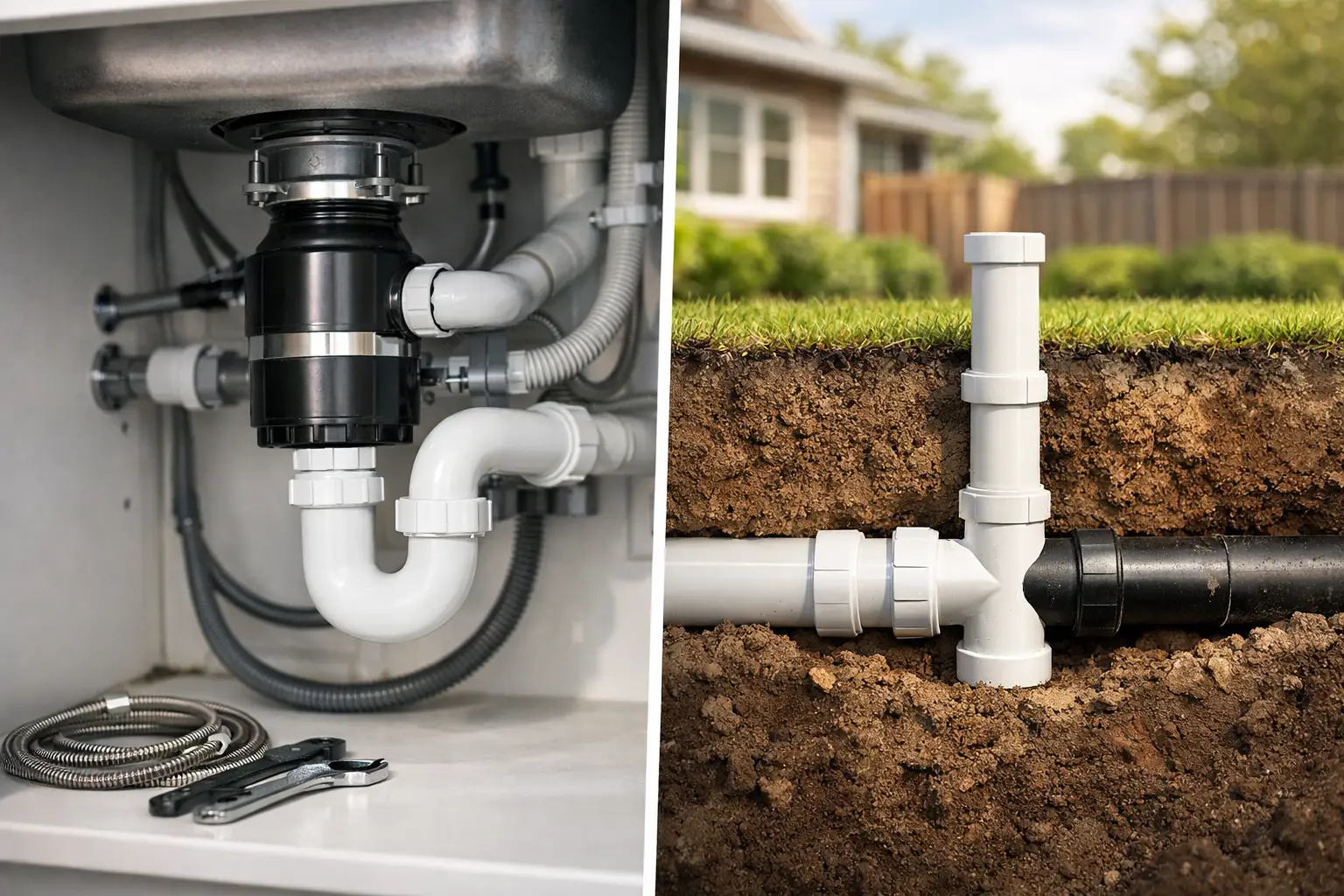
A slow basement drain rarely starts as a basement problem. More often, it is the first visible sign that the residential waste plumbing systems behind your walls and under your floors are under stress. When those systems are designed well and maintained properly, they stay out of sight and out of mind. When they fail, the impact is immediate - odors, backups, water damage, and sanitation concerns that can escalate fast.
For homeowners and property managers, it helps to understand the basics. Not because you need to diagnose every issue yourself, but because knowing how the system works makes it easier to spot risk early, ask better questions, and book the right service before a minor drainage issue becomes a major repair.
What residential waste plumbing systems actually do
At the simplest level, residential waste plumbing systems move used water and sewage safely out of the home. That includes discharge from toilets, sinks, showers, tubs, floor drains, laundry appliances, and in some homes, auxiliary fixtures in basements or secondary suites.
The system has a straightforward job, but it depends on correct slope, proper venting, reliable pipe connections, and clear drainage paths. Wastewater needs enough force to move efficiently, but not so much speed that solids are left behind. Air has to circulate through venting so water can flow without creating suction that empties traps. Every part has to work together.
That is why drain performance is not just about whether water goes down eventually. A fixture that gurgles, drains slowly, or smells foul may still be functional on the surface, but it is often signaling a deeper issue inside the drainage network.
The main parts of a residential waste plumbing system
Most homes rely on the same core components, even if layout and pipe materials vary by age and construction type. Drain lines carry wastewater away from fixtures. Branch lines connect individual fixtures to larger building drains. The main sewer line then directs waste out to the municipal sewer connection or a private septic system.
Traps sit beneath sinks, tubs, and other fixtures to hold a water seal that blocks sewer gas from entering the home. Vent pipes regulate air pressure and support smooth drainage. Cleanouts provide access points for inspection and clearing blockages. In many homes, floor drains and backwater valves also play an important role, especially in lower levels where backup risk is higher.
Older homes may have cast iron, copper, clay, or outdated galvanized piping in parts of the system. Newer homes typically use PVC or ABS for drainage. Material matters because each one ages differently. Cast iron can corrode internally. Clay can crack or shift. Plastic piping resists corrosion well, but poor installation or settling can still create connection problems.
Why failures happen in residential waste plumbing systems
Most drainage failures are not random. They develop from wear, blockage, poor installation, or environmental pressure over time.
Grease buildup is a common issue in kitchen lines. Even households that avoid pouring oil directly down the drain can gradually create residue from food waste, soaps, and rinsed cookware. In bathrooms, hair, soap scum, and hygiene products often restrict branch drains. Toilets are vulnerable to wipes, paper overload, and foreign objects that should never be flushed.
The more serious problems tend to involve the main line. Tree root intrusion is a frequent cause of sewer trouble, especially in older neighborhoods. Roots seek moisture and can enter through small pipe joints or cracks, then expand until they restrict or block flow. Ground movement, pipe collapse, scale buildup, and flushing practices can all contribute as well.
Vent issues are less obvious but equally important. A blocked vent stack can cause slow drainage, gurgling fixtures, and trap seal problems. In cold climates, vent terminations may be affected by frost conditions, while older homes may have venting layouts that no longer perform as well under modern fixture demand.
Warning signs you should not ignore
A single clogged sink may be isolated. Multiple drainage issues at once usually are not. If the shower backs up when the washing machine drains, or a toilet bubbles when a nearby sink is used, the system is telling you something.
Recurring clogs, foul sewer odors, standing water near floor drains, frequent plunging, and water backing up at the lowest drain in the home all point to a drainage issue that needs professional attention. The same is true if drains improve temporarily after a store-bought cleaner but then slow again within days.
Chemical drain cleaners are often a short-term response to a long-term problem. They may not remove the actual obstruction, and repeated use can damage certain pipes, especially in older systems. When symptoms keep returning, the issue is usually deeper in the line or related to venting, pipe condition, or slope.
How professionals assess the system
A proper diagnosis starts with the pattern of the problem. Is it one fixture, one bathroom group, or the entire house? Does it happen only during heavy use? Is the issue recent, seasonal, or ongoing? Those details matter because they help narrow the location and likely cause.
From there, professional drain clearing may involve mechanical snaking, augering, or hydro jetting depending on the pipe type and blockage conditions. Camera inspection is often the clearest way to confirm what is happening inside the line. It can reveal roots, cracks, offset joints, grease accumulation, standing water, or a collapsed section that no amount of clearing will truly fix.
This is where transparency matters. A reliable plumbing provider should be able to explain whether the problem needs cleaning, repair, partial replacement, or preventive maintenance. Not every slow drain means a sewer replacement. At the same time, repeated emergency calls usually cost more than addressing a known defect directly.
Maintenance that helps prevent backups
Residential waste plumbing systems do not require constant attention, but they do benefit from basic preventive care. The goal is not perfection. It is reducing the conditions that lead to emergency failures.
Households should be careful about what goes down drains and toilets. Grease, wipes, paper towels, food scraps, and hygiene products are common causes of avoidable blockage. Drain strainers in showers and tubs help reduce hair buildup. If a home has a history of root intrusion or recurring main line problems, scheduled inspection and cleaning may be worth the cost.
For property managers, consistency is especially important. Tenant turnover, shared usage, and deferred maintenance can accelerate drain wear. A building with recurring unit-level clogs may have a broader stack or branch issue, and a single emergency response does not always solve the underlying condition.
Cold-weather planning also matters in northern markets. Freeze-thaw cycles, snowmelt volume, and foundation drainage conditions can all affect how drainage systems perform. Homes with basements should pay close attention to floor drains, sump systems where present, and backwater valve function if the property is exposed to municipal surcharge risk.
When repair makes sense and when replacement is the better move
Not every damaged drain line needs full replacement. Localized cracks, joint failures, or isolated sections of pipe may be repairable depending on access, material, and condition. If the rest of the system is sound, targeted work can be the most efficient option.
Replacement becomes more practical when problems are repeated, pipe materials are near the end of service life, or camera inspection shows widespread deterioration. A line that has been cleared multiple times for roots but continues to fail may no longer be a maintenance issue. It may be an infrastructure issue.
This is one of those situations where the cheapest immediate fix is not always the lowest long-term cost. The right answer depends on the age of the system, the frequency of service calls, the extent of damage, and how disruptive a future failure would be for the household or property.
Why system knowledge matters for homeowners
You do not need to become a drainage expert to protect your home. You do need to recognize that waste plumbing is a core system, not a background convenience. Problems that begin in the drains can affect sanitation, structure, indoor air quality, and insurance risk if they are left unresolved.
That is why fast, qualified service matters. A dependable provider should be able to respond urgently when needed, explain the issue clearly, and recommend work based on system condition rather than guesswork. For homeowners who want both plumbing reliability and broader water system support, that level of care is the standard.
If your drains have been sending subtle warnings, it is worth taking them seriously now. Residential waste plumbing systems are easiest to manage before they force the issue.
Need this done in your home?
Plumingo handles this work across Kitchener, Waterloo, Cambridge and Guelph. Read how we do it, or call us and we will give you a price before we start.
Learn about all Plumingo plumbing servicesNeed a plumber in Kitchener-Waterloo?
Licensed, insured and upfront about pricing. Call us or book online in under a minute.