
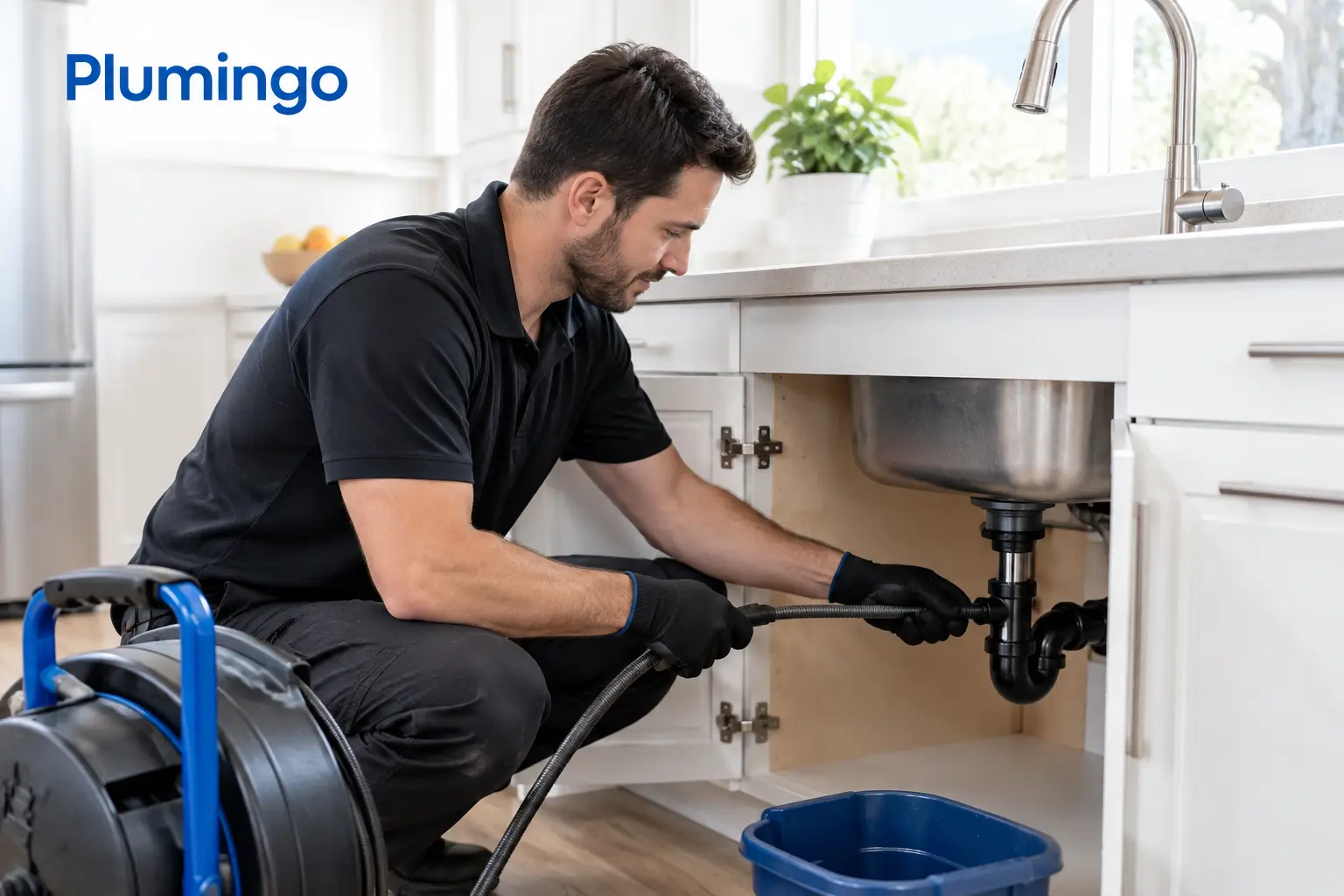
A kitchen sink that drains slowly can turn ordinary cleanup into a frustrating chore. This kitchen drain cleaning guide focuses on the practical first steps that protect your pipes, avoid unnecessary damage, and help you recognize when a blockage needs professional attention.
Start by Identifying the Drain Problem
Not every slow kitchen drain has the same cause. Grease residue, food particles, soap film, and mineral buildup can narrow the pipe gradually. A sudden blockage is more likely to involve a concentrated mass of debris, a utensil or small object, or an issue farther down the drain line.
Watch how the sink behaves. If water drains slowly but steadily, the restriction may be close to the sink. If water backs up quickly, gurgles, or rises in another nearby fixture, the problem may be beyond the trap under the sink. A dishwasher that leaves standing water can also be connected to a kitchen drain restriction, particularly where its discharge hose joins the plumbing.
If only one sink bowl is affected, start there. If both bowls of a double sink back up at the same time, the shared drain line is a more likely source. This distinction matters because pouring products into the drain rarely solves a clog located farther along the line.
Kitchen Drain Cleaning Guide: Safe Steps to Try First
Before taking anything apart, clear the sink and remove any visible debris from the strainer. Wear gloves, especially if there is old food waste in the drain. Do not reach into a garbage disposal while it is connected to power.
Flush with hot water - with one exception
Run hot tap water for several minutes to loosen light soap and grease residue. This is useful for routine buildup, but it will not break apart a solid food blockage or remove an object caught in the pipe.
Avoid repeatedly pouring boiling water into a sink with PVC plumbing. Very hot water can be hard on some pipe connections and may not be appropriate for every fixture setup. Hot tap water is the safer default. If grease is a recurring issue, use the sink with plenty of water rather than trying to wash fats down in a single heavy stream.
Use a plunger correctly
A sink plunger can clear many localized clogs. For a double-bowl sink, seal the unused drain opening with a wet cloth or stopper so pressure reaches the blockage instead of escaping through the other bowl. Add enough water to cover the plunger cup, then make several controlled plunges.
If the sink has a garbage disposal, use care around the disposal side. Never put your hand inside, and make sure the disposal is off before working near its opening. If plunging improves drainage briefly but the problem returns, buildup may still be present in the trap or branch line.
Clean the P-trap only when accessible
The curved pipe beneath the sink, known as the P-trap, catches debris and also holds water that blocks sewer gases. If the clog appears close to the sink, cleaning the trap can be effective.
Place a shallow bucket and towels beneath the pipe before loosening the slip nuts. Remove the trap carefully, empty it into the bucket, and inspect it for food scraps, grease, or foreign objects. Clean the parts, check the washers for wear, then reinstall the trap hand-tight before testing with water.
This is not the right do-it-yourself task if fittings are corroded, the cabinet has water damage, or the plumbing uses glued connections that are not designed to come apart. In those cases, forcing the pipe can create a leak that is more disruptive than the original slow drain.
Use a drain snake with restraint
A hand auger can reach beyond the trap and break through some blockages. Feed the cable slowly and stop if it meets firm resistance. Pushing aggressively can damage pipe interiors, dislodge a connection, or compact the clog farther into the line.
Avoid using a toilet auger in a kitchen sink. Its shape and protective sleeve are made for a different fixture. Also avoid inserting metal tools into a garbage disposal. A disposal jam is often a separate mechanical issue and should be handled with the power disconnected and the manufacturer-approved method.
Why Chemical Drain Cleaners Are Usually a Poor First Choice
Chemical drain cleaners may seem convenient, but they bring trade-offs. Strong acidic or alkaline formulas can generate heat, irritate skin and eyes, and be difficult for a technician to work around if the clog remains. They can also be harsh on older metal pipes, rubber seals, and certain plumbing components.
Never mix drain-cleaning products or combine one with bleach, vinegar, ammonia, or another household cleaner. A mixture can release harmful fumes or react unpredictably. If a chemical product has already been used, tell the plumbing professional exactly what was used and when. That information helps them work safely.
Baking soda and vinegar are often presented as a universal solution. They may freshen a lightly soiled drain, but they do not reliably clear grease-heavy or solid clogs. Mechanical cleaning and proper flushing are generally more effective when water is already backing up.
Prevent Kitchen Drain Buildup Before It Starts
Kitchen drains work best when they are treated as plumbing, not as a disposal route for every leftover. Scrape plates into the trash or compost first, then rinse only small remnants away with running water.
Keep these materials out of the sink whenever possible:
- Cooking oil, bacon fat, butter, and meat drippings
- Coffee grounds, eggshells, rice, pasta, and flour-based scraps
- Produce stickers, twist ties, paper towels, and wipes
- Paint, solvents, and concentrated cleaning chemicals
Even homes with a garbage disposal benefit from this approach. A disposal grinds food into smaller pieces, but it does not eliminate grease or guarantee that dense foods will move freely through the drain. Use cold water while the disposal runs, allow it to run briefly after the food is gone, and avoid overloading it.
For households that cook often, a monthly maintenance habit is usually enough: remove and rinse the sink strainer, clean around the drain opening, and flush the sink with hot tap water. Property managers and commercial kitchens may need a more frequent schedule, especially where high volumes of food preparation create grease buildup. The right interval depends on usage, the age of the plumbing, and whether the building has a grease-management system.
Signs It Is Time to Call a Plumbing Professional
A professional drain assessment is sensible when basic steps do not restore normal flow or when the same clog keeps returning. Repeated backups can point to a deeper obstruction, a poorly sloped drain line, grease accumulation, or a developing issue in the main building drain.
Call for service if you notice water backing up into a second sink, a dishwasher connection, or a nearby floor drain. Persistent sewer-like odors, leaking pipes beneath the sink, visible corrosion, or water staining inside the cabinet also deserve timely attention. These symptoms do not always mean a major repair is needed, but they should be diagnosed rather than covered up with another drain product.
For businesses, recurring slow drains can affect sanitation, staff workflow, and customer areas. A planned inspection and cleaning approach is often less disruptive than waiting for a complete blockage during a busy service period. Plumingo supports residential and commercial plumbing care in Kitchener with clear service options for both scheduled maintenance and urgent drain concerns.
A Cleaner Drain Starts with the Right Next Step
A plunger, careful trap cleaning, and better kitchen habits resolve many common sink issues. When water continues to back up or the source is not clear, stop before using harsher products or more force. A proper diagnosis protects the drain system and gives you a practical repair path instead of a temporary workaround.
Need this done in your home?
Plumingo handles this work across Kitchener, Waterloo, Cambridge and Guelph. Read how we do it, or call us and we will give you a price before we start.
Learn about drain cleaning and sewer serviceNeed a plumber in Kitchener-Waterloo?
Licensed, insured and upfront about pricing. Call us or book online in under a minute.