
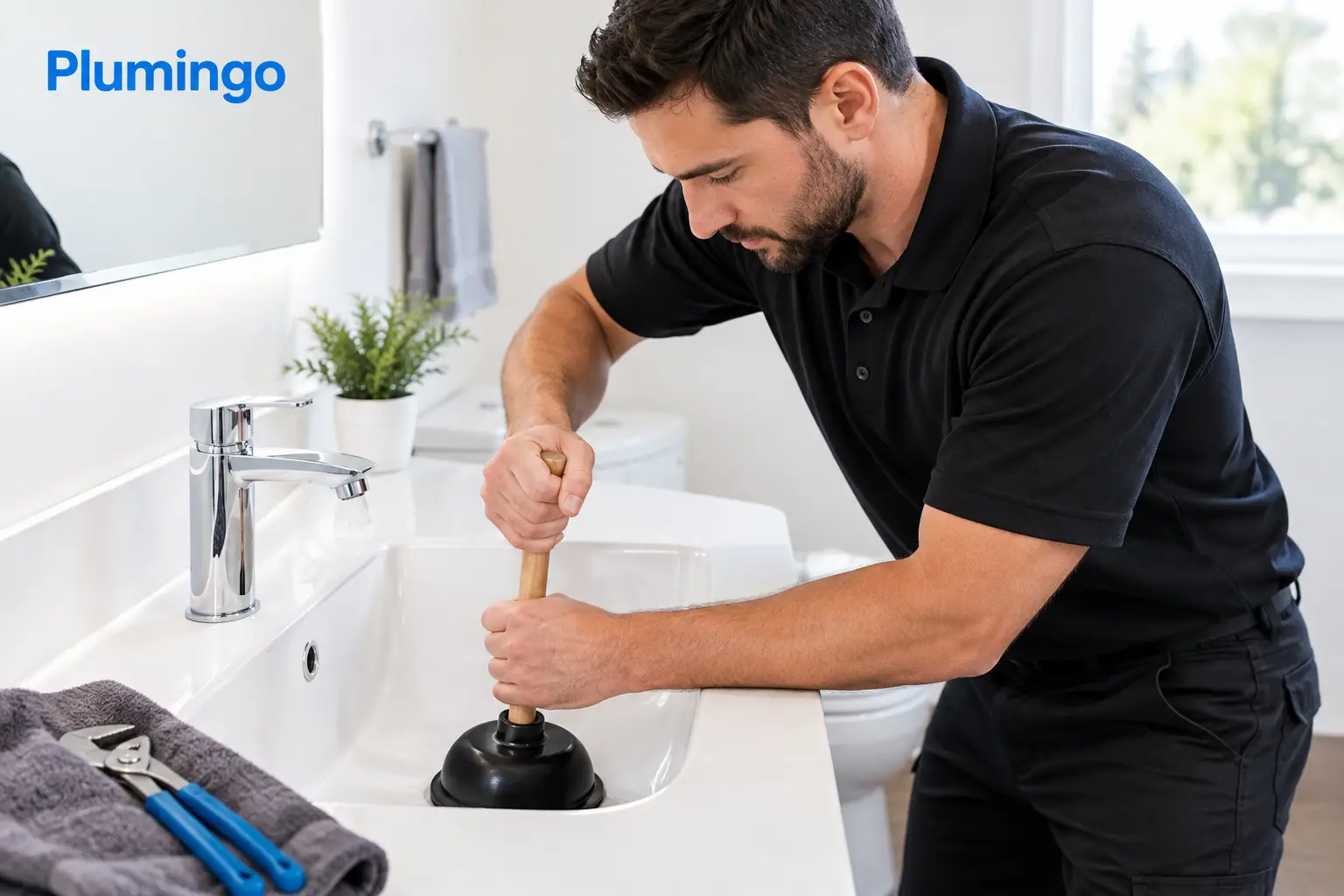
A bathroom sink that drains slowly usually gives you a warning before it stops completely. Water may pool around the stopper, a sour odor may develop, or you may hear gurgling after brushing your teeth. To unclog bathroom sink drains safely, start with the buildup closest to the drain before reaching for harsh chemicals or forceful tools.
Most bathroom sink clogs are manageable with basic cleaning and a little patience. Hair, soap residue, toothpaste, shaving products, and skin oils collect near the stopper and inside the curved drain trap below the sink. The right approach depends on where the blockage is and whether the sink is the only fixture affected.
Start by checking the stopper
The stopper is often the source of a slow bathroom sink. It catches hair and product residue, then holds that material just below the drain opening where water needs to pass.
Place an old towel in the cabinet beneath the sink, then pull the stopper out if your drain design allows it. Many pop-up stoppers are connected to a horizontal pivot rod behind the drain pipe. You may need to loosen the retaining nut by hand and slide the rod free before lifting out the stopper.
Remove any visible hair and residue with a paper towel or disposable brush. Rinse the stopper with warm water and scrub it with dish soap. Avoid flushing a large clump of hair back into the drain, since that can move the clog farther down the line.
Before reinstalling it, run water briefly with the stopper removed. If drainage improves right away, you have likely found the problem. If it remains slow, the blockage is probably in the trap or branch drain.
How to unclog bathroom sink buildup with simple methods
For a minor clog, warm water and manual cleaning are usually the most practical first steps. If your sink has standing water, remove as much as possible with a cup so you can work directly at the drain opening.
A small drain snake or plastic hair-removal tool can pull out buildup that sits below the stopper. Insert it slowly, withdraw it carefully, and discard what it catches. These tools work well for hair-based clogs, but they should not be forced. Pushing too hard can compact debris or damage older drain components.
A plunger can also help, especially when water still drains but very slowly. Use a small cup plunger made for sinks. Cover the overflow opening near the top of the sink basin with a wet cloth, add enough water to cover the plunger cup, and use several controlled plunges. The overflow must be sealed so the plunger can create pressure in the drain.
Afterward, flush the drain with warm tap water for a few minutes. Very hot water may help loosen soap residue, but boiling water is not always appropriate. It can stress certain plastic drain parts, weaken older seals, or affect delicate sink materials. Warm water is the safer choice for most bathroom sinks.
Clean the P-trap when the clog is lower
If the stopper is clear and plunging does not restore flow, the P-trap may need cleaning. This is the curved section of pipe directly under the sink. It holds a small amount of water to block sewer gases, and it is also a common collection point for hair, residue, and small items dropped down the drain.
Put a bucket under the trap and keep towels nearby. Loosen the slip nuts at each end of the curved pipe by hand when possible. Some water will drain out, along with any debris inside. Remove the trap, empty it into the bucket, and clean the interior with a brush.
Inspect the washers before putting the pipe back together. Reassemble the connections hand-tight, then test the sink with a small amount of water. If a connection drips, tighten it slightly. Overtightening plastic slip nuts can crack the fitting or distort the washer, so a firm hand-tight connection is generally enough.
This step is effective for a single slow sink, but it may not solve a blockage farther inside the wall drain. If the trap is clean and water still backs up, a professional drain cleaning assessment is the better next step.
Be cautious with chemical drain cleaners
Chemical drain cleaners may seem like the fastest answer, but they are not a universal fix. They can be ineffective against hair-heavy clogs and may create a more difficult service situation if the product remains in standing water. Some products can also affect older pipes, seals, or finishes when used repeatedly or incorrectly.
Never combine drain cleaning products, and do not follow one chemical product with another. Mixing cleaners can produce dangerous fumes or reactions. If you have already used a chemical cleaner and the sink remains clogged, tell the plumbing professional before service begins. That information helps them work safely.
For routine bathroom sink buildup, physical removal and trap cleaning are often more reliable than chemicals because they remove the material rather than attempting to dissolve part of it. They also make it easier to see what is causing the issue.
When a slow sink points to a larger drain issue
A single slow bathroom sink often has a local clog. However, the situation changes when multiple fixtures are affected. A bathroom sink that drains poorly at the same time as a tub, shower, or toilet may indicate a blockage farther along the drainage system.
Pay attention to patterns. Water rising in the sink when another fixture drains, recurring clogs after cleaning the trap, persistent gurgling, or wastewater odors can all indicate that the problem is beyond the sink itself. Property managers and commercial operators should also take recurring slow drains seriously, since repeated backups can disrupt restrooms and point to accumulated buildup in shared drain lines.
In these cases, avoid repeatedly plunging or adding cleaners. A proper inspection can identify whether the issue is in a fixture drain, a branch line, or a larger building drain. Targeted service is more useful than guessing, particularly in older properties where pipe condition can influence the right repair approach.
Prevent the next bathroom sink clog
Prevention is usually simple. Remove hair from the stopper during regular bathroom cleaning, and wipe away visible toothpaste or shaving residue before it hardens around the drain. A drain screen can help in sinks used for grooming, although it should be cleaned often enough that it does not become a blockage itself.
Avoid treating the sink as a disposal for cotton swabs, dental floss, cosmetics, or thick personal-care products. These materials can catch inside the trap and collect additional debris. For homes with children or high-use commercial washrooms, a quick monthly check of drain speed can help address buildup before it becomes a full stoppage.
If your sink keeps clogging despite careful cleaning, the goal is not to keep repeating the same temporary fix. Expert plumbing support can clear the line properly and help determine whether a repair, maintenance adjustment, or drain-use change is appropriate. Plumingo provides clear, professional plumbing care for homeowners and facilities that need dependable answers without unnecessary work.
A clean, freely draining bathroom sink is a small detail that makes the whole room work better. Address the first signs of slow drainage early, use low-risk methods first, and bring in qualified help when the pattern suggests the clog is deeper than the fixture.
Need this done in your home?
Plumingo handles this work across Kitchener, Waterloo, Cambridge and Guelph. Read how we do it, or call us and we will give you a price before we start.
Learn about drain cleaning and sewer serviceNeed a plumber in Kitchener-Waterloo?
Licensed, insured and upfront about pricing. Call us or book online in under a minute.