
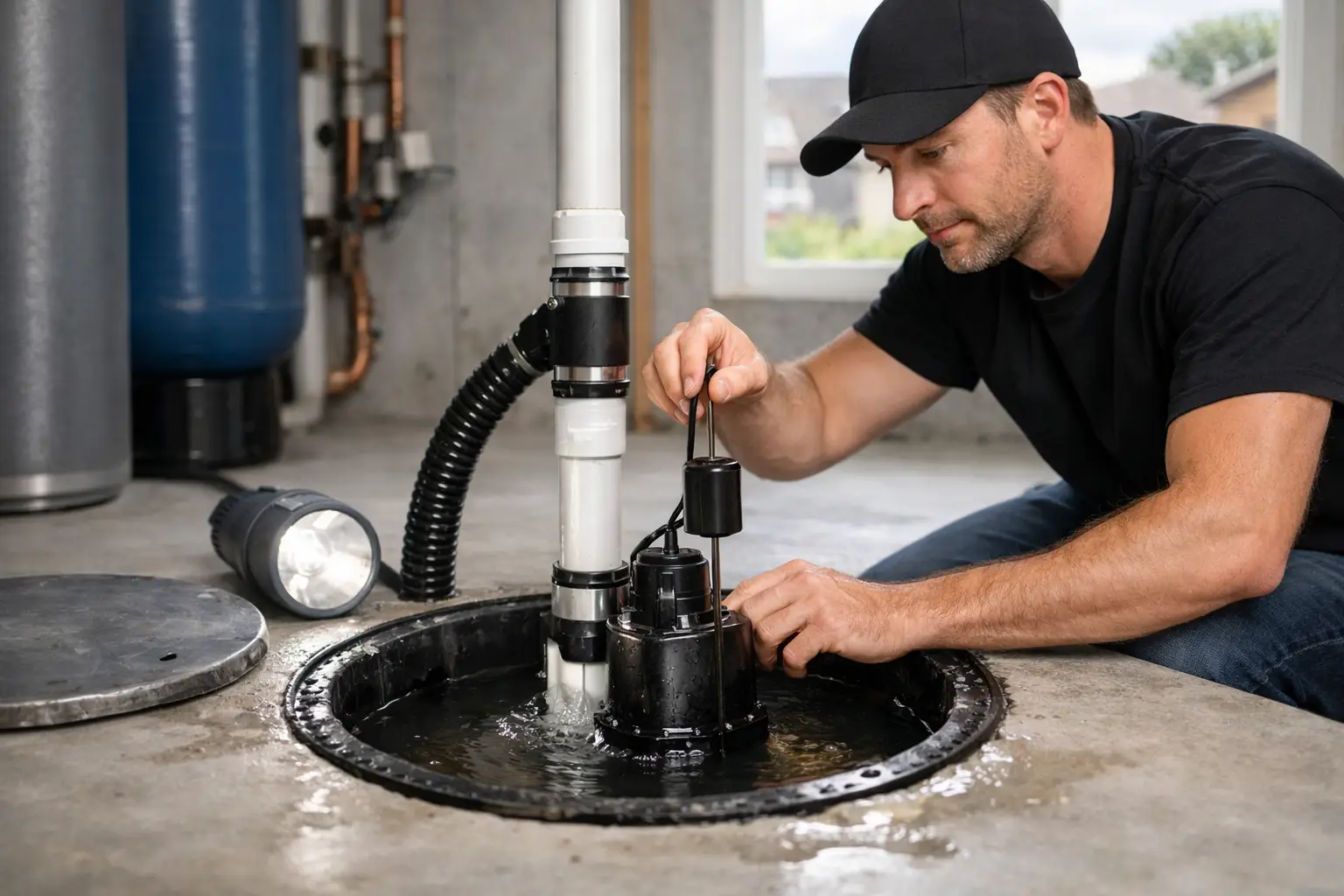
A sump pump often sits quietly at the lowest point of the home until a stretch of heavy rain puts it to work. Knowing how to test sump pump operation gives you a chance to identify a problem on a dry day, rather than discovering it when the pit is filling. The test is straightforward, but the details matter: the float must move freely, the pump must discharge water outside, and the electrical supply must be reliable.
For most homes, testing once before the wetter seasons and again after an extended period without use is a sensible maintenance routine. Property managers should also include sump pump checks in regular site inspections, especially for buildings with finished lower levels or stored inventory nearby.
How to Test a Sump Pump Safely
Start by looking at the sump pit. Remove any loose debris from around the cover and make sure the pump is sitting upright at the bottom of the basin. Avoid reaching into standing water or handling a plugged-in pump with wet hands. If the pit is full of dirt, gravel, or construction debris, clear only what you can safely reach after disconnecting power.
Next, locate the pump’s power cord. It should be plugged directly into a properly grounded outlet, not an extension cord or overloaded power bar. Many pumps use two plugs: one for the pump motor and one for the float switch. In this setup, the float plug typically connects to the outlet and the motor plug connects to the back of the float plug. Check that both are secure.
If the outlet is protected by a ground-fault circuit interrupter, press the reset button if needed. A tripped outlet can leave a sump pump without power while everything else in the pit appears normal. If the outlet will not reset or repeatedly trips, stop the test and arrange for qualified electrical or plumbing service.
Add Water to the Pit
The most reliable basic test is to slowly pour a bucket of water into the sump pit. Use enough water to raise the float until the pump activates. Depending on the basin size and float setting, this may take several gallons.
A working pump should start automatically once the float reaches its activation point. It should remove the water quickly, then shut off after the level drops. Listen for a steady motor sound and watch for a strong discharge from the outlet pipe outside the home.
Do not let the pump run dry for an extended period. Once the water level falls and the pump stops, the test is complete. If the pump continues running after the pit is nearly empty, disconnect it and have the switch or system inspected. Continuous operation can overheat the motor and may indicate a float issue.
Confirm Water Is Leaving the Property
A pump that runs is not necessarily a pump that protects the basement. Walk outside and find the discharge point while the test is underway. Water should flow through the discharge pipe and drain away from the foundation.
Look for a blocked, crushed, disconnected, or frozen discharge line. In colder climates, an exterior pipe can freeze during winter and prevent the system from moving water even though the motor is operating. The outlet should direct water far enough from the building that it does not drain back toward the foundation or re-enter the sump pit.
If the discharge line includes a check valve, listen for a brief click or thump when the pump shuts off. That sound can be normal. The valve prevents discharged water from flowing backward into the basin. A failed or incorrectly installed check valve can make the pump cycle more often and increase wear.
What a Successful Sump Pump Test Looks Like
A healthy system does not need to be silent, but it should behave predictably. The float rises with the water level, the pump starts without hesitation, water moves through the discharge line, and the pump stops once the pit is drained to its normal level.
Pay attention to how long this process takes. A small amount of water should not leave the pump running for several minutes. Slow pumping may point to a worn impeller, restricted discharge pipe, low voltage, or a pump that is undersized for the water entering the pit. The right pump capacity depends on the property, soil conditions, drainage layout, and typical water volume. Bigger is not automatically better if the system is not configured to support it.
It is also useful to note the pump’s behavior in a phone reminder or maintenance log. A record of unusual noises, slower cycling, or past repairs helps homeowners and facility teams spot changes before performance declines further.
Common Problems You May Notice During Testing
If the pump does not turn on after the float rises, first verify the outlet has power. Plug in a small lamp or use a tester if you are comfortable doing so. If power is available, the issue may be the float switch, motor, wiring, or internal components.
A float can become tangled on the pump body, power cord, or basin wall. With the power disconnected, inspect whether it has room to rise and fall freely. Some tethered floats require more open space than vertical float switches, so a crowded pit can interfere with operation.
A loud grinding, rattling, or metallic sound is not a normal operating noise. It may mean debris has entered the pump, the impeller is damaged, or the motor bearings are wearing out. Similarly, a pump that starts and stops every few seconds may be short-cycling due to a check valve problem, an improperly adjusted float, or water returning to the pit.
Watch for these signs that call for professional assessment:
- The pump does not activate, trips the breaker, or loses power intermittently.
- Water remains in the pit well above the normal shutoff level.
- The discharge pipe leaks, is blocked, or sends water back toward the foundation.
- The motor is unusually noisy, hot, or runs continuously.
- The pit fills rapidly during rain and the pump cannot keep up.
A repair may be all that is needed. For example, clearing a blocked line, replacing a check valve, or correcting a float switch can restore proper operation without replacing the entire unit. Replacement becomes more practical when a pump has repeated motor failures, cannot meet the property’s water demands, or is near the end of its expected service life.
Do Not Forget Backup Protection
A primary pump depends on electrical power, which can be interrupted during severe weather. A battery backup sump pump adds protection by operating when the main pump cannot run due to a power outage or primary pump failure. It is especially worth considering for homes with a finished basement, critical mechanical equipment below grade, or a history of frequent water entry.
Backup systems need maintenance too. Check the battery condition, alarm function, charger, and float operation according to the manufacturer’s instructions. A backup unit that has never been tested offers limited reassurance.
Some properties also benefit from a high-water alarm. This device alerts occupants when the water level rises beyond a set point, giving them time to respond if the pump cannot keep up. It does not replace a pump, but it can reduce the chance that a failure goes unnoticed.
When to Schedule Service
Call for service when a test reveals inconsistent pumping, electrical concerns, persistent odors from the pit, visible pipe damage, or poor drainage at the discharge point. A professional inspection can evaluate the pump, float switch, check valve, basin condition, discharge route, and backup options as one system.
Plumingo helps homeowners and property teams address sump pump performance with clear recommendations and professional plumbing care. If a repair will restore reliable function, that is the right place to start. If system changes are needed, the recommendation should be based on the property’s actual drainage needs.
A ten-minute water test before the next heavy rain is a practical way to protect the space below your home. Put it on the seasonal maintenance calendar, keep the pit accessible, and address small warning signs while there is time to do so.
Need this done in your home?
Plumingo handles this work across Kitchener, Waterloo, Cambridge and Guelph. Read how we do it, or call us and we will give you a price before we start.
Learn about sump pump installation and repairNeed a plumber in Kitchener-Waterloo?
Licensed, insured and upfront about pricing. Call us or book online in under a minute.