
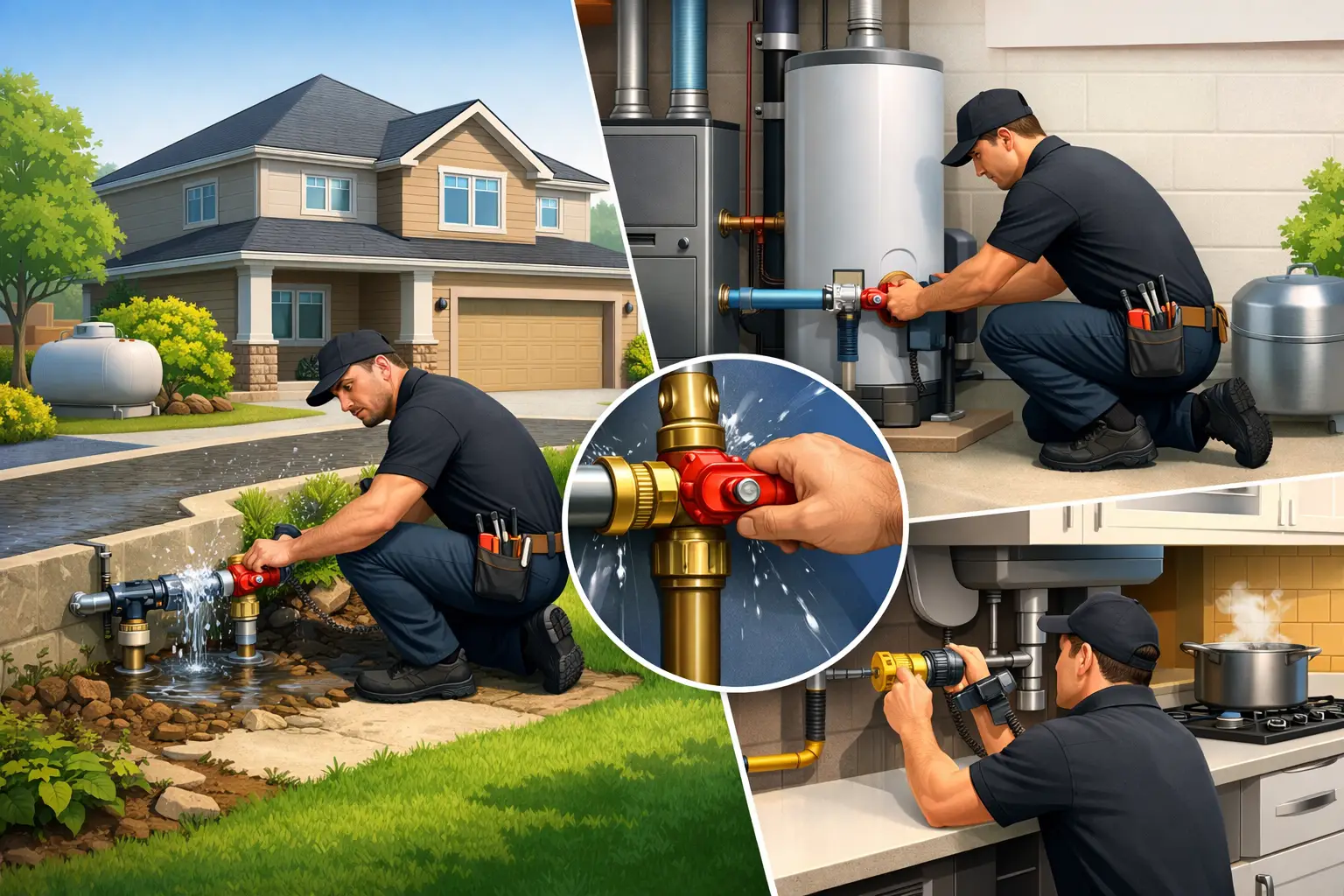
A burst supply hose beneath a sink can release a surprising amount of water before anyone notices. A leaking toilet valve, failed dishwasher line, or damaged pipe may be less dramatic, but it still calls for a calm, fast response. This guide to emergency leak shutoff explains what to do first, where to find the right valve, and when professional plumbing support is the safest next step.
Start With the Nearest Shutoff Valve
The fastest way to limit water damage is usually to stop water at the fixture, not at the whole building. Most toilets, faucets, washing machines, dishwashers, refrigerators, and water treatment systems have a nearby supply valve. Look for a small oval handle or a straight lever where the water line meets the wall, floor, or cabinet.
Turn a standard round valve clockwise until it stops. For a lever-style ball valve, turn the handle a quarter turn so it sits perpendicular to the pipe. Do not force a valve that is seized, corroded, or leaking heavily around its stem. Excess force can break an older valve and make the situation worse.
If the leak is coming from a toilet, sink, or appliance supply line and the local valve works, keep the main water supply on. That allows other sinks and toilets to remain available while the affected fixture is assessed and repaired.
When to Shut Off the Main Water Supply
Use the main shutoff when you cannot identify the source quickly, the fixture valve will not close, or water is flowing from a pipe, ceiling, wall, or floor. It is also the right move when more than one fixture is behaving unusually, such as several faucets losing pressure while water appears where it should not.
In many homes, the main shutoff is located near the water meter, where the service line enters the building, in a utility room, basement, garage, or mechanical closet. In some properties, it may be in a crawl space or near the water heater. Property managers should ensure the location is documented and available to maintenance staff.
Once the main valve is closed, open a cold-water faucet at the lowest accessible point in the home. This relieves pressure in the lines and helps drain remaining water. Do not leave taps running unattended if drainage is poor or water is already collecting around the fixture.
Emergency Leak Shutoff Steps to Follow
A clear sequence prevents rushed decisions. If water is actively escaping, focus on containment first and diagnosis second.
- Move people, pets, electronics, documents, and loose items away from the affected area.
- Shut off the nearest fixture valve. If it does not stop the flow, close the main water valve.
- If water is near outlets, appliances, or electrical panels, avoid the area and turn off power only if it can be done safely from a dry location.
- Place towels, buckets, or a shallow pan beneath a manageable drip, then contact a qualified plumbing professional for an assessment.
A shutoff valve controls the water supply, but it does not always eliminate all water immediately. Pipes, faucet bodies, appliance hoses, and drain lines can retain water. Give the system time to depressurize before disconnecting anything. For most homeowners, attempting a repair during an active leak is not worth the added risk of damage.
Know Which Water Should Not Be Shut Off
Not every water-related issue requires the main shutoff. A slow drain, a toilet that is backed up without overflowing, or a small drip from a drain trap may need service, but closing the main supply may not change the issue. Drain water is already leaving the fixture, so the relevant step is often to stop using that sink, shower, or toilet until it can be inspected.
A water heater leak requires more judgment. If the leak is from the cold-water supply line above the heater, shut off the nearby cold-water valve if one is present. If the tank itself is leaking, turn off its water supply and arrange professional service. Do not shut off a gas water heater and leave the burner operating without water in the tank. For electric water heaters, power should be turned off before the tank is drained or serviced.
If you smell gas, do not troubleshoot the water heater. Leave the area and follow your gas utility's safety instructions.
Prepare Before a Leak Happens
The best time to find your shutoff valves is when nothing is leaking. Walk through the property and identify the main shutoff, fixture valves, appliance valves, and any dedicated valves for water treatment equipment. Make sure responsible household members or on-site staff know where they are.
Test accessible shutoff valves carefully once or twice a year. Turn the valve off, confirm the fixture loses water supply, then return it to the fully open position. A valve that is difficult to operate, drips from the handle, or fails to stop water deserves attention before it becomes urgent.
It also helps to keep basic containment supplies together: absorbent towels, a bucket, gloves, a flashlight, and a marked wrench for the main valve if needed. These items do not replace professional repairs, but they can protect flooring and reduce cleanup while help is arranged.
Do Not Forget Appliance and Filter Lines
Many household leaks begin at connections that receive little attention. Washing machine hoses, dishwasher supply lines, refrigerator ice-maker tubing, and under-sink filtration connections should be checked for moisture, corrosion, kinks, or worn fittings.
Reverse osmosis systems and water softeners typically have their own bypass or supply valves. If a leak is limited to the treatment unit, isolating that equipment can preserve water service to the rest of the building. However, valve layouts vary by installation. If you are unsure which handle controls the system, shut off the main water supply rather than guessing.
Water treatment equipment also has drain connections that can leak or back up. A puddle near a softener or RO system is not always a pressurized supply leak, which is why identifying the source matters. A qualified technician can check the system's valves, fittings, drain routing, and operating condition without recommending replacement when a targeted repair is appropriate.
Special Considerations for Commercial Properties
Commercial spaces often have larger plumbing networks, multiple shutoff zones, mechanical rooms, and equipment that depends on a consistent water supply. Closing the building's main valve may affect restrooms, kitchens, fire protection-related systems, or operations in adjacent suites. The correct response depends on the building design and the source of the leak.
Facility teams should maintain an up-to-date valve map, identify who has access to mechanical rooms, and establish a simple escalation process for tenants and staff. If a leak occurs above ceilings, near electrical equipment, or in a shared service area, isolate the zone only if the valve is clearly identified. Otherwise, contact building maintenance or a plumbing professional promptly.
For rental properties, tenants should know how to shut off the toilet and sink valves in their unit, while property managers should retain clear instructions for the building main and any suite-specific shutoffs.
After the Water Is Off
Take a few photos of the leak source and affected area before moving damaged materials, if it is safe to do so. This can help with repair planning and property documentation. Remove standing water promptly, increase airflow with fans if electrical conditions are safe, and avoid closing wet materials inside cabinets or closets.
Then look for the cause without taking apart plumbing. Common signs include a split braided hose, loose connection, failed valve, cracked filter housing, or water staining that suggests a hidden issue. Visible water may have traveled from another location, especially when it appears below a bathroom, kitchen, or mechanical room.
Plumingo can help homeowners, property managers, and commercial operators assess active leaks, isolate affected plumbing, and restore systems with clear service recommendations. For water treatment equipment, service should address both the leak and the system's continued water quality performance.
A shutoff valve is a small part of a plumbing system, but knowing how to use it gives you valuable control when water goes where it should not. Take ten minutes this week to locate yours, label it clearly, and make sure the people responsible for the property know what to do.
Need this done in your home?
Plumingo handles this work across Kitchener, Waterloo, Cambridge and Guelph. Read how we do it, or call us and we will give you a price before we start.
Learn about all Plumingo plumbing servicesNeed a plumber in Kitchener-Waterloo?
Licensed, insured and upfront about pricing. Call us or book online in under a minute.