
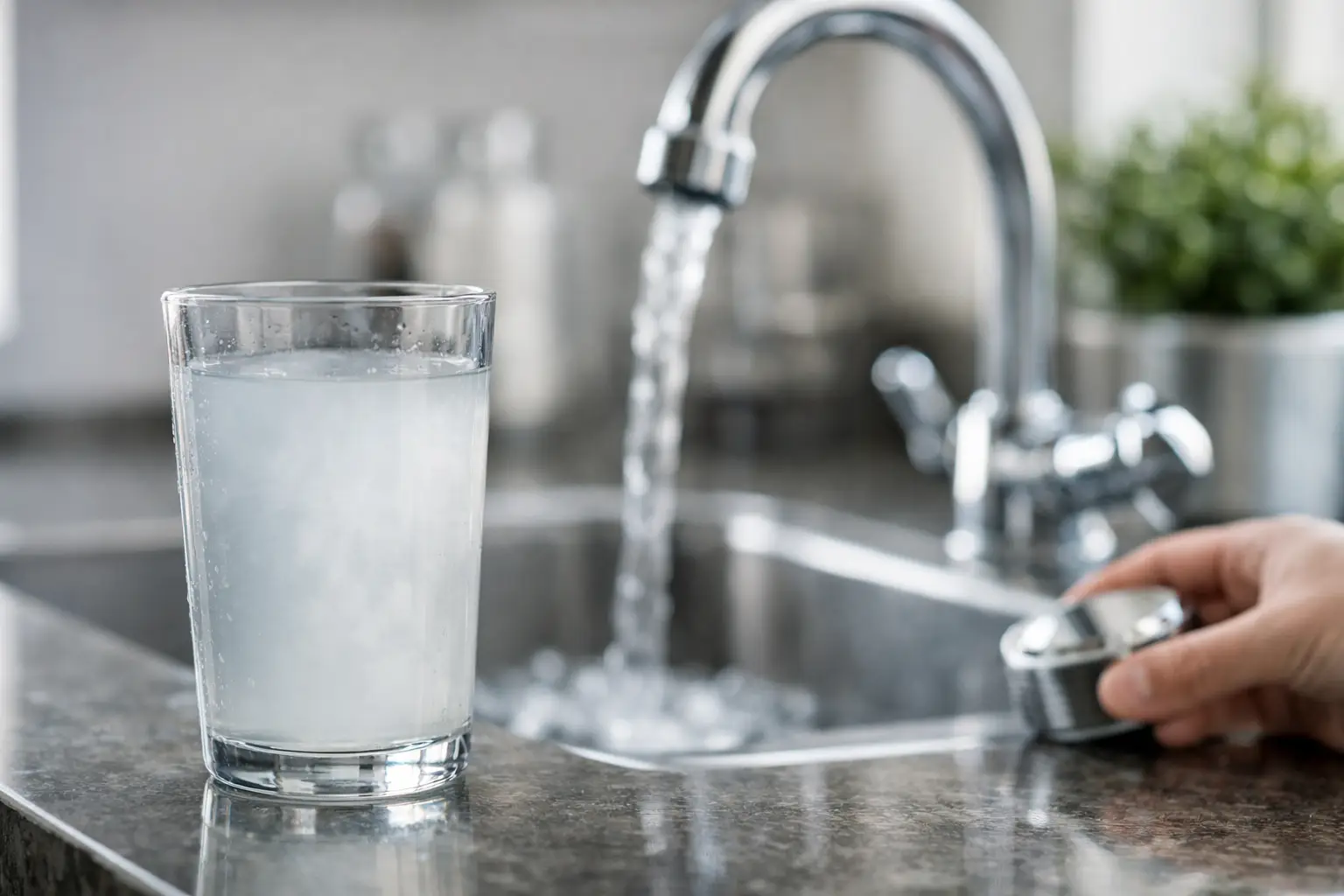
A glass of cloudy water can be unsettling, especially when it appears without warning. If you are asking, why is my water cloudy, the answer may be as simple as harmless trapped air or as significant as sediment, a water heater issue, or a problem in your plumbing system. The key is noticing when the cloudiness occurs, what it looks like, and whether it changes after the water sits.
Cloudy water is not automatically unsafe, but it should not be ignored when it is persistent, discolored, foul-smelling, or limited to certain fixtures. A quick check can help you decide whether to monitor the issue, service a treatment system, or schedule professional plumbing support.
Why Is My Water Cloudy? Start With a Glass Test
Fill a clear glass with cold water from the affected faucet and place it on the counter. Watch it for one to three minutes.
If the cloudiness begins at the bottom and rises upward, tiny air bubbles are usually the cause. This is common after plumbing work, a water supply interruption, changes in water pressure, or cold weather. The water should clear quickly and is generally not a health concern.
If particles settle to the bottom, you are more likely dealing with sediment, mineral material, or debris. If the water stays cloudy without clearing or settling, the source may be dissolved minerals, water treatment equipment, or an issue that needs testing.
Also compare cold and hot water. Cloudiness that appears only with hot water often points to the water heater. Cloudiness at one faucet can indicate a localized fixture or supply-line concern. Cloudiness throughout the property suggests a broader water supply, filtration, or plumbing issue.
Common Reasons Water Looks Cloudy
Trapped air in the water line
Tiny air bubbles are the most common reason water looks white, gray, or milky. Municipal water systems operate under pressure, and air can enter the supply after maintenance, nearby construction, a pressure change, or a temporary interruption in service.
This type of cloudiness clears from the bottom of the glass upward. It is usually temporary. Letting the cold water run for a few minutes may clear the line, although repeated or ongoing pressure changes should be checked by a plumbing professional.
Sediment and mineral buildup
Sand, silt, rust particles, calcium, and other mineral deposits can make water appear cloudy or leave visible material in a glass. This is more common in homes served by wells, older plumbing systems, or areas with hard water.
Sediment can also collect in plumbing fixtures, appliance supply lines, pressure tanks, and water heaters. Over time, it can reduce water flow, affect equipment performance, and shorten the life of fixtures and treatment systems.
Water softeners can help manage hardness minerals such as calcium and magnesium. However, a softener is not designed to solve every sediment issue. Depending on the source, the right solution may involve a sediment filter, water testing, plumbing repairs, or a combination of services.
A water heater issue
If only hot water is cloudy, the water heater deserves attention. Mineral scale and sediment naturally settle in the tank, particularly in hard-water areas. When the tank heats water, those materials can become suspended and travel to faucets.
A water heater that needs service may also produce popping sounds, deliver inconsistent hot water, or take longer to heat. Regular flushing can reduce sediment buildup, but the best approach depends on the unit’s age, condition, and maintenance history. Draining an older, neglected unit without professional assessment can sometimes expose existing problems.
Filter or reverse osmosis system concerns
Cloudiness can appear after changing a water filter, after a filter has reached the end of its service life, or when a reverse osmosis system needs maintenance. Fine carbon particles from a new filter may temporarily appear as dark specks. An improperly seated cartridge, clogged prefilter, exhausted membrane, or overdue sanitization can also affect water clarity and taste.
If your property uses reverse osmosis water for drinking, do not assume cloudy output is normal simply because the system is operating. Confirm that filters are installed correctly and replaced on schedule. A professional service visit can inspect the full system, including pressure, storage tank performance, connections, and water quality.
Plumbing corrosion or pipe debris
Older galvanized pipes, aging fittings, or corroded internal plumbing can release particles into the water. The result may look cloudy, yellow, brown, or reddish rather than milky white. This is especially noticeable first thing in the morning or after water has been sitting in the pipes for several hours.
Run cold water for several minutes and see whether the appearance improves. If discoloration returns regularly, affects multiple fixtures, or is paired with a metallic taste, low pressure, or recurring clogs, arrange a professional plumbing inspection. Replacing a faucet alone will not solve a problem originating deeper in the system.
Changes in the water supply
Municipal flushing, repairs to local water mains, heavy rain, seasonal runoff, or well disturbances can introduce temporary sediment or air into the supply. Neighbors may notice the same issue at the same time.
When cloudy water affects the entire building, ask whether nearby properties are experiencing it as well. For commercial facilities and multi-unit properties, document the timing, affected areas, and water appearance. That information helps determine whether the issue is internal plumbing or the incoming supply.
When Cloudy Water Needs Prompt Attention
Clear, white cloudiness caused by air is usually less urgent than water that is brown, black, yellow, green, oily, or strongly odorous. Stop using water for drinking and cooking until you understand the cause if you notice a sudden color change, chemical smell, sewage odor, visible particles that do not settle, or cloudiness after flooding or plumbing damage.
You should also act promptly if cloudy water is accompanied by low water pressure, leaking pipes, frequent drain backups, or unusual sounds from a water heater. These signs can point to a system issue that may worsen if left unresolved.
For people with compromised immune systems, infants, or anyone relying on private well water, caution is especially appropriate. Visual clarity cannot confirm that water is safe. Water can look clear and still contain contaminants, while harmless air bubbles can make otherwise safe water look cloudy. Testing is the right next step when there is a health concern or an unexplained change in water quality.
What You Can Do Before Scheduling Service
Start by checking whether the issue occurs with both hot and cold water, at one fixture or throughout the property. Use the glass test and take a photo if the cloudiness or particles are visible. This gives a technician useful information before arriving.
Next, inspect obvious service points. Make sure a recently changed filter is correctly installed, check whether filter maintenance is overdue, and note any recent plumbing repairs or utility interruptions. If you have a water softener, look for salt bridging, error messages, or a regeneration cycle that is not completing as expected.
Avoid using harsh drain chemicals or attempting major water heater work to solve a clarity issue. Those actions can damage equipment or complicate diagnosis. If sediment is recurring, pressure is inconsistent, or the source is unclear, professional evaluation is more efficient than repeatedly flushing lines without identifying the cause.
Professional Solutions Depend on the Source
The correct fix for cloudy water is not always a new filter. Air-related cloudiness may resolve on its own. Sediment may require filtration or plumbing maintenance. Hard water may call for softener service, while hot-water-only cloudiness may require water heater inspection and flushing. For a private well, testing and treatment should be based on the actual water results rather than guesswork.
For property managers and commercial operators, regular maintenance is often the practical choice. Scheduled inspection of filters, reverse osmosis systems, water heaters, and plumbing infrastructure can prevent a water-quality concern from becoming a tenant complaint, equipment failure, or business disruption.
If the water does not clear quickly, changes color, or returns after basic checks, treat it as useful evidence that your system needs attention. A clear diagnosis protects more than the water in your glass - it helps protect the plumbing, appliances, and people who rely on them every day.