
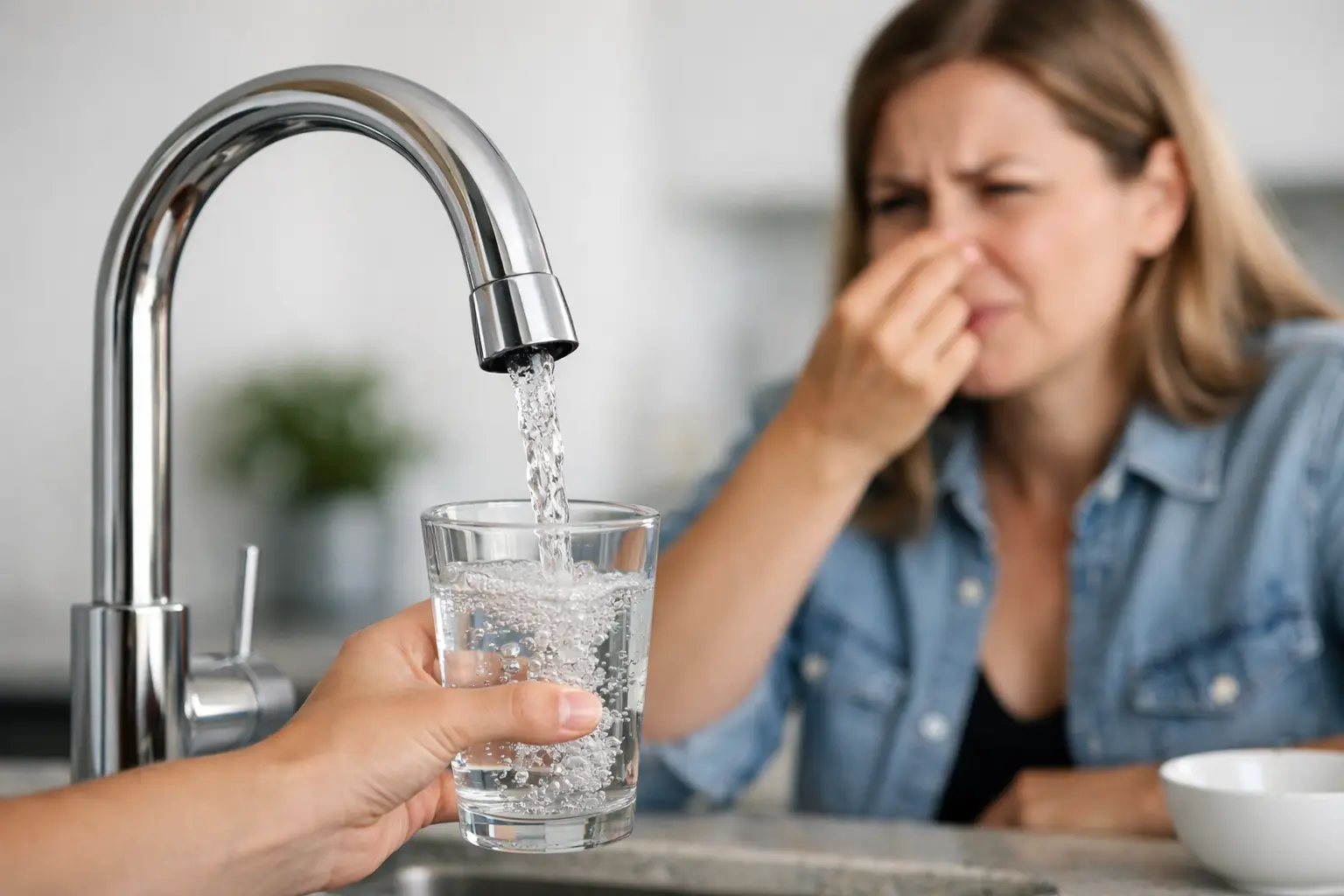
You turn on the faucet, fill a glass, and the first thing you notice is the smell. If you're asking, "why does my tap water smell," the answer usually comes down to one of three sources - your water supply, your plumbing system, or your drain. The good news is that many water odors are identifiable, and once you know the type of smell, it becomes much easier to pinpoint the next step.
Some odors are harmless but unpleasant. Others can signal a maintenance issue that should be addressed quickly, especially in a home or commercial property where water quality and system performance matter every day. The key is not to guess. Smell is a clue, and the type of odor often tells you where to look first.
Why does my tap water smell like rotten eggs?
A sulfur or rotten egg smell is one of the most common complaints. In many cases, it points to hydrogen sulfide gas in the water. This can happen naturally in groundwater, especially in well systems, but it can also develop inside plumbing components or water heaters.
If the smell is only present when you run hot water, the water heater is a likely suspect. A reaction inside the tank, often involving the anode rod and sulfate in the water, can create that sulfur odor. If both hot and cold water smell the same, the source may be your incoming water or bacteria growth somewhere in the plumbing system.
This is where context matters. A sulfur smell in one faucet can mean a localized issue. The same smell throughout the building suggests a broader water quality problem. In commercial settings, that distinction is especially important because a system-wide issue can affect multiple fixtures, tenant satisfaction, and operational continuity.
Why does my tap water smell like chlorine?
A bleach-like or pool-like smell usually means chlorine or chloramine is present in the water. Municipal water suppliers use disinfectants to control bacteria and keep water safe during distribution. That treatment is standard, but the smell can become more noticeable at certain times of year or after changes in local water treatment conditions.
In many cases, chlorine odor is not a plumbing emergency. It is often more of a water quality and comfort issue than a system failure. Still, if the smell is suddenly much stronger than usual, it is worth checking whether neighbors are noticing the same thing. If they are, the change may be coming from the municipal supply rather than your property.
If the odor is isolated to your building, stagnant water in pipes or issues with filtration equipment can make chlorine more noticeable. Homes and businesses with reverse osmosis systems, carbon filters, or other water treatment equipment should also consider whether filters are overdue for service. A neglected system can reduce performance and allow taste and odor issues to return.
Why does my tap water smell musty, earthy, or moldy?
An earthy or musty smell can come from organic material in the water source, but it can also come from biofilm buildup in pipes, faucet aerators, or drains. This is one of the more confusing odor categories because the smell may seem like it's coming from the water when it is actually coming from the sink area.
A simple test can help. Fill a clean glass with water, move away from the sink, and smell it there. If the odor disappears, the drain may be the issue rather than the water itself. Food residue, soap buildup, and bacteria in the drain can create strong odors that rise when water runs.
If the smell stays in the glass, then the water or the fixture is more likely involved. In that case, check whether the problem is limited to one faucet. One affected fixture can point to buildup in the aerator or branch line. Multiple affected fixtures suggest a larger plumbing or water quality concern.
Metallic, chemical, or sewage smells
A metallic smell often gets described as iron, copper, or even blood-like. Older plumbing can contribute to this, particularly if corrosion is present. Water with high iron content can also produce a metallic odor and taste. If you are also seeing reddish, brown, or blue-green staining, that adds another clue about what may be happening inside the plumbing system.
A chemical smell is less straightforward. It may reflect treatment chemicals in the local water supply, contamination near the water source, or interaction with plumbing materials. This is not a category to ignore, especially if the odor is new, persistent, or strong. Chemical-type smells deserve prompt evaluation because the cause is not always obvious at the fixture.
A sewage smell is often not coming from the water itself. More often, it points to a drain, venting issue, or dried-out trap. If the smell appears only around certain sinks or floor drains, the plumbing drainage system should be inspected. In commercial buildings, infrequently used fixtures are common culprits because trap seals can dry out and allow sewer gas to enter the space.
Why does my tap water smell only from one faucet?
When one faucet smells but the rest do not, the problem is usually local. That could mean buildup in the aerator, bacteria growth in the fixture, or a branch line that has been sitting unused. Guest bathrooms, break room sinks, and seasonal-use areas often develop odor issues simply because water does not move through them often enough.
Removing and cleaning the aerator is a reasonable first step. Flushing the faucet for several minutes may also help if the issue is stagnation. If the odor returns quickly, a deeper inspection may be needed to check the fixture connection, local piping, or nearby drain.
For property managers, a one-fixture odor issue is easy to underestimate. It may feel minor, but recurring complaints from the same unit or restroom often point to a maintenance condition that will not resolve on its own.
Hot water smells bad but cold water is fine
This pattern strongly suggests a water heater issue. Sediment buildup, bacterial growth, or reactions involving the tank's internal components can create noticeable odor in hot water lines while cold water remains unaffected.
Water heaters do not always fail dramatically. Sometimes they show problems through water quality changes first. If hot water has developed a sulfur, musty, or metallic odor, service should not be delayed. The fix may be as simple as flushing the tank or replacing a component, but it depends on the age of the heater, the water chemistry, and whether the unit has been maintained regularly.
In larger properties or commercial spaces, centralized hot water systems can spread the same odor across multiple fixtures. That makes fast diagnosis more important because the issue affects a wider portion of the building.
What you can check before calling a professional
Start by narrowing down the pattern. Check whether the smell is in hot water, cold water, or both. Test more than one faucet. Smell a glass of water away from the sink to rule out drain odors. Notice whether the issue is constant or happens at certain times of day.
It also helps to ask whether this is a sudden change or a long-standing issue. Sudden changes often point to a recent shift in water supply conditions, plumbing performance, or filtration effectiveness. Long-term odors may reflect untreated water quality issues or aging infrastructure.
If you have filters, softeners, or RO equipment, consider the maintenance history. Water treatment systems need regular service to perform correctly. When they are overdue, odor complaints often follow.
When to call for expert help
If the smell is strong, widespread, recurring, or difficult to identify, it is time for a professional assessment. The same applies if odor appears alongside discoloration, low pressure, staining, or changes in taste. Those combinations can indicate a broader system issue rather than a simple fixture problem.
Professional diagnosis matters because water odor is not one-size-fits-all. A sulfur smell could be a heater issue, bacterial growth, or source water conditions. A chlorine smell might be normal municipal treatment, or it might be telling you your filtration system is no longer doing its job. The right solution depends on where the problem starts.
For homes, that may mean plumbing inspection, water heater service, or water treatment support. For commercial properties, it often means taking a wider view of fixture use patterns, building plumbing layout, and treatment equipment performance. Providers like Plumingo approach these cases from both angles - plumbing function and water quality - which is often what odor issues require.
Water that smells off is not something to ignore or simply get used to. Even when the cause is minor, the smell is telling you something about the condition of your water or your system. The sooner you identify that signal, the easier it is to restore confidence every time you turn on the tap.