
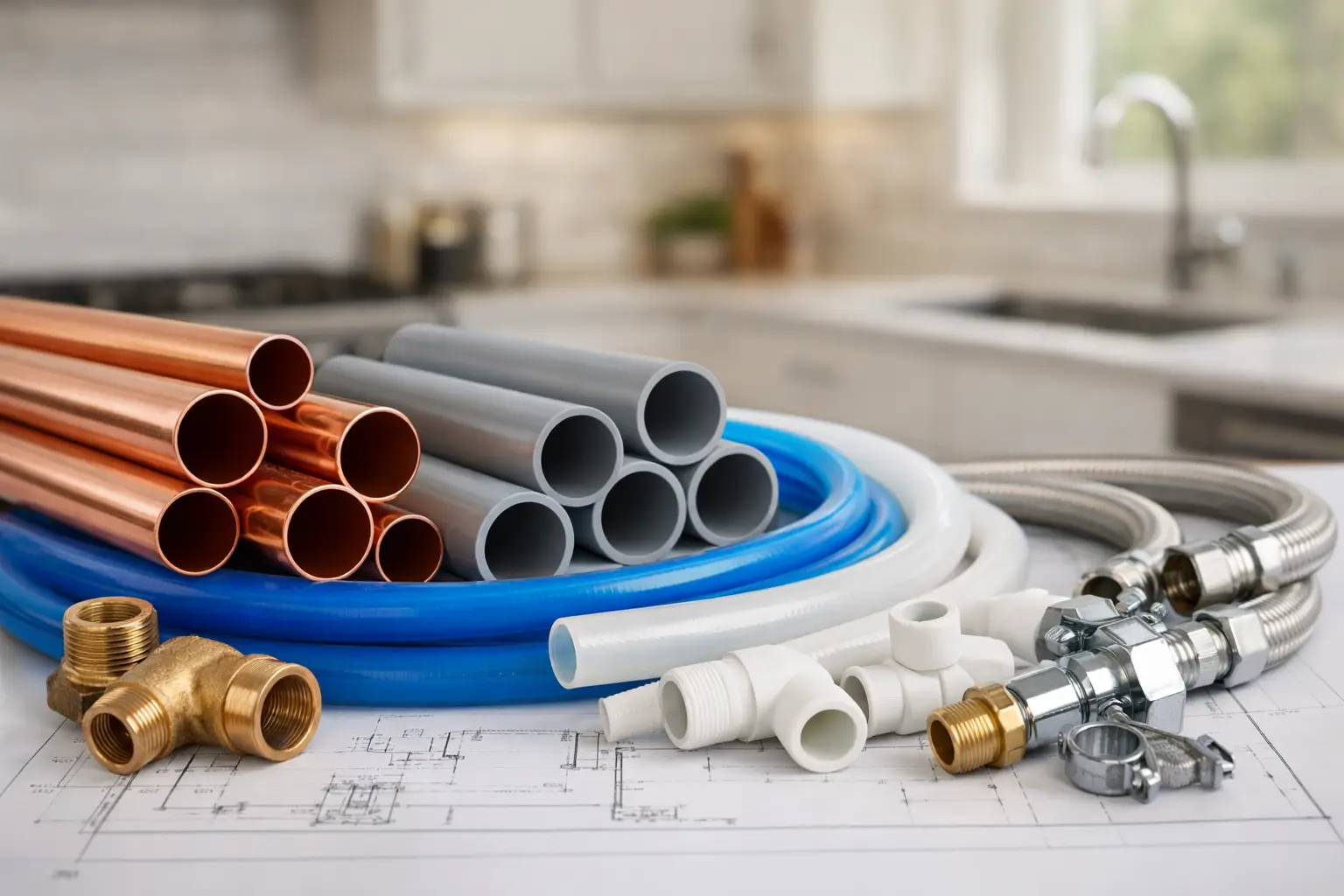
If you are asking which pipe is best for home plumbing, the real question is usually this: best for what - lower cost, longer life, better freeze resistance, or cleaner water delivery? In most homes, there is no single perfect pipe for every line. The right choice depends on where the pipe is going, how your water behaves, your local code, and how much risk you want to take on future repairs.
For most residential supply lines, PEX is now the practical first choice. It is flexible, cost-effective, faster to install than copper, and generally handles freezing conditions better because it can expand somewhat before splitting. That matters in cold-weather regions and in homes where pipes pass through exterior walls, basements, crawl spaces, or other temperature-sensitive areas.
Still, PEX is not always the final answer. Copper remains a strong premium option in many homes, especially where long-term durability and high heat tolerance matter. CPVC can still appear in certain systems, but it is less forgiving during installation and over time. For drain, waste, and vent lines, the conversation changes entirely. There, PVC or ABS is usually the standard, not PEX or copper.
Which pipe is best for home plumbing supply lines?
If you are choosing water supply piping for a house, the main contenders are PEX, copper, and CPVC. Each has legitimate use cases, and each comes with trade-offs.
PEX: the best fit for most modern homes
PEX works well because it solves several common homeowner concerns at once. It is affordable, resists corrosion, installs efficiently, and can snake through framing with fewer joints than rigid pipe. Fewer fittings usually mean fewer potential leak points. That alone makes it attractive in remodels and repipes.
PEX also performs well in areas where freeze events are a concern. It is not freeze-proof, and it can still burst under the wrong conditions, but it tends to be more forgiving than rigid materials. In practical terms, that gives homeowners a little more protection if temperatures drop unexpectedly.
The main cautions with PEX are sunlight exposure and installation quality. It should not sit exposed to UV light for long periods, and poor connections can create problems that have nothing to do with the material itself. The best result depends on proper design, the correct fitting system, and a qualified installer.
Copper: durable, proven, and still premium
Copper has a long track record, and that matters. Many property owners trust it because it has been used successfully for decades and handles high temperatures extremely well. It is also non-plastic, which some homeowners prefer for personal or water-quality reasons.
That said, copper is typically more expensive to buy and install. Labor is higher, the material cost is higher, and in some water conditions copper can develop pinhole leaks over time. If your water is highly acidic or otherwise aggressive, copper may not be the best long-term value without first understanding the water chemistry.
Copper often makes sense when durability, heat resistance, and a more traditional premium system are priorities. But it is rarely the budget-friendly answer.
CPVC: usable, but less forgiving
CPVC is still found in residential plumbing, but it is usually not the first recommendation for a full modern repipe unless there is a specific reason to use it. It can carry hot and cold water and is generally less expensive than copper, but it is more brittle than PEX and can become a concern as systems age.
In colder environments or in homes where impact resistance matters, brittleness is a real drawback. Repairs can also be less forgiving if the pipe becomes fragile with age. CPVC is not automatically a bad choice, but it is often a second-tier option when compared with PEX for flexibility and copper for premium durability.
Which drain pipe is best for home plumbing?
When people ask which pipe is best for home plumbing, they often mix water supply piping with drain piping. They are not interchangeable, and the best material depends on the job.
For drain, waste, and vent systems, PVC is widely used because it is reliable, affordable, and resistant to corrosion. It is suitable for most residential drain applications and has become the standard choice in many markets.
ABS is another option for drain lines. It is lightweight and durable, and in some areas it remains common. The difference often comes down to local code, installer preference, and the existing system in the home. If you are matching or extending an older drain layout, compatibility matters just as much as price.
Cast iron can still be the right choice in certain higher-end or noise-sensitive applications because it reduces sound better than plastic drain pipe. If a quiet interior drainage system matters, especially in multi-story homes, cast iron deserves a look. It costs more, but the noise reduction can be worth it.
Water quality changes the answer
Pipe selection is not only about structure. Water quality can change what performs best over time.
Hard water, acidic water, sediment, and high mineral content all affect plumbing materials differently. Copper may struggle in certain aggressive water conditions. Scale buildup can narrow older piping. Fixtures and valves may wear faster if the water chemistry is not managed properly.
This is one reason pipe recommendations should not be made in isolation. If a home has hard water, for example, investing in the right supply piping while ignoring water treatment can limit the value of the upgrade. A strong plumbing system works best when the water entering it is also being managed correctly.
Climate and location matter more than most homeowners expect
A pipe that performs well in one region may be a weaker choice in another. Cold-weather performance, code acceptance, and installation conditions all shape what makes sense.
In homes with basements, crawl spaces, garages, or exterior wall runs, freeze resistance matters. PEX usually has an advantage there. In homes where piping is exposed to direct sunlight or installed outdoors, UV exposure becomes a concern and can rule PEX out unless it is fully protected.
Local plumbing code also matters. Even if a material is technically strong, it still needs to be approved for the application in your area. A good recommendation is always code-aware, not just product-aware.
Cost vs. value: what actually saves money?
The cheapest pipe is not always the least expensive system over time. Homeowners often focus on installation cost, but long-term value comes from reliability, lower leak risk, easier service, and fit for the building.
PEX usually wins on installed cost and practical value for a typical single-family home. Copper costs more up front but may appeal to owners who want a traditional premium material and are comfortable with the price. CPVC can reduce initial cost in some cases, but that advantage may fade if durability or repair concerns show up later.
If this is a whole-home repipe, labor efficiency matters almost as much as material price. A pipe that installs faster with fewer joints can reduce disruption and lower total project cost.
Best pipe by situation
If you want the clearest answer, it looks like this.
For most home water supply lines, PEX is the best overall choice because it balances cost, durability, and freeze resistance.
For homeowners who want a premium traditional material and are prepared for higher cost, copper remains a strong option.
For drain lines, PVC is typically the best standard choice, with ABS or cast iron making sense in specific cases.
For homes with unusual water conditions, the best pipe may depend on testing the water first and addressing treatment needs alongside plumbing work.
When to replace instead of repair
If your home has recurring leaks, discolored water, pressure changes, visible corrosion, or aging materials such as galvanized steel, pipe selection stops being a theory question. It becomes a system decision.
Partial repairs can make sense when the issue is isolated. But if the piping is reaching the end of its service life, repeated spot fixes often cost more in the long run. In those cases, choosing the right replacement material gives you a chance to improve reliability, water delivery, and future service access at the same time.
A professional inspection is especially valuable if you own an older home, manage a multi-unit property, or are planning renovations that will open walls anyway. That is usually the best moment to make a smart pipe upgrade instead of paying twice.
The best plumbing pipe is the one that fits your home’s water, layout, climate, and service goals without creating avoidable problems later. If you are unsure, start with the condition of your current system and the water moving through it. The right answer is rarely the loudest product claim. It is the material that performs reliably, year after year, in your specific home.