
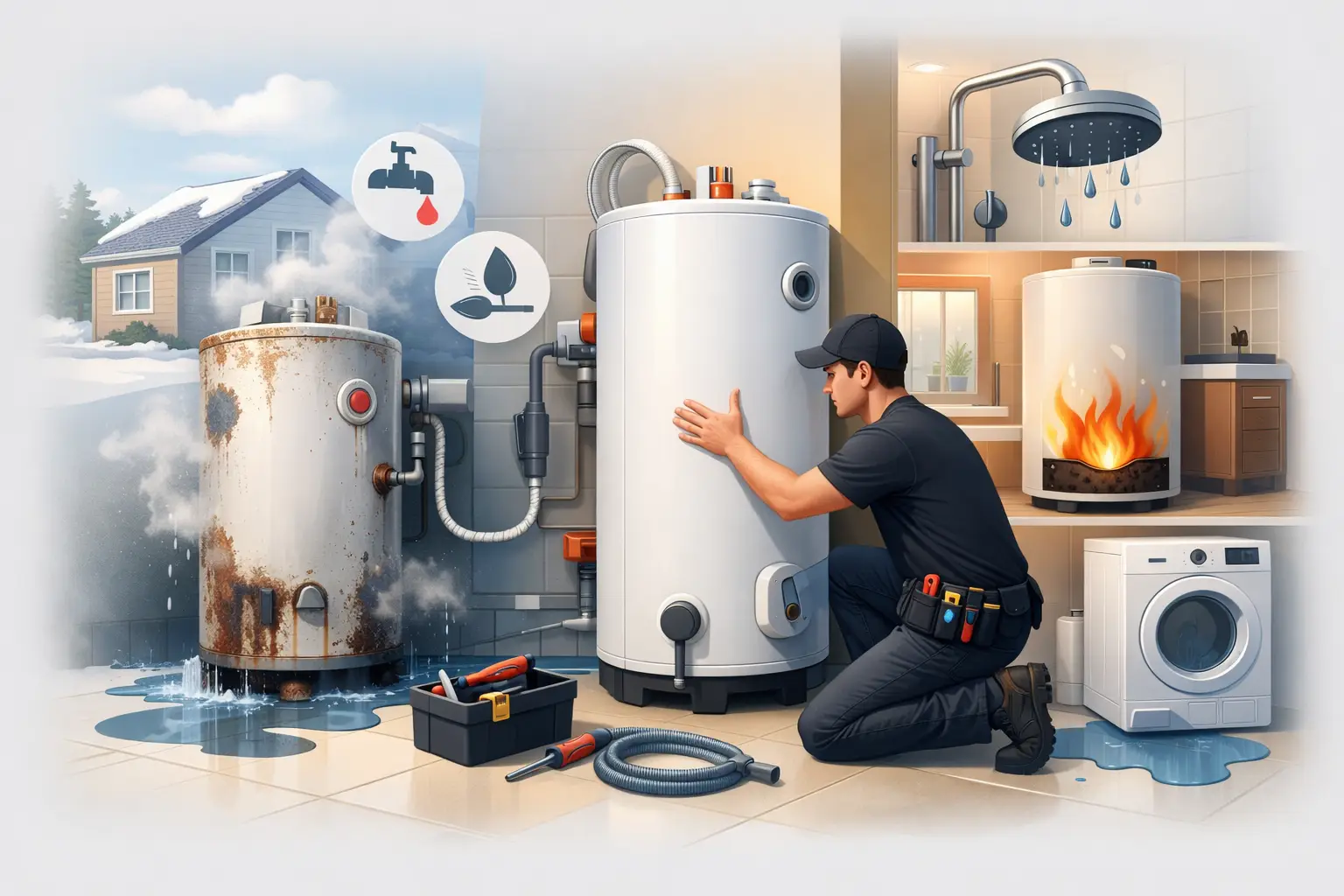
A cold shower is an obvious prompt to ask when to replace a water heater, but it is rarely the only clue. Most replacements are easier to plan when you notice gradual changes in performance, efficiency, or the condition of the tank. The right decision depends on the unit’s age, fuel type, maintenance history, and the cause of the problem.
A professional inspection can distinguish a repairable component issue from a tank that has reached the end of its useful service life. That matters because replacing a working water heater too early adds unnecessary cost, while waiting too long on a failing tank can create avoidable disruption.
When to Replace a Water Heater
For many conventional tank water heaters, the planning window begins around eight to 12 years of service. Some units last longer with favorable water conditions, proper installation, and regular maintenance. Others wear out sooner, particularly in areas with hard water or where the tank has not been flushed.
The manufacture date is usually printed on the unit’s rating plate or can be identified from the serial number. Age alone does not require replacement. A well-maintained nine-year-old heater with steady output and no corrosion may continue to serve the property well. But once an older tank begins leaking, producing rusty water, or requiring repeated repairs, replacement often becomes the more practical choice.
Tankless water heaters generally have a longer expected service life, often 15 to 20 years or more with regular descaling and service. Their components can frequently be repaired individually, so a performance issue does not automatically mean the entire system should be replaced.
Eight Signs Your Water Heater Needs Attention
1. Water is leaking from the tank
Water around a heater deserves a prompt inspection, but the source matters. A loose connection, a failing temperature and pressure relief valve, or condensation may be repairable. A leak from the tank body itself is different. Internal corrosion can create small openings in the steel tank, and a tank leak cannot be permanently repaired.
If the tank is leaking, replacement is usually the appropriate solution. Avoid assuming every puddle means the tank has failed, though. A technician can identify the source before a replacement decision is made.
2. Hot water has a rusty or metallic appearance
Brown, reddish, or metallic-smelling hot water can point to corrosion inside the tank or worn internal parts. First, compare the hot and cold water. If only hot water is discolored, the heater deserves attention. If both are affected, the issue may be in the plumbing supply or another part of the system.
In some cases, replacing the anode rod can slow corrosion and extend the heater’s life. If rust has progressed inside an aging tank, replacement may offer better long-term value.
3. The water heater is nearing or past its expected age
A water heater does not need to fail before you begin planning. For a household or commercial property that depends on consistent hot water, an older unit is worth evaluating before it becomes unreliable. Consider its age alongside recent repair history, energy use, hot-water capacity, and visible condition.
Planning ahead also gives you time to select the right capacity and fuel option rather than making a rushed decision. This is especially useful for property managers coordinating access, tenant needs, and building maintenance schedules.
4. Rumbling, popping, or banging comes from the tank
Mineral sediment settles at the bottom of a tank over time. When water heats beneath that buildup, it can create popping or rumbling sounds. A flush may help if the sediment is limited and the tank is otherwise in good condition.
Heavy, long-standing sediment reduces heating efficiency and can place extra stress on the tank. In areas with hard water, routine flushing and water softener maintenance can help reduce mineral accumulation. If an older unit remains noisy or underperforms after service, replacement may be the sensible next step.
5. Hot water runs out sooner than it used to
A shorter supply of hot water does not always mean you need a new heater. An electric unit may have a failed heating element, while a gas unit may have a burner, thermostat, or control issue. These repairs can be worthwhile, particularly on a newer system.
If the unit is older and the available hot water has steadily declined, sediment or internal wear may be reducing usable tank capacity. A professional assessment can help determine whether a repair will restore performance or simply delay a larger problem.
6. Repairs are becoming more frequent
One repair is part of normal ownership. Repeated service calls for leaks, controls, valves, ignition problems, or declining output tell a different story. As repair needs increase, it is useful to compare the cost of the next repair with the age and condition of the heater.
There is no fixed rule that every repair means replacement. A newer heater with a single failed part is often worth repairing. An aging unit with multiple concerns may be a better candidate for a planned upgrade.
7. Your energy costs have risen without another clear cause
Water heating can account for a meaningful share of a building’s energy use. When a tank loses efficiency due to sediment, aging parts, or heat loss, it may run longer to deliver the same amount of hot water.
Utility costs can rise for many reasons, so this sign should not be used alone. Review usage patterns, seasonal changes, and the condition of the appliance. If the heater is older and other warning signs are present, improved efficiency may be a valid reason to consider replacement.
8. The heater no longer matches the property’s needs
A water heater can be in working condition and still be the wrong fit. A growing household, renovated bathroom, commercial kitchen addition, or change in occupancy can place more demand on the system than it was designed to handle.
In that situation, replacement is an opportunity to size the equipment correctly. A larger tank is not always the answer. The right option depends on peak demand, fuel availability, space, venting, electrical capacity, and how the property uses hot water throughout the day.
Repair or Replace: How to Make a Practical Decision
Start with the condition of the tank. A leaking or severely corroded tank generally calls for replacement, while a failed valve, thermostat, heating element, or anode rod may be repaired. Next, consider age. Repairs on a relatively new unit often make sense; repairs on a unit near the end of its expected service life require a closer cost comparison.
Also consider water quality. Hard water can shorten equipment life by creating scale inside tank heaters, tankless heat exchangers, fixtures, and appliances. If mineral buildup is contributing to repeated water-heater problems, addressing the water treatment system may protect the replacement unit as well.
For commercial operators, downtime and demand patterns are equally relevant. A unit that works intermittently may still create operational problems for staff, customers, or tenants. Scheduled assessment and replacement can be more manageable than waiting for a performance issue to escalate.
What to Expect When Replacing a Water Heater
A proper replacement begins with confirming the existing unit’s capacity, fuel source, venting, and installation requirements. The replacement should be sized for real demand rather than simply matching the old tank. A household with additional bathrooms or a business with changing operations may need a different solution than the original installation.
Installation should also include a review of shutoff valves, drain connections, venting where applicable, expansion control, and temperature and pressure relief protection. These details support safe, reliable operation and help the new system perform as intended.
Before work begins, ask for a clear explanation of the recommended model, any required upgrades, the scope of installation, and expected maintenance. Transparent information makes it easier to compare repair and replacement options with confidence.
A water heater rarely chooses a convenient time to need attention. Watching for changes early, maintaining the unit, and getting an expert opinion when symptoms appear gives you more control over the decision. For homeowners and property managers in Kitchener, Plumingo can help assess the system and recommend the repair or replacement path that fits the property’s condition and hot-water needs.