A reverse osmosis system can keep producing water long after its filters have stopped doing their best work. That is why the question of when should RO filters be replaced is not answered by taste alone. Filter age, household water use, local water conditions, and the condition of the RO membrane all affect the right service schedule.
For most homes, replacing pre-filters and post-filters on time is straightforward preventive maintenance. It protects water quality, maintains good flow at the faucet, and helps the more expensive membrane last longer. For property managers and commercial operators, a documented replacement schedule also helps keep water treatment equipment dependable across multiple occupants or points of use.
When Should RO Filters Be Replaced?
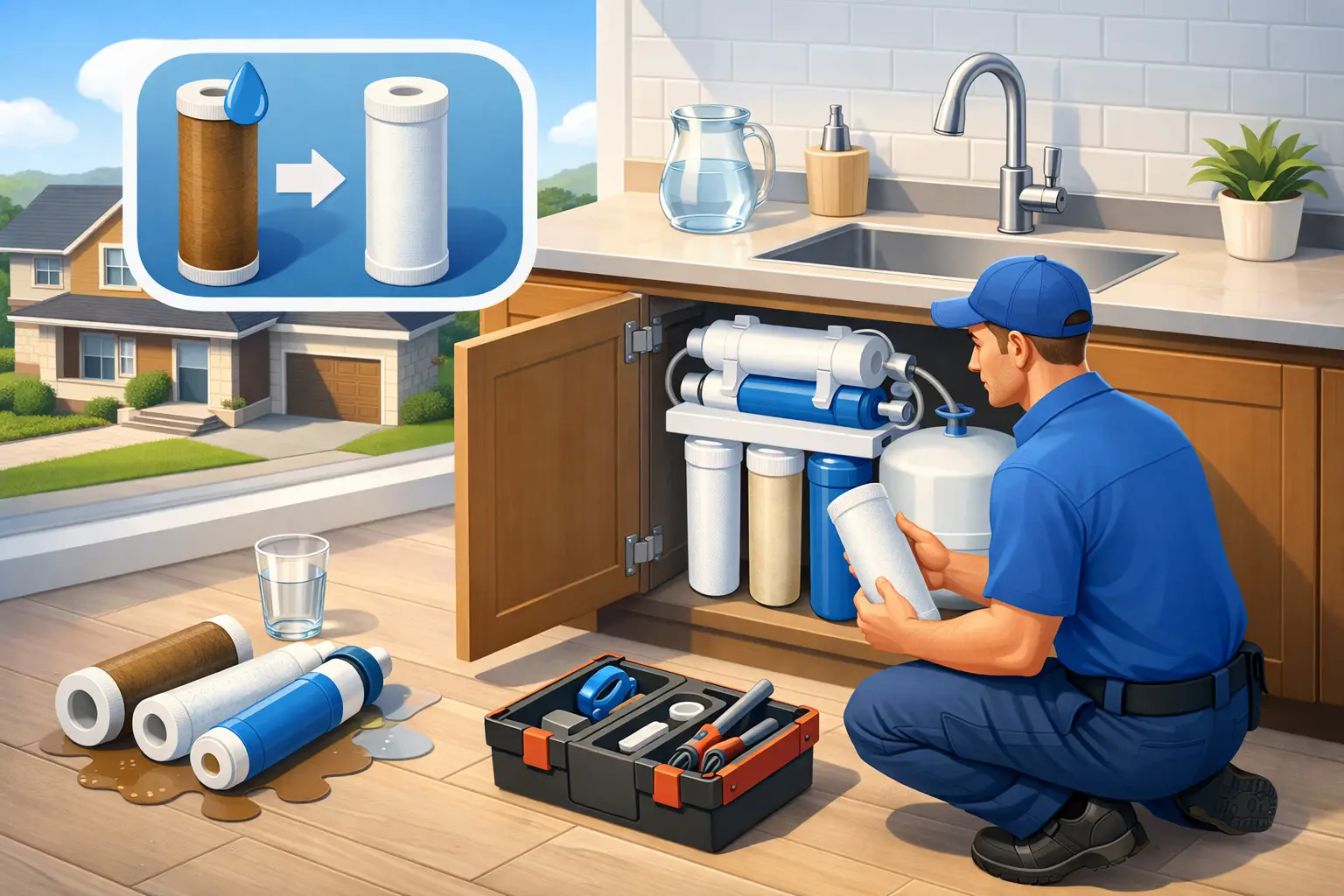
Most under-sink RO systems have several stages, and they do not all need replacement at the same time. A typical system includes a sediment pre-filter, carbon pre-filter, RO membrane, and carbon post-filter. Each part has a different job and a different expected lifespan.
As a general guideline, sediment and carbon pre-filters are commonly changed every 6 to 12 months. The RO membrane often lasts 2 to 3 years, while the post-filter is usually replaced once a year. These are useful planning ranges, not automatic rules. A system serving a large family, a rental unit with high occupancy, or a business break room may need service sooner than a lightly used system.
The manufacturer’s specifications for your specific unit should always guide the final schedule. Filter sizes, water pressure requirements, and source-water quality can vary significantly between systems.
The sediment pre-filter: usually every 6 to 12 months
The sediment filter catches sand, silt, rust particles, and other suspended material before water reaches the carbon filter and membrane. In areas with visible sediment, aging plumbing, or water supplied by a private well, it can load up faster.
A heavily used sediment filter can restrict water flow. Replacing it on schedule is one of the simplest ways to prevent unnecessary strain on the RO system. If the filter housing is clear, discoloration may be visible, but do not rely on appearance alone. Fine particles can reduce performance before a cartridge looks completely dark.
Carbon pre-filters: usually every 6 to 12 months
Carbon pre-filters are especially important for municipal water supplies because they reduce chlorine and certain other compounds. Chlorine can damage many RO membranes over time, so delaying a carbon filter replacement may shorten membrane life even if the system still appears to work.
Carbon filters do not always provide an obvious visual sign that they are exhausted. For that reason, scheduled replacement is more reliable than waiting for a change in taste or odor.
The RO membrane: usually every 2 to 3 years
The membrane is the central treatment component. It separates a high percentage of dissolved solids, including many salts, minerals, and contaminants, from the product water. It can last longer with proper pre-filter maintenance and stable water pressure, but it can also wear out early where source water has high dissolved solids or challenging chemistry.
Membrane replacement should be based on performance whenever possible. A water-quality test or total dissolved solids, or TDS, reading can help determine whether the membrane is still rejecting dissolved material effectively. A professional service technician can compare the incoming-water reading with the treated-water reading and assess the system as a whole.
The post-filter: usually every 12 months
The carbon post-filter is the final stage before water reaches the faucet. It is designed to improve the finished water’s taste and smell. Because it handles already-treated water, it may look clean even when it is due for replacement.
Replacing the post-filter annually helps keep drinking water fresh and avoids letting one overlooked cartridge undermine the experience of an otherwise well-maintained system.
Signs Your RO Filters May Need Service Sooner
Time is a useful guide, but changes in system performance deserve attention. The most common sign is reduced water flow from the RO faucet. This can be caused by clogged pre-filters, a full storage tank, low feed-water pressure, or an issue with the tank itself. A filter replacement may solve the problem, but it is worth diagnosing the cause before replacing parts unnecessarily.
A noticeable change in taste or odor is another reason to inspect the system. This may point to an exhausted carbon filter, but it can also come from a stale storage tank, a faucet component, or changes in the incoming water supply. If the water has an unusual odor, color, or appearance, pause use for drinking until the cause is assessed.
Other signs include a system that runs continuously, takes much longer than usual to refill its tank, or produces more wastewater than expected. These issues can relate to filters or the membrane, but they can also involve the automatic shutoff valve, drain line, pressure, or tank pressure. Replacing every filter without checking the system may add cost without correcting the underlying issue.
What Changes the Replacement Schedule?
Filter schedules are not one-size-fits-all because the amount and type of material entering the system changes from property to property. Municipal water is typically treated with chlorine or chloramine, while well water may contain more sediment, iron, hardness minerals, or other naturally occurring material. A water softener upstream of an RO system can also reduce scale exposure and support membrane performance where hard water is present.
Water use matters just as much. A single resident who uses RO water mainly for drinking and cooking puts far less demand on a system than a busy household filling bottles, preparing meals, and supplying a refrigerator water line. Commercial systems need a maintenance plan based on actual daily volume, not a residential calendar estimate.
Seasonal changes can play a role as well. Construction activity, municipal flushing, heavy rain, and changes to a well can increase sediment in incoming water. If you notice a sudden drop in flow after a change in the water supply, schedule an inspection rather than assuming the membrane has failed.
Why Timely Filter Changes Protect the Whole System
The least expensive filters in an RO system protect the components that cost more to repair or replace. Sediment and carbon pre-filters reduce the burden on the membrane. When those filters are overdue, the membrane must work under less favorable conditions and may lose effectiveness sooner.
Timely service can also help prevent leaks associated with worn O-rings, improperly seated cartridges, or aging filter housings. That does not mean every routine filter change requires major parts replacement. A qualified technician should inspect seals and fittings, replace only what is worn, and verify that the system is operating correctly after service.
For homes and facilities that depend on consistent drinking water, professional maintenance provides more than a cartridge swap. It can include checking incoming pressure, tank pressure, drain flow, membrane performance, and the condition of the faucet and supply connections. This is particularly useful when a system has been neglected, has unknown service history, or is producing less water than it used to.
A Practical RO Maintenance Routine
Keep a simple record of each filter replacement, including the date, filter type, and any performance concerns. This is useful for homeowners and essential for property managers overseeing multiple units. Set reminders based on the filter manufacturer’s recommended interval, then adjust the timing if water use or system performance indicates an earlier change is needed.
When changing filters, use the cartridges specified for the unit and follow the system’s flushing instructions. Filters that are installed incorrectly or not flushed as directed can affect taste, flow, and service life. If you are unsure which cartridge fits your system, or if the housings are difficult to open, professional service is a sensible option.
A good maintenance visit should leave you with clear information: what was replaced, what was inspected, whether membrane performance is acceptable, and when the next service is likely due. Plumingo provides RO filter service with that practical focus, helping homeowners and businesses maintain water treatment equipment without guesswork.
If your filters are approaching their scheduled interval, arrange service before water flow or quality becomes a concern. Consistent maintenance is usually simpler, more predictable, and easier on the entire RO system than waiting for performance to decline.