
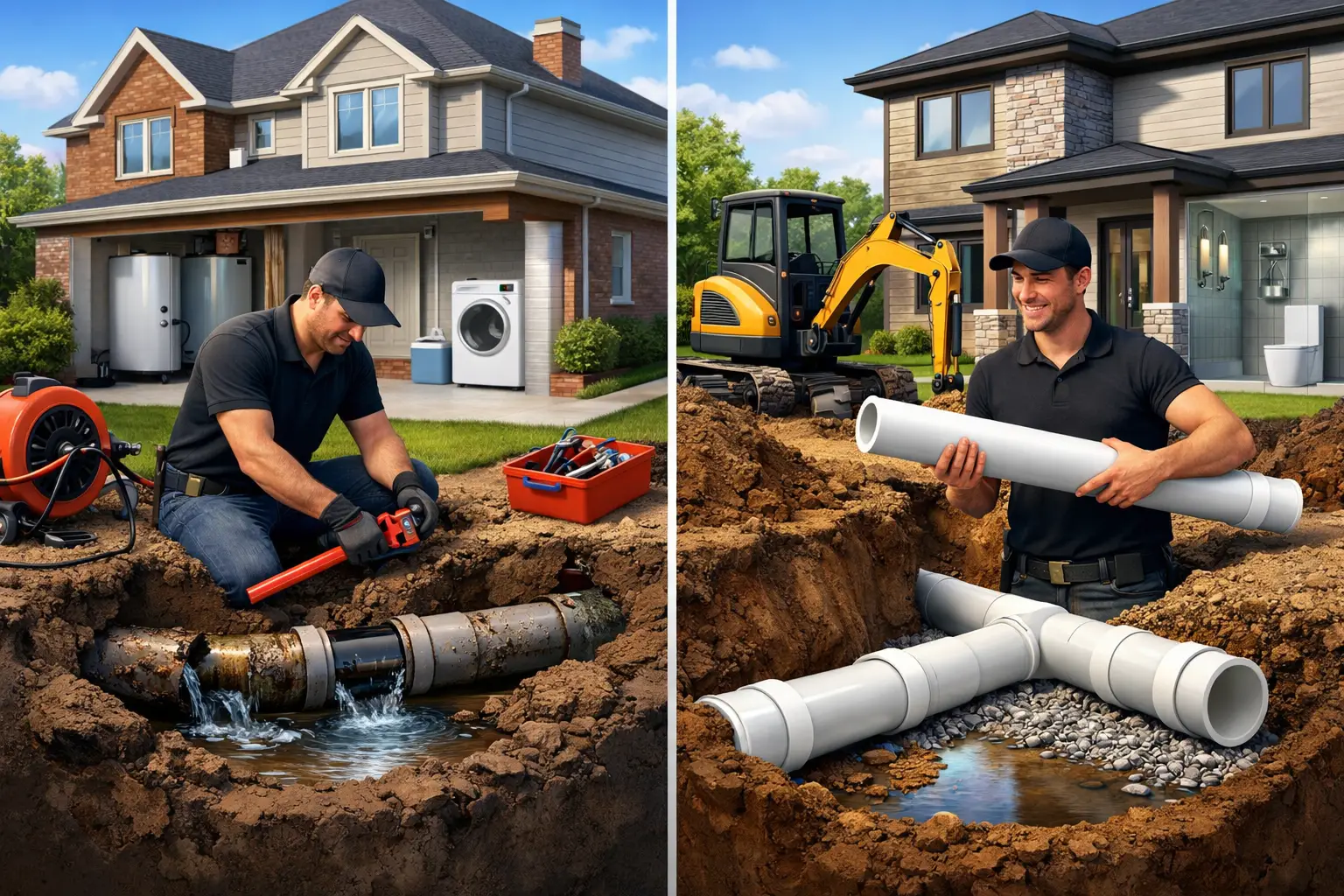
A slow floor drain, recurring backup, or wet area near a foundation does not automatically mean a full sewer replacement is needed. Waterloo drain restoration begins by identifying the condition of the pipe, the source of the blockage, and the most practical repair path for the property. A clear diagnosis protects both your drainage system and your budget.
For homeowners, property managers, and commercial operators, the right decision is rarely based on one symptom alone. Drain performance, pipe material, age, access points, root intrusion, and past repair history all matter. The goal is to restore dependable flow with the least disruption that still delivers a lasting result.
What Drain Restoration Actually Means
Drain restoration is the process of returning a damaged, restricted, or aging drain line to proper working condition. It may involve professional cleaning, removing roots, repairing a localized break, relining a pipe, or replacing a section that can no longer perform reliably.
It is not simply another word for replacement. A drain with buildup or roots may respond well to cleaning and follow-up maintenance. A pipe with one separated joint may only need a targeted repair. A line with extensive collapse, severe offsets, or repeated failures may require more substantial work. The inspection findings should determine the scope.
For many properties in Waterloo and nearby Kitchener, older underground drain lines can face a combination of aging materials, soil movement, tree roots, and long-term scale buildup. These conditions do not always show themselves at once. A fixture may drain slowly for months before a backup or persistent odor makes the problem difficult to ignore.
Start With a Camera Inspection
A camera inspection is the foundation of sound Waterloo drain restoration. A technician feeds a specialized camera through an accessible drain opening to view the pipe interior and locate the issue. This reduces guesswork and helps distinguish between a simple obstruction and structural damage below the surface.
The inspection can reveal common conditions such as root growth at joints, grease or mineral buildup, cracked pipe walls, bellies where water collects, displaced sections, and foreign objects caught in the line. It also helps establish where the concern is located - inside the building drain, beneath the property, or in a connection leading outward.
For a commercial property, camera documentation can be especially useful when planning maintenance, coordinating with facility teams, or evaluating whether a recurring issue affects one fixture group or a larger branch line. For homeowners, it provides a clearer basis for choosing repair rather than approving work based on assumptions.
A camera inspection has limits. Heavy standing water, dense debris, or a fully blocked line can obscure the view until cleaning is completed. In those cases, professional drain clearing may come first, followed by a second inspection to assess the pipe itself.
Choosing the Right Restoration Method
The most appropriate restoration method depends on the pipe condition and the cause of the drainage issue. A qualified recommendation should explain what was found, why a particular approach fits, and what level of future maintenance may still be needed.
Professional Cleaning for Buildup and Roots
When a pipe is structurally sound but restricted by grease, sludge, scale, or roots, professional cleaning may restore normal flow. Mechanical cleaning and high-pressure water methods can remove material from the pipe wall more thoroughly than store-bought chemical products.
Cleaning is often the right first step for a maintained commercial kitchen line, a laundry drain with soap residue, or an exterior line affected by manageable root intrusion. It is not a permanent structural repair for cracked or collapsed pipe. If roots are entering through damaged joints, cleaning can improve performance while the underlying defect still needs to be monitored or repaired.
Chemical drain cleaners are generally not a substitute for professional diagnosis. They may not reach the actual blockage, can be hard on certain plumbing components, and can create safety concerns when mixed with other products. A recurring clog is better treated as a system issue than a product-selection issue.
Targeted Repair for Localized Damage
A localized excavation and repair may be suitable when the problem is limited to one accessible section of pipe. This option can make sense for a known break, a severely offset joint, or a section damaged by roots or ground movement.
Targeted repair avoids replacing functional sections of the drainage system. However, it is only as effective as the condition of the surrounding pipe. If the camera shows multiple weak areas across an older line, repairing one spot may solve the immediate concern without eliminating the risk of future failures elsewhere.
Access also affects the decision. A repair beneath an open yard is different from one beneath a finished basement, parking area, or landscaped entrance. The restoration plan should account for both plumbing work and the practical impact on the property.
Pipe Lining for Selected Drain Lines
Pipe lining can restore some damaged pipes from within, often reducing the amount of excavation required. A liner is installed inside the existing pipe to create a new, continuous inner surface. This can be useful for certain cracks, joint gaps, and root-entry points where the host pipe still has enough shape and stability to support the process.
Lining is not right for every drain. A fully collapsed line, a pipe with major misalignment, or a line with severe diameter loss may need a different solution. The pipe must also be properly cleaned and evaluated before lining is considered. A reliable contractor should explain whether the line qualifies rather than treating lining as a default answer.
Replacement When the Pipe Cannot Be Restored
Replacement becomes the practical choice when the pipe has extensive collapse, repeated structural failures, widespread deterioration, or a layout that no longer serves the property well. While replacement is more involved, it can provide a dependable long-term solution when repair would only delay another failure.
The key is proportion. A single localized defect does not always justify replacing an entire drain line. At the same time, repeated spot repairs on a badly deteriorated system can become more disruptive and costly over time. Inspection evidence and the property’s plans should guide the decision.
Signs Your Drain Needs Professional Attention
Some drain concerns can wait for a scheduled service visit, while others should be assessed promptly to prevent property damage. Repeated backups, multiple fixtures draining slowly at the same time, gurgling sounds, sewage odors, water around a floor drain, or wastewater appearing at a lower-level fixture all warrant professional evaluation.
A single slow sink may be a fixture-level issue. Slow drains throughout the building point more often to a shared branch or main line. That distinction matters because treating only the visible symptom can leave the underlying restriction in place.
Property managers should also pay attention to patterns. If a stack, washroom group, or kitchen area needs frequent clearing, recording the location and timing can help identify whether use habits, grease loading, roots, or pipe condition are contributing to the problem.
Protecting a Restored Drain System
Once a drain line is restored, practical habits help preserve its performance. Keep wipes, paper towels, hygiene products, and grease out of drains. Use strainers where food debris or hair regularly enters fixtures. For commercial kitchens, maintain grease-control equipment on schedule and address slow drainage before it becomes a service interruption.
Seasonal conditions also matter. Before winter, confirm that exterior drainage areas are clear and that water is moving away from the building. During spring thaw or extended rain, watch for slow floor drains or unusual moisture near lower levels. These signs may not always originate in the drain line, but early assessment can prevent uncertainty from becoming a larger repair.
For lines with a history of roots or buildup, planned maintenance can be more efficient than waiting for another blockage. The right interval depends on the pipe, surrounding trees, building use, and inspection results. A maintenance schedule should be based on actual conditions rather than a one-size-fits-all calendar.
A Clear Plan Makes Restoration Easier
Drain work is easier to manage when you know what is happening below the surface. Ask for the inspection findings, the recommended scope, and the reason a repair, lining, cleaning, or replacement is being proposed. Transparent information gives you a practical way to compare immediate needs with long-term system reliability.
Plumingo supports residential and commercial customers with expert plumbing care, clear service recommendations, and structured booking for scheduled or urgent drain concerns. The best next step is not always the largest repair. It is the solution that addresses the real condition of the line and helps your property return to reliable daily use.