
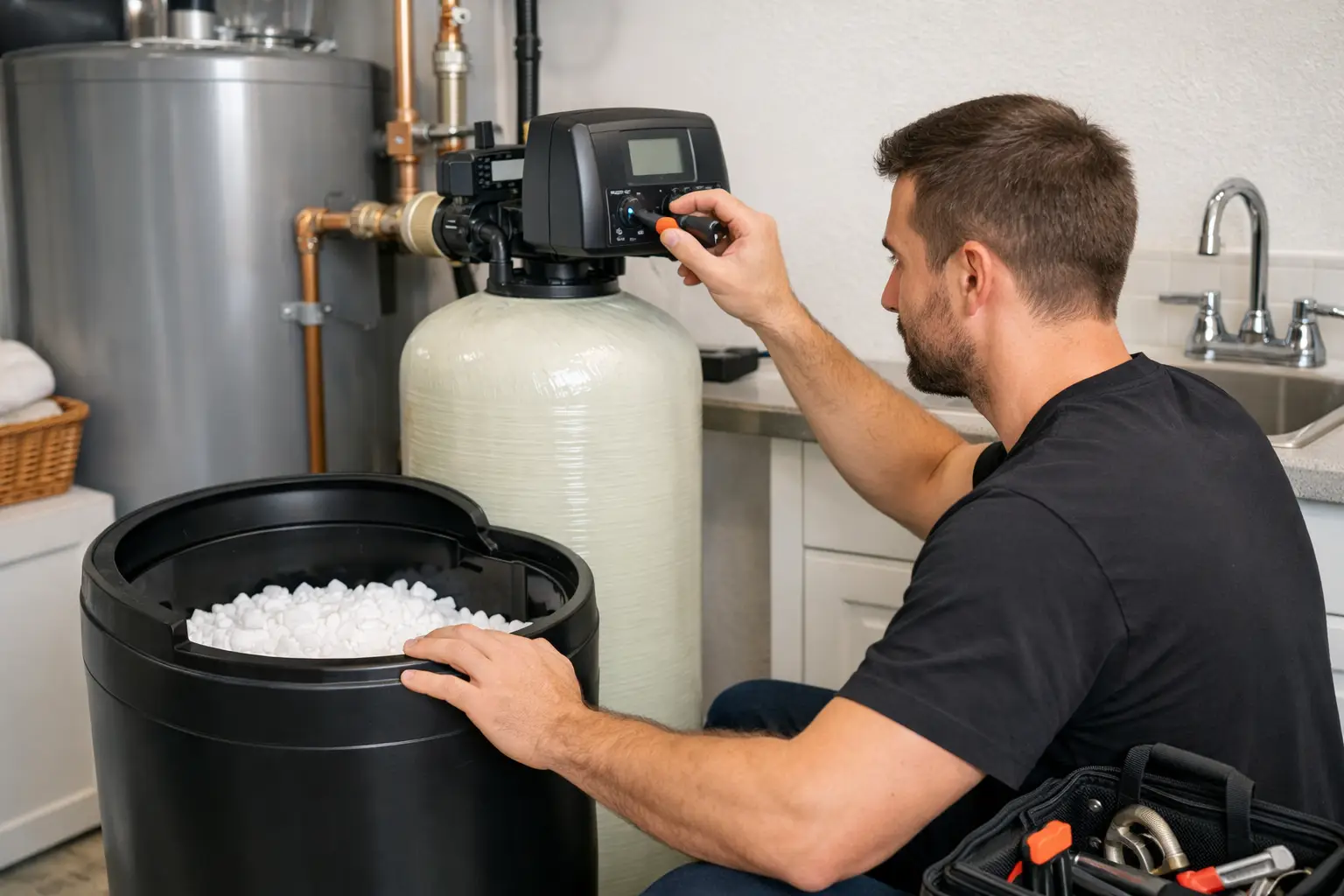
Hard water rarely announces itself with one dramatic failure. It shows up as cloudy glassware, stiff laundry, soap that will not rinse clean, and scale around fixtures. A consistent water softener maintenance schedule helps prevent those small signs from becoming reduced system performance, unnecessary salt use, or service interruptions.
For most homes, maintenance is straightforward when it is handled before the brine tank runs low or buildup becomes severe. The right timing depends on your household's water use, the hardness and iron content of the incoming water, and the type of equipment you own. A family of five with very hard water will need more attention than a one-person household with moderate hardness. Commercial systems should follow a documented plan based on demand, water testing, and equipment specifications.
A Practical Water Softener Maintenance Schedule
Think of maintenance in three layers: quick monthly checks, periodic cleaning, and an annual professional review. Metered systems regenerate according to actual water use, so they often use salt more efficiently than timer-based units. Still, both need basic oversight.
Every month: Check salt and system operation
Open the brine tank and check the salt level. Keep it about one-third to two-thirds full rather than filling it to the top every time. This gives you room to spot problems and reduces the chance that humidity, compaction, or old salt will create a hard salt bridge.
Use high-quality water softener salt that suits your local water conditions. Evaporated salt pellets are a reliable choice for many systems because they leave less residue than lower-purity products. If your water contains iron, a salt formulated to address iron buildup may be appropriate, but it should complement proper system cleaning rather than replace it.
While you are at the unit, look for dampness around connections, leaks at the control valve, and unusual sounds during regeneration. Check the display or control head for error messages. A softener that is constantly regenerating, not regenerating at all, or using salt unusually fast deserves professional attention.
Every two to three months: Look for salt bridges and mushing
A salt bridge is a hard crust that forms across the brine tank. It can look like the tank is full even though there is an empty space underneath, preventing salt from dissolving into the water needed for regeneration. Gently press the salt with a broom handle or similar non-sharp tool. If it feels solid or hollow beneath the surface, break up the bridge carefully without damaging the tank.
Salt mushing is different. It occurs when dissolved salt recrystallizes into a thick layer at the bottom of the tank. Water cannot move through it properly, which can stop the system from making brine. If you see thick sludge or compacted salt, remove it, clean the tank, and refill it with fresh salt.
This is also a good time to inspect the drain line and overflow tube. They should be secure, unobstructed, and positioned as specified by the manufacturer. Do not cap or block the overflow tube. It is there to direct water away if the brine tank overfills.
Every three to six months: Test your water
A simple hardness test provides useful confirmation that the softener is doing its job. Test both the incoming water, if accessible, and softened water from an indoor cold-water tap. If the softened water is testing hard, the cause may be low salt, a salt bridge, incorrect programming, a stuck valve, or resin that needs cleaning or service.
Homes with well water or elevated iron should test more often. Iron can coat resin beads and reduce their ability to exchange hardness minerals. In those conditions, a resin cleaner approved for your specific system may be needed on a more frequent schedule. Follow the product and equipment instructions carefully. Adding cleaners too often or using the wrong formula can create its own problems.
Water testing is especially valuable after a change in water source, a plumbing renovation, or a noticeable shift in taste, staining, or lathering. It separates a softener issue from other water-quality concerns that may require filtration or a different treatment approach.
Once a year: Clean the brine tank
Most residential salt-based softeners benefit from a complete brine tank cleaning about once each year. If the water has high iron content, visible sediment, or frequent salt mushing, the tank may need cleaning more often.
Start by allowing the salt level to run low. Put the unit into bypass according to the manufacturer instructions, disconnect power if required, and remove remaining salt and water from the tank. Clean the interior with mild dish soap and warm water, then rinse thoroughly. Avoid harsh chemicals that could damage components or affect the resin bed when the system returns to service.
Reconnect the unit, add fresh salt, take it out of bypass, and run a manual regeneration if the manufacturer recommends one. The exact sequence varies by model, which is why the owner manual should remain part of your maintenance file.
Annual Service Protects the Parts You Cannot See
A homeowner can handle salt checks and basic tank cleaning, but an annual service visit adds a deeper inspection. A qualified water treatment technician can verify programming, regeneration settings, brine draw, injector performance, seals, drain flow, and resin condition. These checks matter because a softener can appear to run normally while using too much salt or delivering partially softened water.
The technician should also confirm that the hardness setting matches current water conditions. This setting is not always permanent. Municipal treatment changes, seasonal source changes, and private well conditions can affect water hardness and iron levels. Correct programming helps the unit regenerate only when needed, balancing performance with salt and water use.
For property managers and commercial operators, annual service should be documented alongside filter changes, backflow testing where applicable, and other building maintenance. A neglected softener can contribute to scale on water heaters, dishwashers, boilers, fixtures, and process equipment. The cost of routine inspection is often easier to plan than the operational impact of hard-water scale.
What Changes the Maintenance Frequency?
No single schedule fits every system. Your softener may need closer attention when the household grows, water use increases, or the supply contains high hardness, iron, sediment, or manganese. Vacation homes can have the opposite issue: long periods of low use may warrant a check before the property is occupied again.
The design of the system matters too. Salt-based ion-exchange softeners need brine management and periodic cleaning. Salt-free conditioners do not use a brine tank or regenerate with salt, but they still need manufacturer-recommended filter changes, media service, or cartridge replacement. Do not apply a salt-softener routine to a salt-free unit without checking its requirements.
Older timer-based softeners can also benefit from a programming review. If a unit regenerates on a fixed schedule regardless of actual demand, it may use more salt and water than necessary. That does not automatically mean replacement is the answer. In many cases, repair, adjustment, or a controls assessment can restore appropriate operation.
Signs It Is Time to Schedule Service Sooner
Routine maintenance is designed to reduce surprises, but some changes should not wait for the next annual visit. Arrange an assessment if you notice hard-water spotting returning quickly, a sudden increase in salt consumption, water remaining in the brine tank after regeneration, recurring error codes, leaking fittings, or a system that will not complete a cycle.
It is also sensible to call for support if you are unsure how to put the system into bypass before plumbing work. Bypass protects the softener during certain repairs and makes it easier to isolate the equipment without interrupting water service to the entire property.
A dependable service provider can explain what was found, recommend only the work the system needs, and help you set a maintenance interval that reflects your water conditions. Plumingo supports scheduled water treatment service for homeowners and properties that need clear, professional system care.
Keep a simple record of salt additions, water test results, cleanings, and service dates near the unit or with your building maintenance documents. That small habit makes patterns visible and gives any technician a clearer starting point. With regular attention, your water softener can continue protecting fixtures, appliances, and everyday water use without demanding constant attention.