
Hard water usually announces itself before anyone tests it. You see white scale on faucets, cloudy spots on dishes, soap that never quite rinses clean, and water heaters that seem to work harder than they should. A professional water softener installation service addresses those symptoms at the source by treating the mineral load moving through your plumbing system every day.
For homeowners, that often means better appliance performance, less scale buildup, and a more comfortable experience at sinks and showers. For property managers and commercial operators, it can also mean less wear on fixtures, fewer maintenance calls, and more predictable system performance. The key is not just adding equipment. It is installing the right system, in the right location, with the right settings for the property.
What a water softener installation service should include
A quality installation starts with evaluation, not guesswork. Water hardness levels, daily water demand, plumbing layout, drain access, and available space all affect the system choice. If a provider skips those details and jumps straight to a unit recommendation, there is a good chance the result will be oversized, undersized, or awkward to maintain.
The service itself should cover more than placing a tank near the main line. It typically includes reviewing the incoming water line, identifying the best tie-in point, confirming electrical access if required, planning a safe drain connection, and setting up bypass valves so future servicing does not interrupt the entire property. In many cases, installers also test incoming water and program the control valve based on hardness and expected usage.
That matters because installation quality affects day-to-day performance. A premium softener can still underperform if drain routing is poor, regeneration settings are wrong, or the unit is placed where servicing becomes difficult. Good installation protects the equipment and makes ownership easier.
Why proper sizing matters more than most people think
Sizing is one of the most common points of confusion in a water softener installation service. Bigger is not always better. A system that is too small may regenerate too often, consume more salt and water than necessary, and struggle during peak demand. A system that is too large can sit too long between regeneration cycles, which may reduce efficiency depending on the setup and usage pattern.
The right size depends on hardness level, occupancy, fixture count, and how the property uses water across the day. A family home with two bathrooms and consistent demand has different needs than a mixed-use commercial space with irregular but heavy spikes in usage. This is where a professional installer adds value. They match capacity to actual operating conditions instead of relying on a generic recommendation.
In some buildings, the answer may involve more than one treatment step. If the water contains iron, sediment, or other water quality issues, the softener may need pre-treatment or a different system configuration. Softening helps with hardness minerals, but it is not a catch-all solution for every water issue.
The installation process from arrival to startup
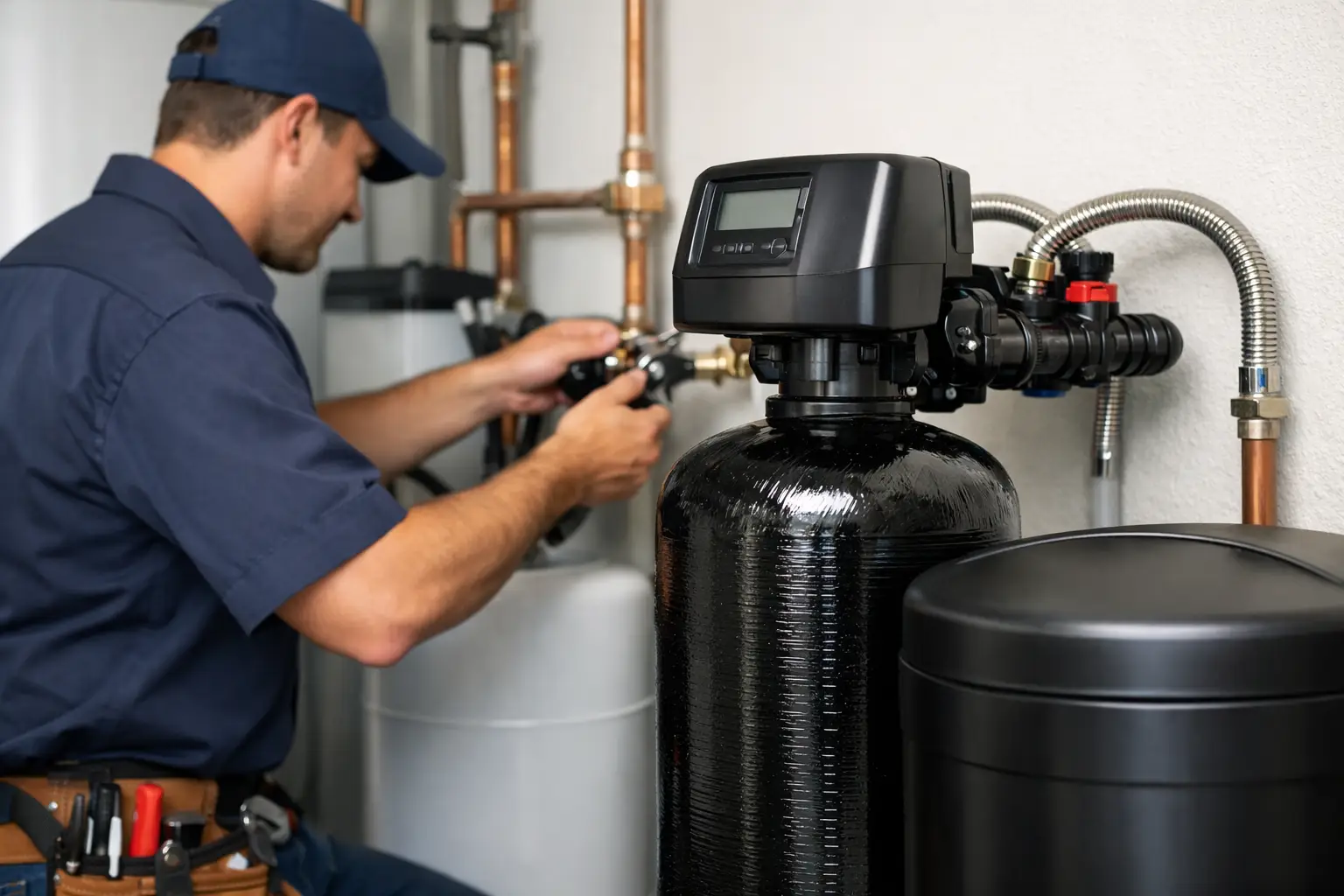
Most customers want to know what happens on installation day and how disruptive it will be. In a standard residential setup, the process is usually straightforward when the plumbing conditions are favorable. The installer confirms the location, shuts off water as needed, prepares the connection point, installs the softener and any required bypass components, connects the drain line, and tests for leaks before startup.
After the physical installation, programming and commissioning are just as important. The system needs to be set to the property's water hardness and expected consumption so regeneration occurs at the right intervals. The installer should also explain salt loading, basic maintenance, and what normal operation looks like.
Commercial or larger multi-unit installations can be more involved. Access restrictions, code requirements, operating schedules, and system redundancy may all affect the scope. In those cases, planning matters as much as the install itself. A service-oriented provider will account for uptime, coordination, and maintenance access from the beginning.
Where the system should be installed
Placement affects both performance and serviceability. Most systems are installed near the main water supply entry point so softened water can serve the property broadly. The location also needs practical drain access and enough clearance for routine maintenance, salt refills, and future repairs.
Basements, utility rooms, mechanical areas, and garages are common choices, but the right answer depends on the property. In colder regions, freezing risk must be considered. In finished spaces, drainage and floor protection may matter more. In commercial settings, installers may need to work around operational traffic, utility congestion, or limited service access.
A rushed placement decision can create years of inconvenience. If the brine tank is hard to reach or the control head is tucked into a corner, even simple maintenance becomes harder than it should be. Professional installation looks beyond day one.
Cost factors and what drives pricing
Water softener installation pricing varies because the job is rarely just about the unit itself. The final cost often reflects system capacity, plumbing complexity, valve configuration, drain routing, and whether additional water treatment components are needed. If the existing plumbing is outdated or poorly configured, the installation may require extra work to bring the setup into a reliable operating condition.
Transparent pricing matters here. Customers should understand whether the quote includes equipment, labor, programming, startup testing, and any required accessories. If not, the lowest number on paper can become the highest invoice by the end of the job.
There is also a trade-off between upfront cost and long-term operating cost. A properly matched, professionally installed system may cost more initially, but it often performs more efficiently and with fewer service issues over time. That matters in homes. It matters even more in buildings where downtime or equipment wear has a wider impact.
Signs you need professional installation instead of a DIY approach
Some property owners consider self-installation to save money. That can work in a very simple setup with existing infrastructure, strong plumbing knowledge, and a clear understanding of local code requirements. But many installations are not simple.
If the property has tight mechanical space, older plumbing, high hardness levels, drainage limitations, or any combination of filtration and softening equipment, professional installation is the safer path. The same applies when water pressure issues, iron staining, or inconsistent water quality are part of the problem. Those conditions can point to a system design issue rather than a basic install job.
For commercial properties and managed residential buildings, professional installation is the practical standard. Reliability, compliance, and service continuity usually matter more than trying to reduce labor cost on a critical water system.
Choosing a water softener installation service
Not every plumbing company approaches water treatment with the same depth. When comparing providers, look for more than availability. Ask whether they assess water conditions before recommending equipment, whether they handle both plumbing and treatment system integration, and whether they provide clear expectations on timing, pricing, and maintenance.
Responsiveness also matters. Water quality issues do not always start as emergencies, but they can become system problems if left unchecked. Scale buildup affects heaters, valves, and fixtures gradually, then all at once through repair costs and performance complaints. A provider that can support both scheduled installation and follow-up service offers more long-term value than a one-time installer.
This is especially relevant for customers who want one trusted source for plumbing and water treatment support. A platform such as Plumingo fits that need by combining service coordination, technical expertise, and transparent customer handling in one place.
What happens after installation
A water softener is not a set-it-and-forget-it system. Salt levels need monitoring, settings may need adjustment if occupancy changes, and periodic checks help catch minor issues before they affect performance. That does not mean ownership is complicated. It means the system works best when there is a clear service plan behind it.
For residential customers, that may be as simple as knowing when to refill salt and when to schedule a check. For commercial operators, it may mean routine inspections tied to broader plumbing maintenance. Either way, long-term performance depends on both equipment quality and service support.
If your water leaves scale on every surface and your plumbing system is feeling the strain, the right next step is not guessing which box to buy. It is getting the system sized, installed, and set up properly so your water works the way it should.