
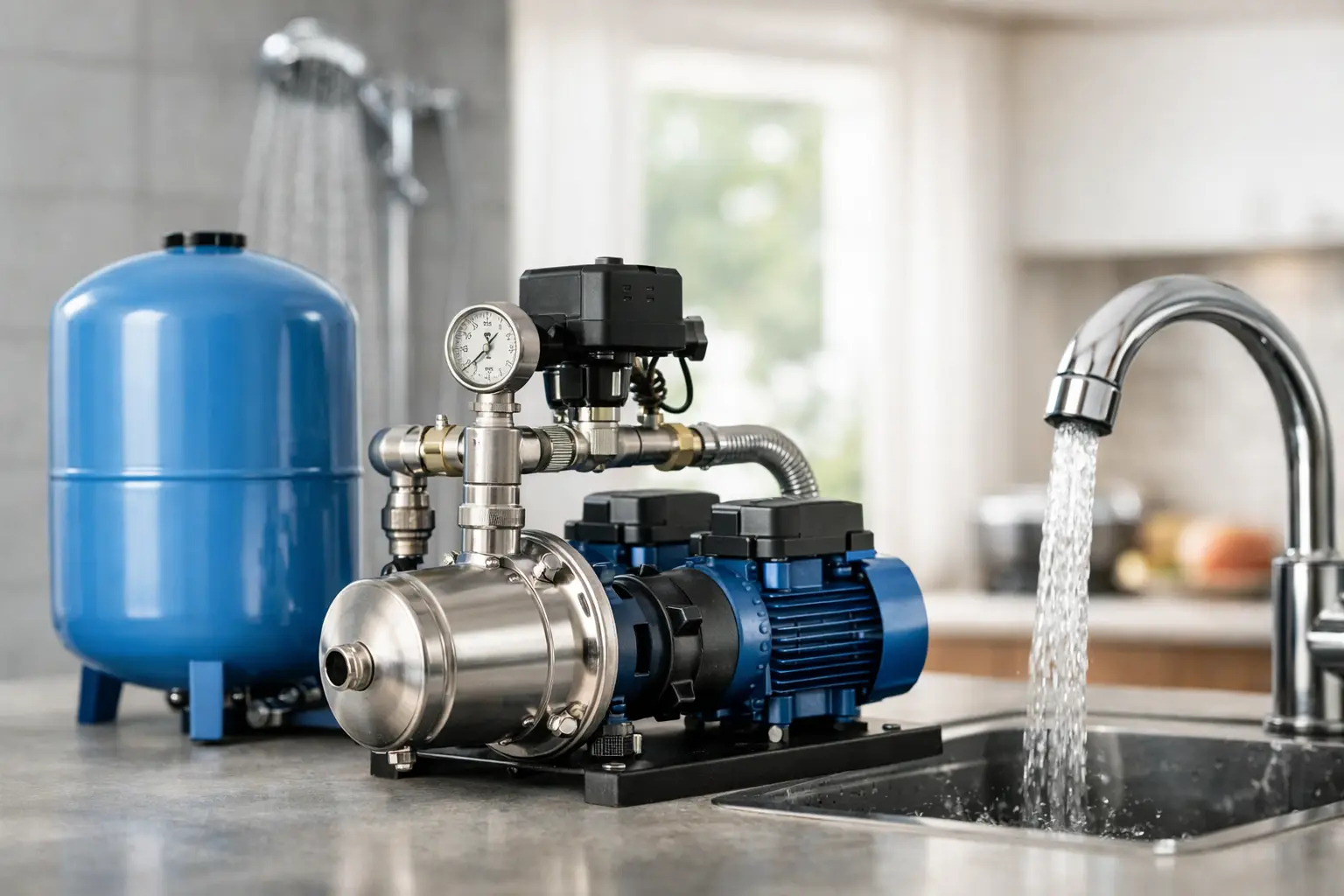
Low water pressure usually shows up at the worst time - during a shower, at a busy restaurant hand sink, or when multiple fixtures are running at once. Water pressure booster systems are designed to correct that problem by increasing pressure where the incoming supply is not enough for the building’s real demand.
For homeowners, that can mean stronger showers, faster tub filling, and more consistent fixture performance across the house. For property managers and commercial operators, it often means protecting tenant comfort, supporting daily operations, and reducing service complaints. The right system can make a noticeable difference, but only when the pressure problem is diagnosed correctly first.
What water pressure booster systems actually do
A booster system increases water pressure after water enters the building. In simple terms, it helps push water through the plumbing system with more force so fixtures and appliances perform as expected. Most systems use a pump, pressure controls, and in many cases a pressure tank or variable speed drive to maintain stable delivery.
That sounds straightforward, but the cause of low pressure is not always straightforward. Some buildings have low municipal supply pressure. Others lose pressure because of elevation, long pipe runs, undersized piping, partially closed valves, clogged filters, failing pressure-reducing valves, or internal pipe buildup. In those cases, adding a booster system without addressing the real restriction can lead to poor results or unnecessary expense.
This is why a pressure complaint should be treated as a system issue, not just a pump issue. The goal is not simply to add force. The goal is to deliver stable, safe pressure throughout the property.
When a booster system makes sense
A booster system is often the right answer when the incoming pressure is consistently too low for the building’s layout or usage. Multi-story homes, mixed-use properties, and commercial spaces with simultaneous demand are common examples. If pressure drops sharply when more than one fixture is in use, a booster may help, but only after basic plumbing conditions have been checked.
In residential settings, the most common signs are weak second-floor showers, poor flow at peak times, and appliances that take longer than expected to fill. In commercial properties, low pressure can affect washrooms, kitchen operations, janitorial use, and tenant satisfaction. In facilities with water treatment equipment, pressure loss through filters and treatment stages can also be part of the equation.
It depends on the pattern. If the issue is constant, the incoming supply may be too weak. If it happens only at certain fixtures, the problem may be local. If it started suddenly, a mechanical fault is more likely than a long-term supply issue.
Water pressure booster systems for homes vs. commercial buildings
Residential and commercial booster systems solve the same core problem, but the sizing and controls are very different.
For a home, the system is usually selected around the number of bathrooms, fixture demand, building height, and expected simultaneous use. A small household with one pressure complaint does not need the same setup as a large home with multiple bathrooms, irrigation demands, and treatment equipment. Oversizing can create noise, short cycling, and unnecessary wear. Undersizing leaves the original complaint unresolved.
In commercial buildings, pressure demand is less forgiving. A booster system may need to support multiple tenants, public washrooms, break rooms, utility sinks, and time-of-day demand spikes. Control strategy matters more in these environments because pressure swings can disrupt operations and increase equipment stress. Variable speed booster systems are often preferred where demand changes throughout the day because they adjust output more precisely and operate more efficiently than simple on-off setups.
Reliability also carries more weight on the commercial side. If a pressure issue affects business continuity, response time and service access matter just as much as equipment choice.
Key components that affect performance
The pump gets most of the attention, but the full system matters. A well-designed booster setup typically includes the pump itself, controls that monitor pressure, and protective components that prevent dry running, overpressure, or excessive cycling.
Pressure tanks help stabilize the system and reduce pump starts in many applications. Sensors and controllers help maintain a target pressure instead of letting the system swing sharply between low and high points. Check valves and isolation valves support safe service and proper flow direction. In some systems, expansion control and backflow considerations also need to be addressed.
Noise and vibration should not be overlooked, especially in finished homes, condo mechanical rooms, and occupied commercial spaces. A technically correct system can still be a poor fit if it is loud, poorly mounted, or causes pipe vibration through the building.
Common mistakes when choosing a booster system
The biggest mistake is treating low pressure and low flow as the same issue. Pressure is the force behind the water. Flow is the volume moving through the system. A property can have acceptable pressure but poor flow because of pipe restrictions, clogged cartridges, scale buildup, or undersized lines. Installing a booster pump in that scenario may not solve much.
Another common mistake is buying based on horsepower alone. More power is not the same as better design. The correct system depends on inlet pressure, desired outlet pressure, fixture demand, pipe layout, and the building’s peak usage patterns.
Poor installation planning is another problem. If the system is placed without considering electrical supply, drainage, service access, noise control, freeze protection, and code requirements, maintenance becomes harder and the installation may create future risks.
Water quality also matters more than many owners expect. Sediment, hardness, and treatment equipment can affect pump life and system performance. In buildings with filtration, reverse osmosis equipment, or water softeners, the booster system should be evaluated as part of the broader water infrastructure.
How to know if your property needs one
The best starting point is measurement, not guesswork. Static pressure, flowing pressure, fixture performance, and demand patterns all tell part of the story. A pressure gauge reading at one location is useful, but it is not the whole diagnosis.
A proper evaluation usually looks at where the pressure drops, when it drops, and whether the issue is building-wide or isolated. It should also confirm that shutoff valves are fully open, filters are not clogged, pressure-reducing valves are working correctly, and there are no hidden restrictions in the line.
For larger homes and commercial sites, the building’s elevation profile matters. Water loses effective pressure as it travels upward, so upper floors often experience the problem first. In some properties, zoning or staged boosting may be more appropriate than one system trying to serve everything equally.
Installation and maintenance expectations
A booster system is not a set-it-and-forget-it solution. Even well-selected equipment needs routine inspection to maintain stable performance and protect service life. Pressure settings may need adjustment over time, tanks can lose charge, sensors can drift, and strainers or filters may need cleaning.
Professional installation is especially important because booster systems interact with plumbing, electrical, and in some cases water treatment components. Code compliance, backflow protection, pressure limits, and safe control setup all matter. This is not just about making the water feel stronger at the tap. It is about protecting the building’s plumbing system while delivering reliable performance.
For commercial operators and property managers, preventive service is often the smarter path. A booster system that fails during business hours can create a much larger operational problem than the original low-pressure complaint. Fast support matters, but planned care is better than emergency disruption.
If your property has ongoing pressure problems, the most effective next step is a professional assessment rather than a quick equipment purchase. The right fix may be a booster system, a valve replacement, a piping correction, or a combination of improvements. Providers such as Plumingo approach this work with the full plumbing and water treatment picture in view, which is often what separates a temporary fix from a dependable one.
Water pressure affects comfort, cleanliness, equipment performance, and day-to-day operations more than most people realize. When the system is designed around the actual building instead of the symptom alone, the result is not just stronger water flow - it is a plumbing system that works the way it should.