
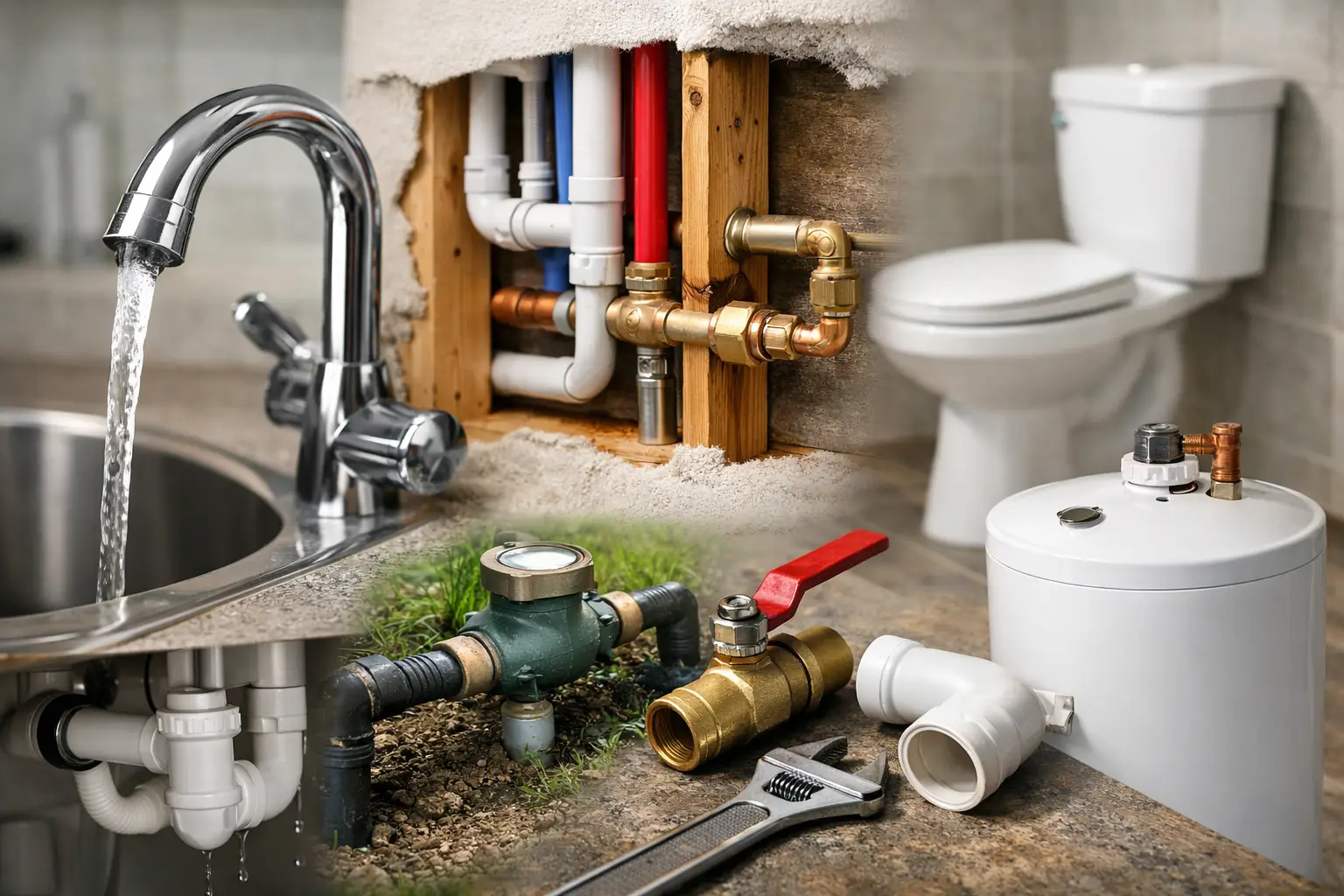
A home can have excellent fixtures and still perform poorly if the plumbing behind the walls is outdated, undersized, or poorly matched to the property. When homeowners ask about the types of residential plumbing systems, they are usually trying to solve a real problem - low water pressure, recurring drain backups, poor hot water delivery, or concerns about pipe life.
The right way to look at a plumbing system is not as a single network, but as several connected systems that each do a different job. Fresh water has to come in safely. Wastewater has to leave without blockage or odor. Hot water has to be delivered reliably. In many homes, water treatment also plays a direct role in how well plumbing performs over time. Once you understand those categories, it becomes much easier to spot risks, plan upgrades, and make smarter repair decisions.
The main types of residential plumbing systems
Most homes rely on four core plumbing systems: the water supply system, the drain-waste-vent system, the hot water system, and, in many cases, water treatment equipment tied into the plumbing line. Some properties also have specialized setups such as well water systems, sump and sewage ejector systems, or radiant plumbing loops. The exact mix depends on the age of the home, the local infrastructure, and the household's water quality needs.
What matters most is that these systems work together. A home with strong supply piping but poor drainage will still have serious plumbing issues. A home with a modern water heater but hard water and scale buildup may still suffer from reduced efficiency and early fixture failure.
1. Water supply systems
The water supply system brings clean water into the home under pressure. This includes the main line, shutoff valves, branch lines, and fixture connections that serve sinks, showers, toilets, appliances, and hose bibs. In city-serviced homes, water usually enters from a municipal main. In rural properties, it may come from a private well with a pressure tank and pump.
Supply systems vary most by pipe material. Older homes may still have galvanized steel, which tends to corrode internally and restrict flow over time. Copper remains a durable and widely trusted option, though cost is higher. PEX has become common in newer construction and renovations because it is flexible, efficient to install, and less prone to certain freeze-related failures than rigid pipe. CPVC appears in some homes as well, though performance can depend on water conditions and installation quality.
There is no single best choice in every house. Copper offers longevity and a strong track record, but material and labor costs are higher. PEX is cost-effective and practical for many layouts, but homeowners should still care about routing, fittings, and code-compliant installation. If pressure fluctuates, water discolors, or leaks start appearing in multiple places, the issue may be less about a fixture and more about the supply network itself.
2. Drain-waste-vent systems
If the supply side brings water in, the drain-waste-vent system moves used water and sewer gases out. This system includes drain pipes, waste stacks, vent stacks, traps, and the building sewer connection. It works mostly by gravity, not pressure, which is why slope, venting, and pipe sizing matter so much.
This is one of the least visible but most important types of residential plumbing systems. When a drain-waste-vent system is properly designed, wastewater leaves quickly and traps retain enough water to block sewer gas from entering the home. When it is not, the symptoms show up fast - gurgling drains, slow sinks, sewer odors, bubbling toilets, or recurring backups at the lowest fixtures.
Older drain lines may be cast iron, clay, or Orangeburg in some regions, while newer homes often use PVC or ABS. The trade-off is straightforward. Older materials can be durable but become vulnerable to corrosion, shifting, root intrusion, or internal scaling. Plastic drain piping is lighter and easier to service, but long-term reliability still depends on proper support and installation.
3. Hot water plumbing systems
Hot water deserves its own category because it affects comfort, operating cost, and system wear. This part of the plumbing system includes the water heater, hot water lines, shutoff components, and in some homes, recirculation equipment that reduces wait time at fixtures.
Traditional tank water heaters remain common because they are familiar and relatively simple to replace. Tankless systems are popular where efficiency and continuous hot water are priorities. Each has trade-offs. Tank systems are typically less expensive upfront but store a limited volume of heated water. Tankless units save space and can reduce standby losses, but they require correct sizing and may need upgrades to gas, venting, or electrical service.
The pipe layout also matters. In a larger home, long hot water runs can create delays and wasted water before hot water reaches the tap. A recirculation loop can improve convenience, but it adds complexity and should be designed carefully to avoid unnecessary energy loss.
4. Water treatment plumbing systems
For many households, water quality is not separate from plumbing performance. It is part of it. Water treatment systems connect directly to the home's plumbing and are often essential where hard water, chlorine taste, sediment, iron, or other contaminants are present.
Common residential options include water softeners, reverse osmosis units, sediment filtration, carbon filtration, and whole-home treatment setups. In hard water areas, a softener can reduce scale buildup inside fixtures, appliances, and water heaters. That can improve efficiency and help plumbing components last longer. Reverse osmosis systems are usually installed for drinking water at a point of use, while whole-home systems treat water before it reaches the rest of the property.
This is where homeowners often underestimate the system-wide impact. Water quality issues can look like plumbing issues. Scale can reduce flow. Sediment can damage valves. Poor incoming water can shorten the life of heaters, dishwashers, and washing machines. In a service-focused model like Plumingo's, that overlap between plumbing and water treatment is not a side issue - it is often the source of the problem.
Other residential plumbing system types worth knowing
Some homes have additional systems that are just as critical, even if they are not present in every property.
Well water systems
Homes on private wells rely on pumps, pressure tanks, switches, filtration, and often disinfection or conditioning equipment. These systems require a different maintenance approach than city water. If pressure drops or water quality changes, the issue may involve the pump, tank, controls, or treatment setup rather than the interior piping alone.
Sewer ejector and sump systems
Basement bathrooms, laundry rooms, and below-grade fixtures may use ejector pumps to move wastewater up to the sewer line. Homes with groundwater concerns often use sump pumps to protect against flooding. These are plumbing-related systems with mechanical components, and failure can create urgent property damage risks.
Radiant and hydronic systems
Some homes use plumbing-based heating loops for radiant floors or hydronic baseboard heat. These are not part of standard domestic water delivery in every case, but they still rely on piping, pressure control, and leak-free performance. Diagnosis requires a plumbing professional who understands both water movement and heating system behavior.
How to tell which system your home has
The fastest clues come from the home's age, location, and service history. A house built decades ago may still have a mix of old and new materials after partial renovations. A newer home may have modern supply piping but still struggle if the water heater is undersized or the drainage design is poor.
Homeowners should pay attention to pipe material, water source, drain performance, and any added treatment equipment. If you have hard water stains, fluctuating pressure, noisy pipes, or frequent clogs, those symptoms usually point to a specific system category. That makes inspection more targeted and repair planning more efficient.
A professional plumbing assessment is especially useful when buying a home, renovating kitchens or baths, or dealing with repeat failures. Many expensive emergencies start as small signs that were misread as isolated fixture problems.
Choosing repairs and upgrades based on system type
Not every issue calls for full replacement. Sometimes a targeted repair is the right move. Sometimes it is not. If a home has a single leaking section of newer copper, a localized repair may make perfect sense. If the property has aging galvanized supply lines causing pressure loss throughout the house, patching one leak at a time is rarely cost-effective.
The same logic applies to drains, hot water equipment, and treatment systems. A tank water heater near the end of its service life may not justify another major repair. A recurring sewer backup may need camera inspection rather than another basic drain clearing. A home with persistent scale may need water treatment, not repeated fixture replacement.
The better decision usually comes from looking at the whole system, not just the current symptom. That is where transparent recommendations matter. Homeowners should know whether they are authorizing a short-term fix, a longer-term correction, or a preventive upgrade.
Understanding the types of residential plumbing systems gives you a clearer way to evaluate risk before a small disruption becomes a major repair. If something in your home keeps underperforming, the answer is often not more guesswork. It is identifying which system is involved and addressing it with the right level of expertise.