
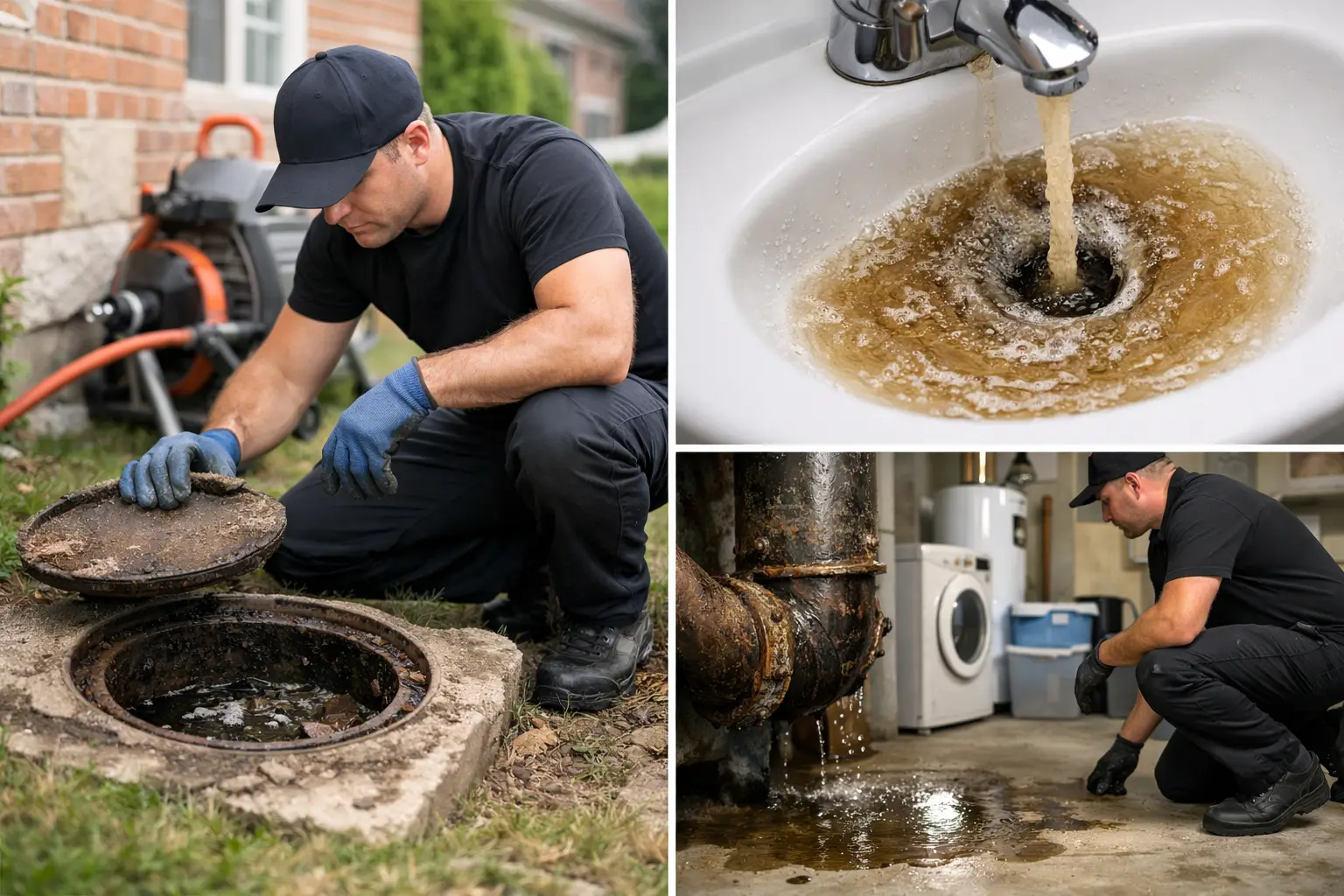
A slow drain in one bathroom is usually a local plumbing issue. Slow drains, odors, or backups appearing across the property are different. Recognizing the top signs of sewer line trouble helps homeowners, property managers, and business operators arrange the right inspection before a small disruption becomes a larger cleanup.
Your sewer line carries wastewater from sinks, toilets, showers, floor drains, and appliances to the municipal sewer connection or septic system. Because most of the pipe is underground, problems can develop out of sight. The goal is not to assume the worst at the first gurgle. It is to notice patterns, limit water use when needed, and have a qualified plumber identify the actual cause.
Top Signs of Sewer Line Trouble to Watch For
Several drains are slow at the same time
A single slow sink can often be traced to soap residue, hair, grease, or debris in that fixture's drain. When multiple drains on different levels of a home or throughout a commercial space are draining slowly, the restriction may be farther down the system.
Pay particular attention if toilets flush weakly while showers, tubs, or lower-level sinks also drain slowly. These fixtures may share a main branch or the main sewer line. The location and timing of the issue help a plumber determine whether drain cleaning, camera inspection, or another repair approach is appropriate.
Gurgling sounds come from drains or toilets
Drains need air movement to flow properly. A gurgling toilet, shower, or sink can mean air is being pushed back through the plumbing because wastewater is meeting resistance in the line.
Gurgling alone does not automatically confirm a damaged sewer pipe. A venting issue or a partial blockage in a branch line can produce similar sounds. But when gurgling occurs with slow drainage, unpleasant odors, or water rising in another fixture, it deserves prompt professional attention.
Water backs up in a tub, shower, or floor drain
A backup is one of the clearest signs that wastewater cannot move through the system as intended. In many homes, the bathtub, shower, or basement floor drain sits lower than other fixtures. When the main line is restricted, wastewater may appear there first.
For example, flushing a toilet may cause water to rise in the tub, or running a washing machine may lead to water at a nearby floor drain. Stop using water-intensive fixtures until the source is assessed. Continuing to run dishwashers, washing machines, or multiple faucets can add more wastewater to an already restricted line.
Sewage odors linger indoors or outdoors
A sewer odor is not something to ignore, especially when it returns after cleaning a room or airing out the space. Dry drain traps, damaged seals, and venting problems can all cause odors. A blockage, cracked pipe, or sewer line separation may also allow sewer gases to escape.
Notice where the smell is strongest. An odor concentrated around one unused floor drain may have a simple cause, such as an evaporated trap seal. Odors near several drains, in a basement, or around an outdoor sewer access point call for a more complete evaluation.
The yard has unusually wet, sunken, or lush patches
An underground sewer line leak can affect the soil above it. You may see a persistently damp area without recent rain, a depression in the lawn, or a strip of grass that grows faster and greener than surrounding areas.
These changes are not proof of a sewer issue on their own. Irrigation leaks, grading, and stormwater can create similar conditions. Still, when outdoor changes occur alongside indoor drainage problems or sewer odors, an inspection can prevent guesswork and avoid unnecessary digging.
Toilets clog more often than usual
An occasional toilet clog can happen in any busy property. Repeated clogs, especially in multiple toilets, may signal that the line beyond the toilet is partially obstructed. If plunging provides only short-term relief, the blockage may not be at the fixture.
Avoid using excessive force or repeatedly flushing after a failed flush. That can cause overflow without clearing the restriction. A professional assessment is more useful than treating the same symptom again and again.
Why Sewer Lines Develop Problems
Sewer line trouble does not always mean full replacement is needed. The right solution depends on the pipe material, age, layout, condition, and the cause of the problem.
Tree roots are a common concern, particularly with older pipe joints. Roots seek moisture and can enter through small gaps, then expand inside the pipe and catch paper or other debris. A camera inspection can show whether roots are present and how extensively they have affected flow.
Grease, wipes, hygiene products, and heavy paper buildup can create obstructions even in newer plumbing. Products labeled flushable do not necessarily break down quickly enough for every plumbing system. Commercial kitchens and shared facilities may also experience buildup from fats, oils, food particles, or high daily use.
Older clay, cast-iron, and certain plastic lines can crack, shift, corrode, or develop separated joints over time. Soil movement, freezing conditions, nearby construction, and aging materials can all affect buried pipes. In some cases, targeted cleaning or repair restores service. In others, a damaged section may need rehabilitation or replacement. A clear diagnosis should come before a major recommendation.
What to Do When You Notice a Pattern
Start by observing which fixtures are affected and what triggers the problem. Note whether the issue began after heavy rain, laundry, a busy business day, or use of a particular bathroom. This information can help narrow the cause.
If wastewater is backing up, reduce water use immediately. Do not run the dishwasher, washing machine, or additional showers until the system has been checked. Keep children, pets, customers, and staff away from affected wastewater, and clean only after the plumbing issue has been safely addressed.
Do not rely on harsh chemical drain cleaners for suspected main sewer line problems. They rarely resolve root intrusion, pipe damage, or significant buildup, and they can create handling risks or complicate later service. A mechanical drain cleaning and sewer camera inspection give a much more reliable view of what is happening inside the pipe.
For homes and properties in Kitchener, seasonal freeze-thaw cycles and mature landscaping can add variables to underground plumbing performance. A professional can assess the symptoms, inspect the line when needed, and explain practical options with transparent next steps.
When a Professional Sewer Inspection Makes Sense
Schedule service when multiple fixtures are affected, backups recur, odors persist, or you see signs of possible leakage outdoors. It is also reasonable to arrange an inspection before purchasing an older property, after major root growth near a sewer route, or when repeated drain cleaning has not produced lasting results.
A sewer camera inspection can identify blockages, root intrusion, cracks, offset joints, standing water, and pipe condition without excavating simply to investigate. This matters because similar symptoms can have very different causes. The most effective repair is based on evidence, not assumptions.
For property managers and commercial operators, documenting recurring drainage issues can also support maintenance planning. Tracking the fixture, date, weather conditions, and service history makes it easier to spot repeat patterns and prioritize work without disrupting operations more than necessary.
A sewer line is easy to forget when it is working properly. Paying attention to changes in drainage, sound, odor, and outdoor conditions gives you time to make a measured service decision and keep the rest of your plumbing system running as it should.