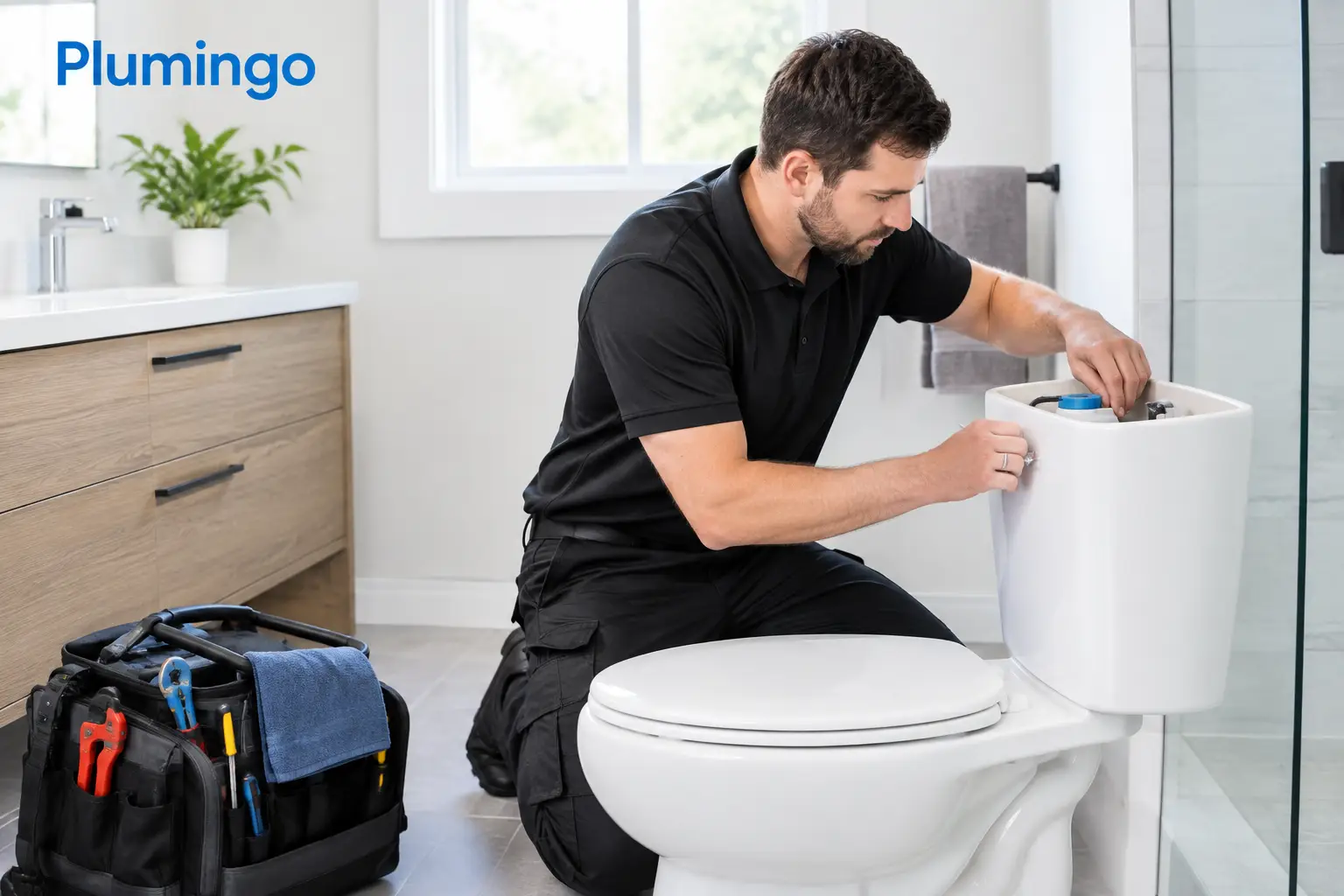
A toilet that runs between uses, flushes weakly, or leaves water on the floor is more than an inconvenience. Small toilet problems can waste water, affect bathroom hygiene, and put added strain on flooring or nearby fixtures. This toilet repair troubleshooting guide helps you identify what is happening, make a sensible first check, and recognize when a professional repair is the right next step.
Start With a Safe, Simple Inspection
Before removing parts or tightening connections, look for the toilet shutoff valve on the wall or floor behind the bowl. Turning this valve clockwise stops the water supply if a leak worsens or the toilet begins overflowing. If the valve is difficult to turn, do not force it. Older valves can fail when handled aggressively.
Remove the tank lid carefully and place it on a towel or stable surface. Porcelain lids can crack easily. Then flush once and watch what happens inside the tank and bowl. A normal flush should send water from the tank into the bowl with steady force, clear the bowl without rising toward the rim, and stop refilling within a short period.
The location and timing of the problem usually point to the cause. Water moving inside the tank after the flush is often a fill or flush valve issue. Water appearing around the toilet base may involve the wax seal, mounting hardware, or a cracked component. A slow bowl drain may be a simple clog, but it can also signal a larger drain line restriction.
Toilet Repair Troubleshooting Guide: Match the Symptom
The toilet keeps running
A running toilet is often caused by a flapper that no longer seals properly. The flapper is the rubber piece at the bottom of the tank that lifts during a flush. Over time, it can become warped, coated with mineral buildup, or misaligned on its hinges. When it does not seal, water slowly escapes into the bowl and the fill valve repeatedly turns on.
Start by checking whether the flapper sits flat over the flush valve opening. Make sure the chain has a little slack when the flapper is closed. A chain that is too tight can hold the flapper slightly open; a chain that is too loose may prevent a full flush.
If the flapper appears worn, replacement is usually a practical repair. However, if water continues to rise into the overflow tube after the tank has filled, the issue may be the fill valve or float adjustment. The water level should sit below the top of the overflow tube. A fill valve that does not shut off reliably should be repaired or replaced rather than ignored, since even a quiet leak can add meaningful water use over time.
The toilet flushes weakly
A weak flush can begin in the tank or in the bowl. First, check the tank water level. If it is too low, the toilet does not have enough stored water to produce a strong flush. Most tanks have a fill-level mark or an overflow tube that provides a useful reference point.
If the tank fills normally, inspect the flush handle, chain, and flapper. A flapper that closes too quickly releases only part of the tank's water. You may notice that holding the handle down produces a better flush. In that case, a chain adjustment or flapper replacement may solve the problem.
Mineral deposits can also restrict the small rim holes beneath the bowl edge. This is more common where water contains higher mineral content. The toilet may still flush, but water enters the bowl unevenly and lacks force. Cleaning those openings carefully can help, although severe buildup or internal component wear may require a technician's assessment.
Weak flushing is not always a toilet-tank issue. A partial blockage in the trap or drain line can slow water movement even when the tank mechanism works correctly. If several fixtures drain slowly, the problem is more likely beyond the toilet itself.
The toilet is clogged or close to overflowing
When bowl water rises after a flush, do not flush a second time. Remove the tank lid and close the flapper by hand if water is still entering the bowl, then shut off the supply valve if needed. Wait for the water level to fall before attempting a repair.
A flange-style toilet plunger is the appropriate tool for most simple clogs. It has a soft extension that fits into the toilet drain opening, creating a better seal than a flat sink plunger. Use controlled, repeated pressure rather than quick splashing motions. The goal is to move the obstruction, not force water over the rim.
Avoid using harsh chemical drain cleaners in a toilet. They can damage components, create a splash hazard, and make later service more difficult. If plunging does not restore normal drainage, a toilet auger may be appropriate for an accessible obstruction. Persistent clogs, recurring backups, or drainage problems affecting other fixtures deserve professional diagnosis. The right repair depends on whether the restriction is in the toilet trap, branch drain, or main line.
Water is leaking around the toilet base
Water at the base of a toilet needs prompt attention, but the source matters. First, dry the floor completely and observe when the water returns. If it appears only after flushing, the seal between the toilet and drain may be compromised. If it appears even without flushing, inspect the supply line, shutoff valve, tank bolts, and condensation on the tank.
A failed wax ring is a common cause of leaks after flushing. The toilet may also feel loose or rock slightly. Do not simply caulk heavily around a leaking base to hide the water. That can trap moisture underneath and delay discovery of damage to the floor or subfloor.
Resetting a toilet with a new seal requires lifting the fixture, inspecting the flange, and securing the bowl level without overtightening porcelain. This is a repair where professional care is often worthwhile, particularly in multi-unit properties or commercial washrooms where downtime and concealed water damage can carry higher costs.
The toilet rocks or moves
A toilet should sit firmly on the finished floor. Movement can loosen the base seal and eventually lead to leaks. Sometimes the cause is an uneven floor rather than loose bolts. Tightening the bolts too much can crack the porcelain, so proceed carefully.
Small toilet shims may stabilize a bowl, but they should not be used to avoid investigating a leak or damaged flange. If rocking developed recently, if the toilet has leaked, or if the floor feels soft around the base, arrange an inspection before the issue becomes more involved.
When a Toilet Problem Points Beyond the Fixture
A toilet can reveal broader plumbing or water-quality concerns. Repeated fill-valve failures, mineral buildup around tank components, or restricted rim holes may be connected to hard water. Water softener service can help protect fixtures where mineral content is a recurring concern, though it will not clear an existing drain blockage or repair a worn flapper.
Likewise, a toilet that gurgles when another fixture drains may indicate a venting or drain-line issue. Bad odors, slow drains in multiple rooms, or recurring backups are not good candidates for repeated do-it-yourself attempts. These symptoms need a clear diagnosis so the repair addresses the actual cause rather than the visible result.
For property managers and commercial operators, document when the issue occurs, which washroom is affected, and whether other fixtures show similar behavior. That information helps service teams identify patterns and reduce unnecessary disruption.
Know When to Schedule Expert Care
Many toilet repairs are straightforward when the issue is limited to an accessible tank part. Call for professional plumbing support when there is water at the base, a cracked tank or bowl, recurring clogs, a loose toilet, drainage problems elsewhere in the property, or uncertainty about the source of a leak. Shut off the water supply if active leaking or overflow is present, and avoid using the fixture until it has been assessed.
Plumingo provides clear, professional support for toilet repairs, drain concerns, and water treatment needs. A qualified technician can determine whether a targeted repair is appropriate and explain the work before it begins.
A toilet that works quietly and consistently is easy to overlook. Addressing the first change in its flushing, filling, or drainage behavior is often the simplest way to protect the room around it.