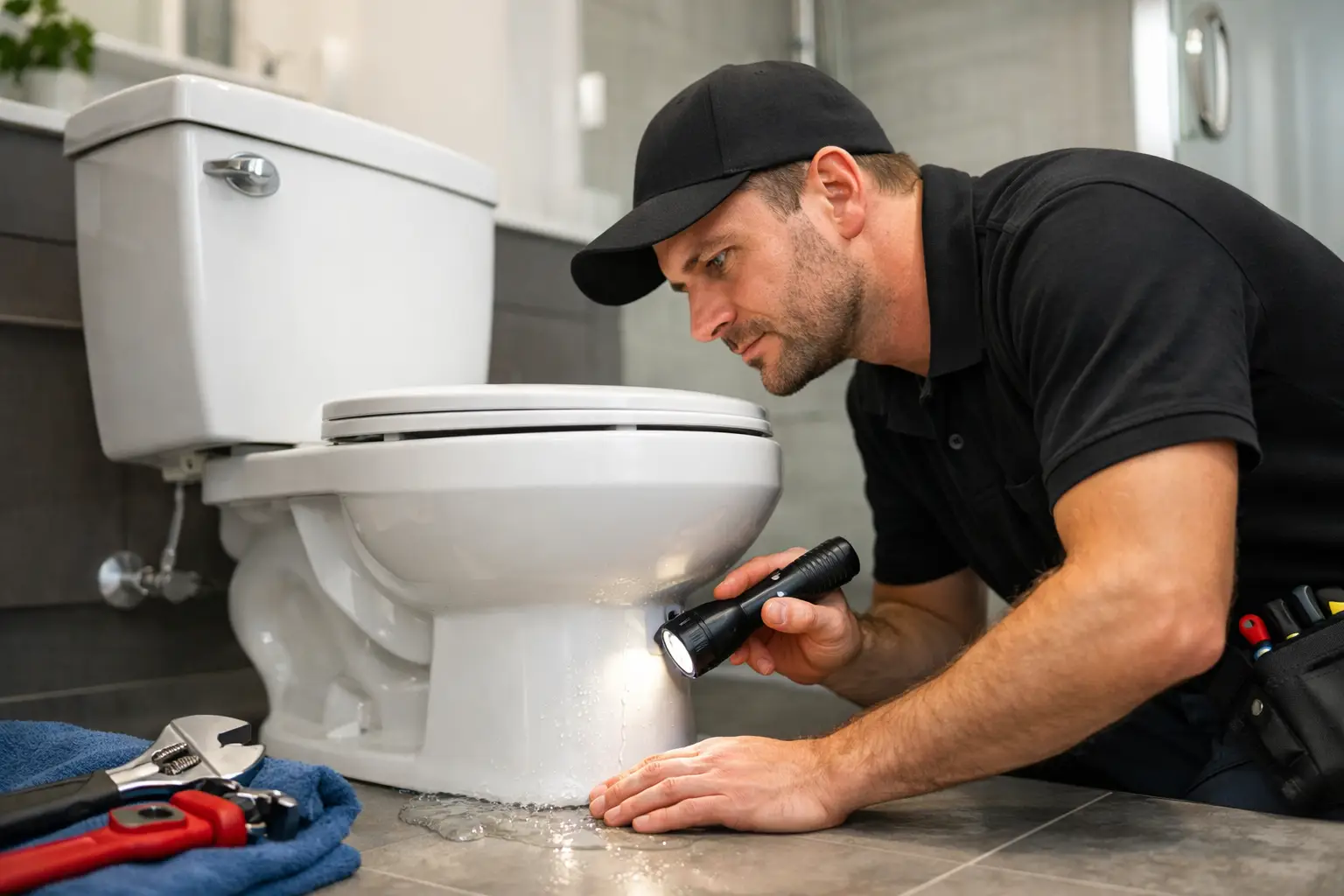
A toilet that leaks only after a flush, refills at random, or leaves a damp ring on the floor is giving you useful clues. Most toilet leak causes are localized and repairable, but the location of the water matters. A slow tank leak may raise your water bill, while water at the base can affect flooring, subflooring, and the ceiling below in multi-level properties.
The first step is simple: dry the toilet completely, then observe it through one normal flush and refill cycle. Do not assume water near the toilet is coming from the bowl. Condensation, a loose supply connection, a leaking tank component, and a failed seal beneath the fixture can look similar at first glance.
Toilet Leak Causes: Find the Source First
A toilet has three main areas where leaks develop: the water supply connection, the tank and its internal components, and the seal between the toilet base and the drain. Pinpointing the area helps determine whether you are dealing with a small adjustment, a replacement part, or a repair that should be handled by a plumbing professional.
If water appears while the tank is filling, look at the supply line, shutoff valve, and fittings below the tank. If the toilet runs when no one has flushed it, the issue is usually inside the tank. If water appears at the floor after flushing, the base seal or toilet stability deserves attention.
A worn flapper lets water escape from the tank
The flapper is the rubber valve at the bottom of the tank. It lifts during a flush and should settle back into place tightly afterward. Over time, rubber can warp, harden, collect mineral buildup, or become misaligned with the flush valve opening.
When the flapper does not seal, water slowly moves from the tank into the bowl. The fill valve then turns on periodically to replace it. This is often called a running toilet, even when the sound comes and goes. It can waste a meaningful amount of water over weeks or months.
A quick dye test can help confirm the issue. Add a few drops of food coloring to the tank, avoid flushing for about 15 minutes, and check the bowl. Color in the bowl indicates water is passing through the flush valve area. In many cases, cleaning the sealing surface or replacing the flapper resolves the problem. The replacement must match the toilet's flush valve size and design.
A faulty fill valve causes overflow or constant refilling
The fill valve controls how much water enters the tank after a flush. If it is worn, obstructed by debris, or adjusted incorrectly, the tank may overfill. Excess water then enters the overflow tube and drains continuously into the bowl.
Remove the tank lid and watch the refill cycle. Water should stop below the top of the overflow tube. If it continues running into that tube, the fill valve may need adjustment or service. A floating arm or cup that sticks can also prevent the valve from shutting off properly.
This repair is usually contained within the tank, but use care when working around plastic components. Overtightening can crack fittings or damage threads. If the shutoff valve below the toilet does not close fully, or the tank hardware is brittle, professional service can prevent a minor repair from becoming a larger leak.
Loose tank bolts or worn tank-to-bowl seals leak during flushing
Two-piece toilets have a separate tank secured to the bowl with bolts and sealed by rubber washers and a large gasket. These parts are exposed to moisture every day and can deteriorate over time. A leak may appear only during or immediately after a flush because that is when water moves quickly through the tank outlet.
Look for moisture beneath the tank, around bolt heads, or along the back of the bowl. Tightening hardware may help if bolts have loosened slightly, but this requires restraint. Porcelain can crack under excessive pressure, and a cracked tank should be replaced rather than patched.
If washers or the central gasket have failed, the tank typically needs to be removed so the sealing parts can be replaced correctly. This is a repair where alignment matters. A tank that sits unevenly can continue leaking even with new components installed.
Supply line and shutoff valve leaks create moisture below the tank
A braided supply line connects the shutoff valve at the wall or floor to the toilet tank. The connection can drip when a nut is loose, the rubber washer has worn, or the line itself has aged. The shutoff valve may also seep around its stem, especially if it has not been operated for years.
Dry the fittings with a towel, then wrap a piece of tissue around each connection while the tank fills. A damp spot helps identify the source without guessing. Avoid repeatedly tightening a fitting that continues to drip. A damaged washer, corroded valve, or compromised supply line needs the appropriate repair or replacement.
For property managers, this is worth addressing promptly even when the drip is small. Water can travel along a line and collect inside cabinetry, behind baseboards, or on finished flooring before it becomes obvious.
A failed wax ring leaks at the toilet base
The wax ring seals the connection between the toilet outlet and the drainpipe. When it fails, water may seep from the base during flushing. You may also notice a persistent sewer odor, staining around the toilet, or movement when the toilet is used.
A wax ring can fail because of age, a loose toilet, an uneven floor, or changes to finished floor height after renovation. Caulking around the entire base can hide evidence of a leak, which is why many professionals leave a small gap at the back of the base. Water needs a visible path rather than being trapped underneath the fixture.
A leaking base seal is not a repair to postpone. The toilet generally must be removed, the flange and floor inspected, and the toilet reset level and secure. Simply adding more caulk or tightening bolts without correcting the underlying issue can crack the porcelain or conceal water damage.
When It Is Not a Leak: Condensation and Bowl Splashing
Not every wet toilet has failed parts. In humid conditions, cold tank water can create condensation on the outside of the tank. This is more likely when indoor humidity is high and the toilet is flushed frequently. The water usually forms evenly across the tank surface rather than at one fitting or seam.
Improve bathroom ventilation, use the exhaust fan during showers, and inspect whether the tank's exterior is sweating rather than dripping from a connection. Some toilets can also splash water from the bowl during use or flushing, especially if the water level is too high. These situations call for a different solution than replacing seals.
Preventing Common Toilet Leak Causes
A brief toilet check a few times a year helps catch small issues before they affect finishes or water use. Listen for refilling after the toilet has sat unused. Check that the toilet does not rock, inspect the floor around the base, and look under the tank for corrosion or moisture. Exercise the shutoff valve gently so you know whether it operates when needed.
Hard water can shorten the life of fill valves and leave deposits on flappers and flush components. Where mineral-heavy water is a recurring concern, water treatment and routine plumbing maintenance can support more consistent fixture performance. The right approach depends on the home's water conditions and the age of the plumbing system.
If you can identify the leak but are unsure whether tightening, adjusting, or replacing a part is appropriate, arrange an expert inspection. Clear diagnosis protects the fixture, the surrounding finishes, and your ability to make a repair decision with confidence.
A dry floor and a quiet tank are small signs that a bathroom is working as it should. Addressing the first change you notice is usually the most practical way to keep it that way.