
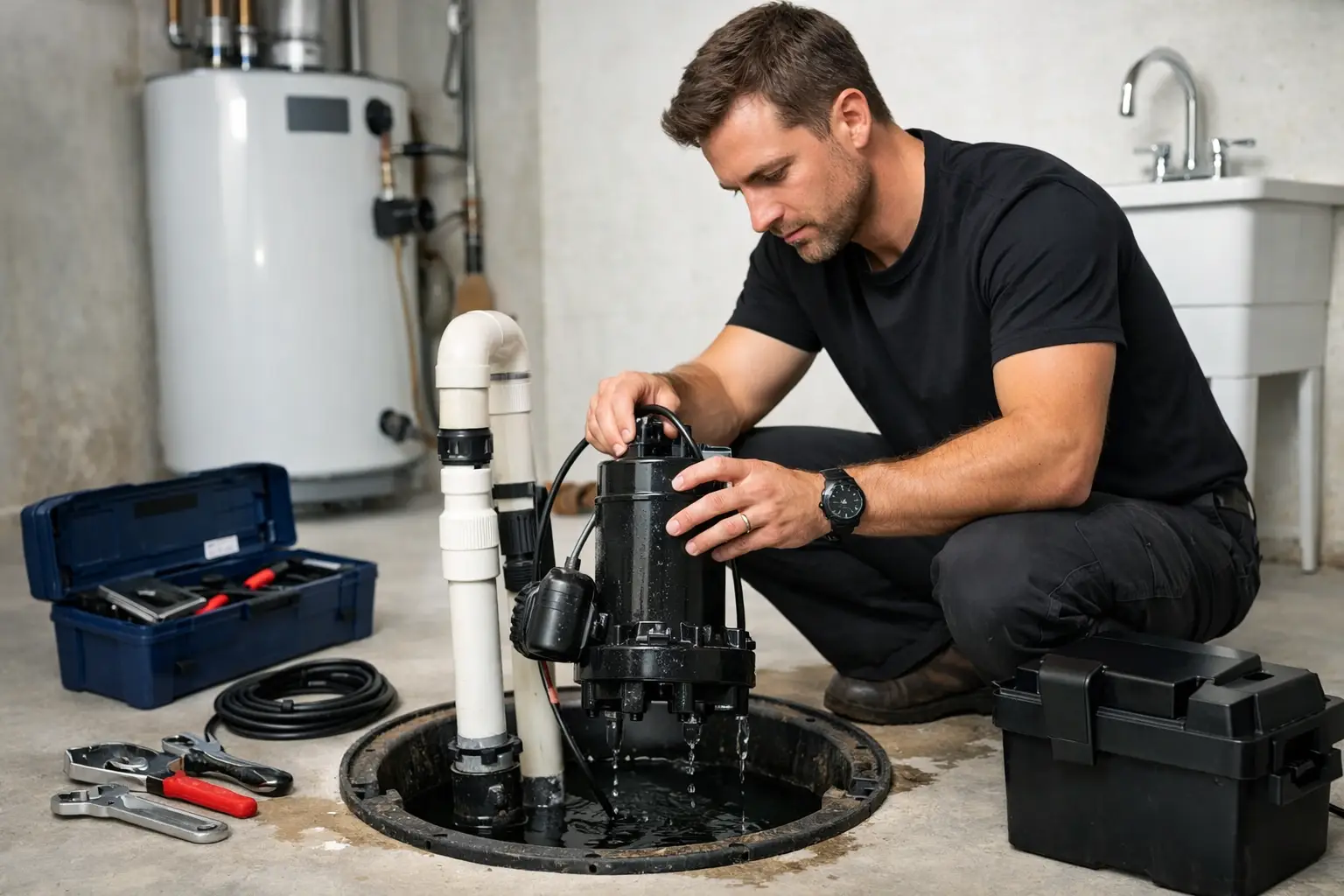
A sump pump is easy to forget because it does its best work out of sight. But when snow melts quickly, rain is heavy, or groundwater rises, a neglected pump can leave a basement or utility area vulnerable to unwanted moisture. This sump pump maintenance guide explains the checks that help homeowners, property managers, and facility teams keep the system ready for the season.
Most basic maintenance takes less than an hour. The key is not simply confirming that the pump turns on. You also need to make sure water can reach the pit, the float can move freely, and the discharge line can carry water safely away from the building.
Know What Your Sump Pump Is Doing
A sump pump sits in a basin, or pit, at the lowest point of a basement, crawl space, or foundation drainage system. As water collects in the pit, a float switch activates the pump. The pump then pushes water through a discharge pipe to an approved drainage location outside.
The system has several parts that need to work together: the pump, float switch, power supply, check valve, discharge pipe, and basin cover. A problem in any one of these areas can affect performance. For example, a pump may run properly but still fail to protect the property if the discharge line is blocked, disconnected, frozen, or sending water too close to the foundation.
For many homes, a check in early spring and another before the wet fall season is a practical baseline. Properties with consistently high groundwater, finished basements, or older drainage systems may benefit from more frequent checks.
Start With a Safe Visual Inspection
Before touching the pump, disconnect its power supply. If the system is connected to a dedicated outlet, unplug it. Avoid handling electrical connections with wet hands or while standing on a damp floor. If you see damaged wiring, a loose outlet, corrosion around electrical components, or repeated breaker trips, stop the inspection and arrange professional service.
Remove the basin cover if it is accessible and inspect the pit with a flashlight. Look for sediment, gravel, leaves, or other debris that could interfere with the float or enter the pump intake. The float needs enough open space to rise and fall without catching on the basin wall, power cord, or discharge pipe.
Check that the pump is standing upright and stable at the bottom of the pit. A tilted pump may run inefficiently or allow the float to become stuck. Also inspect the visible discharge pipe connections for signs of leaks, loose fittings, or staining that suggests water has escaped during previous cycles.
Test the Pump With Water
The most useful maintenance test is simple: pour water slowly into the sump pit until the float rises and activates the pump. A bucket is usually better than a hose because it gives you more control over the amount of water entering the basin.
Watch for three things. First, the pump should start once the water reaches the float’s activation level. Second, it should remove the water steadily without excessive vibration, grinding, or rattling. Third, it should shut off after the water level drops.
If the pump does not start, confirm that it is plugged in and that the outlet has power. If it runs but does not move water, the intake, impeller, check valve, or discharge line may be obstructed. Do not continue running a pump that is making unusual noise, cycling repeatedly, or failing to shut off. Those symptoms deserve a closer inspection by a qualified plumbing professional.
After the test, reinstall the cover securely. A covered basin helps keep debris out, limits humidity, and reduces the chance of objects falling into the pit.
Check the Float Switch Carefully
The float switch is a common source of sump pump trouble because it is a moving component. During your test, make sure the float rises freely and returns to its resting position without snagging. A tethered float needs adequate clearance to swing, while a vertical float needs a clear path up and down.
Do not tie the float up or force it into position as a permanent fix. It may make the pump run continuously or prevent it from activating when water levels rise. If the switch is sticking, damaged, or unreliable, a repair assessment is the sensible next step.
Clean the Pit and Pump Intake
Small amounts of sediment in a sump basin are normal, particularly in homes with active foundation drainage. Over time, however, sludge and debris can collect around the pump intake and reduce water flow.
With the pump unplugged, remove loose debris from the basin. If the pump can be lifted safely, inspect its intake screen and clean away visible buildup according to the manufacturer’s instructions. Avoid using harsh chemicals in the pit. They can damage components and may enter the drainage system.
You do not need to over-clean a sump pit or disturb drainage materials unnecessarily. The goal is to remove buildup that could obstruct the pump or restrict the float, not to turn the basin into a spotless container.
Inspect the Discharge Line Outside
A well-maintained pump still depends on a clear discharge route. Walk outside while the pump is operating, if conditions allow, and confirm that water is exiting where expected. The discharge point should direct water away from the foundation without creating slippery areas, erosion, or drainage issues on the property.
Look for crushed extensions, separated connections, standing water near the outlet, and visible blockages. In colder climates, frozen discharge piping can be a seasonal concern. If the line is frozen, do not force the pump to run against a closed path. Address the obstruction safely and assess whether the discharge configuration needs adjustment before the next cold season.
Also check the check valve on the vertical discharge pipe. This valve prevents water from flowing back into the basin after the pump stops. A failing check valve can contribute to frequent cycling, extra wear, and water returning to the pit. If you hear a loud bang when the pump stops or notice rapid cycling, the valve may need service.
Keep Power and Backup Plans in View
Your sump pump should generally be connected to a properly grounded, dedicated outlet. Avoid extension cords, power strips, and shared outlets that can be unplugged accidentally or overloaded by other equipment.
A battery backup pump can provide added protection during a power outage, but it also needs maintenance. Test it according to the manufacturer’s instructions, check battery condition, and make sure its alarm is working. Some properties may be better served by a water-powered backup system, depending on local plumbing conditions and water pressure. The right option depends on the building, the level of risk, and the available utility setup.
For commercial properties or multi-unit buildings, document each test. Record the date, pump response, visible condition of the pit, and any concerns. A basic maintenance record makes it easier to spot recurring issues and schedule service before a busy weather season.
A Practical Seasonal Maintenance Routine
A simple routine keeps sump pump care manageable:
- In spring, test the pump with water and inspect the outdoor discharge route after winter.
- Before fall rain, clean debris from the pit, confirm the float moves freely, and test the check valve response.
- After major construction or landscaping near the foundation, inspect the basin for added sediment.
- During long dry periods, run a water test occasionally so a dormant pump does not go unchecked for months.
If the pump is older, runs frequently, or has a history of switch problems, plan a professional inspection rather than waiting for a failure. Repair may be appropriate when the issue is isolated, such as a worn switch or faulty check valve. Replacement may make more sense when the motor is unreliable, the pump is undersized, or repeated repairs are no longer cost-effective.
When to Schedule Professional Service
Call for expert assessment if the pump will not activate, runs continuously, cycles too often, makes new mechanical noises, or cannot discharge water effectively. Professional service is also worthwhile when water is returning to the pit, the basin is unusually full of sediment, or you are unsure whether the current pump capacity suits the property.
For Kitchener homeowners, seasonal snowmelt and periods of heavy rain make timely testing especially worthwhile. Plumingo can help assess pump performance, discharge concerns, and related plumbing conditions with clear service recommendations and transparent pricing.
A sump pump does not need constant attention, but it does need proof that it is ready. A few planned checks each year can turn an overlooked piece of equipment into a more dependable part of your property’s water management plan.