
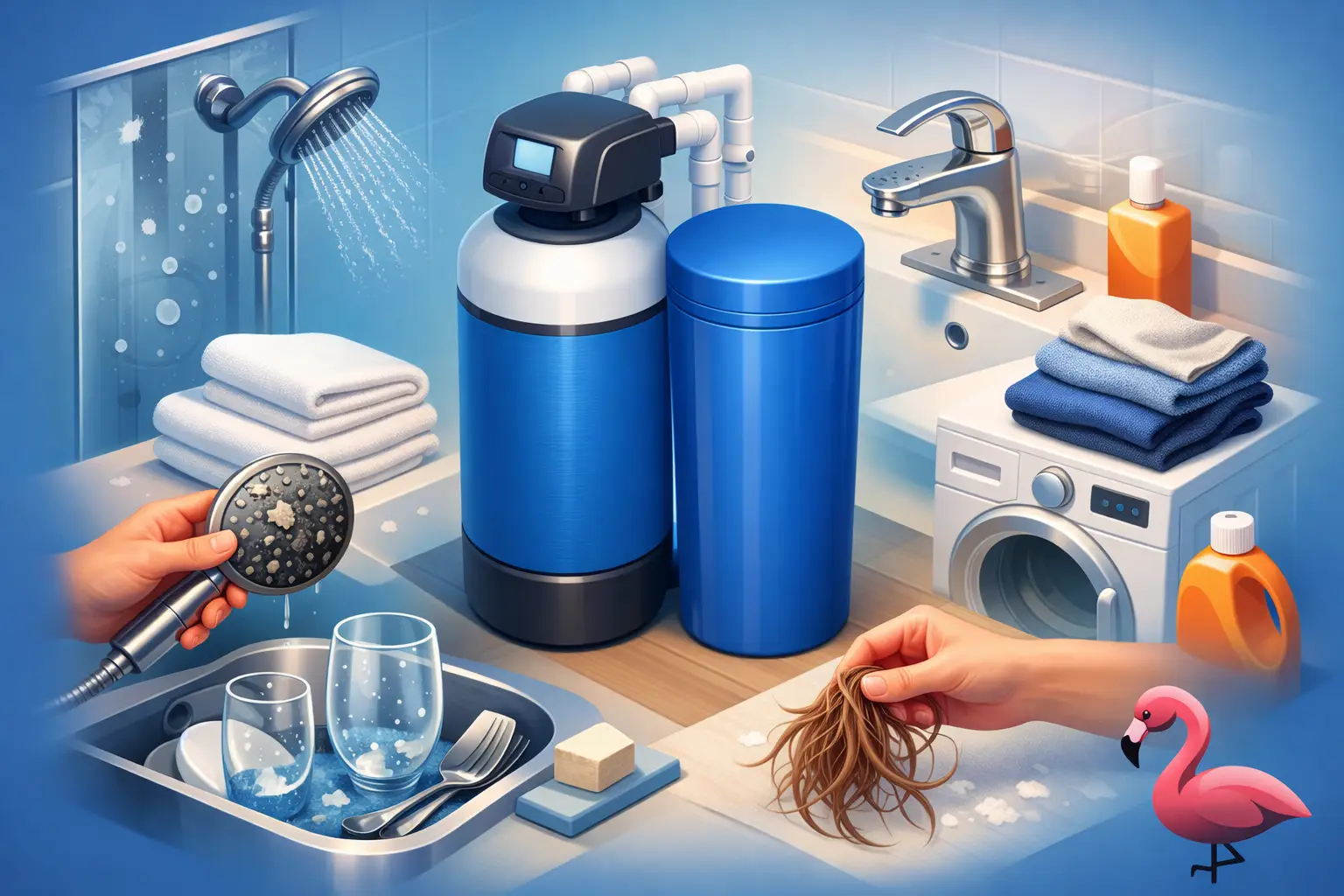
A white crust around the faucet may look like a cleaning problem. If it returns soon after you scrub it away, it may be one of the clearest signs you need a water softener. That residue is often mineral scale left behind by hard water, and it can affect far more than the appearance of your fixtures.
Hard water contains dissolved minerals, mainly calcium and magnesium. These minerals are not automatically a health concern, but they can create costly friction throughout a home or commercial property: on fixtures, inside appliances, in hot-water equipment, and even on laundry. The right solution depends on your water test results, plumbing setup, and daily water use.
What Hard Water Does to a Plumbing System
When hard water is heated or evaporates, minerals can settle out and form scale. You may see it on shower glass and taps, but some of the most significant buildup happens where you cannot see it - inside water heaters, supply lines, dishwashers, coffee equipment, and other water-using appliances.
Over time, this buildup can reduce efficiency and add strain to equipment. A water softener is designed to reduce hardness minerals before they move through the plumbing system. It is different from a reverse osmosis system, which is typically used to improve drinking water at a dedicated tap. Some properties benefit from both, but they solve different problems.
9 Signs You Need a Water Softener
1. Scale keeps appearing on fixtures
Chalky white or gray deposits on faucets, showerheads, sink edges, and glass doors are common hard-water indicators. Cleaning products can remove the visible residue, but they do not change the mineral content in the incoming water. If scale returns quickly, a softener may address the cause rather than the symptom.
2. Your showerhead has weak or uneven spray
A showerhead can lose pressure when mineral deposits restrict its small spray openings. Soaking it may improve the flow temporarily. If the issue repeats, or if multiple fixtures show reduced performance, hard water may be contributing to buildup farther into the system.
Low pressure can also come from a pressure regulator issue, pipe corrosion, a partially closed valve, or a plumbing leak. That is why a professional assessment matters before assuming a softener is the only answer.
3. Soap does not rinse or lather well
Hard water can interfere with soap and detergent performance. You may notice that shampoo feels difficult to rinse out, hand soap leaves a film, or you need more detergent than expected to get the same result. This happens because hardness minerals react with soap, creating residue instead of a clean rinse.
A properly sized softener often improves the feel of water for bathing and can reduce the amount of soap and detergent a household uses. Results vary based on the hardness level and the products you use.
4. Dishes come out cloudy after washing
Spots on glassware are not always caused by a dishwasher problem. If glasses look hazy or feel gritty even after a normal cycle, hard-water minerals may be drying on the surface. Rinse aid can help manage spotting, but it does not remove the hardness minerals entering the appliance.
Persistent cloudiness is worth investigating, particularly if you also see scale on faucets and shower doors.
5. Laundry feels stiff, dull, or less clean
Minerals can settle into fabric over repeated wash cycles. Towels may feel rough, dark clothing can look faded, and whites may lose brightness sooner than expected. You may also find yourself using extra detergent, fabric softener, or additives to compensate.
Softened water can help detergents work more effectively and may be easier on fabrics. For property managers and commercial operators handling frequent laundry, the long-term impact on equipment and supply use can be especially relevant.
6. Your water heater is working harder
Hard water and hot water equipment are a difficult combination. Mineral scale can collect on heating elements and at the bottom of tank-style water heaters. That buildup can reduce heat transfer, which means the system may need more energy and time to heat water.
Warning signs include rising utility costs, inconsistent hot water, popping or rumbling sounds from a tank, and equipment that seems to age faster than expected. Regular water heater maintenance remains necessary, but reducing hardness can limit the scale entering the system in the first place.
7. Appliances need frequent cleaning or repairs
Dishwashers, washing machines, tankless water heaters, ice makers, coffee machines, humidifiers, and commercial equipment all interact with the mineral content in water. Scale can shorten maintenance intervals and affect performance, particularly where water is heated or sprayed through narrow components.
A water softener is not a guarantee against every appliance repair. It can, however, reduce one common source of internal buildup. For businesses, that can support more predictable equipment care and fewer avoidable service interruptions.
8. Your skin and hair feel dry after bathing
Dry skin and dull, coated-feeling hair can have many causes, including weather, skincare products, and personal health factors. Still, hard water may be part of the equation. Mineral residue can make it harder to rinse away soap and shampoo fully, leaving skin feeling tight and hair less manageable.
This sign is subjective, so it is best considered alongside more measurable evidence such as scale, spotting, or a water test.
9. A water test confirms high hardness
The most reliable way to determine whether you need a softener is to test the water. A professional test can measure hardness and identify other relevant conditions that affect system recommendations, such as iron, pH, total dissolved solids, and sediment.
Water hardness can vary by neighborhood, property, and source. Municipal water can be hard, and private well water may require more customized treatment. A test helps avoid undersizing a system, choosing the wrong equipment, or paying for treatment that does not match the problem.
When a Water Softener May Not Be the Right First Step
Not every white mark or appliance issue points to hard water. Old plumbing, sediment, excess iron, chlorine, damaged fixtures, and water pressure problems can produce similar symptoms. If your concern is taste, odor, lead, bacteria, or other drinking-water contaminants, a softener alone is not the appropriate treatment method.
There are trade-offs to consider as well. Conventional ion-exchange softeners require salt and regular replenishment. They also need proper sizing, drainage, and maintenance. Some homeowners prefer salt-free conditioning systems, but these typically condition minerals rather than remove hardness in the same way, so results on spotting and soap performance can differ.
For homes with a low-sodium diet requirement, discuss the system configuration and alternatives with a qualified water treatment professional. Potassium chloride may be an option in some systems, though it is generally more expensive than standard softener salt.
Choosing the Right Size and Setup
A water softener should be selected based on measured hardness, household size, water use, plumbing layout, and peak demand. Bigger is not always better. An oversized or poorly programmed unit may waste water and salt, while an undersized system can regenerate too frequently and fail to keep up with demand.
Commercial properties need an even more careful review. A restaurant, multi-unit building, salon, clinic, or office may have equipment-specific water needs and variable usage patterns. In these cases, the goal is not just softer water. It is reliable system performance, practical maintenance, and a treatment plan that fits operations.
For homeowners and property operators in Kitchener, a professional assessment can clarify whether hard water is affecting your plumbing and what treatment setup makes sense. Plumingo can help evaluate the symptoms, test the water, and recommend a clear path forward with transparent service guidance.
A water softener is most valuable when it solves a verified problem. If scale keeps returning, appliances are struggling, and your water test shows elevated hardness, acting early can protect the equipment you rely on every day.