
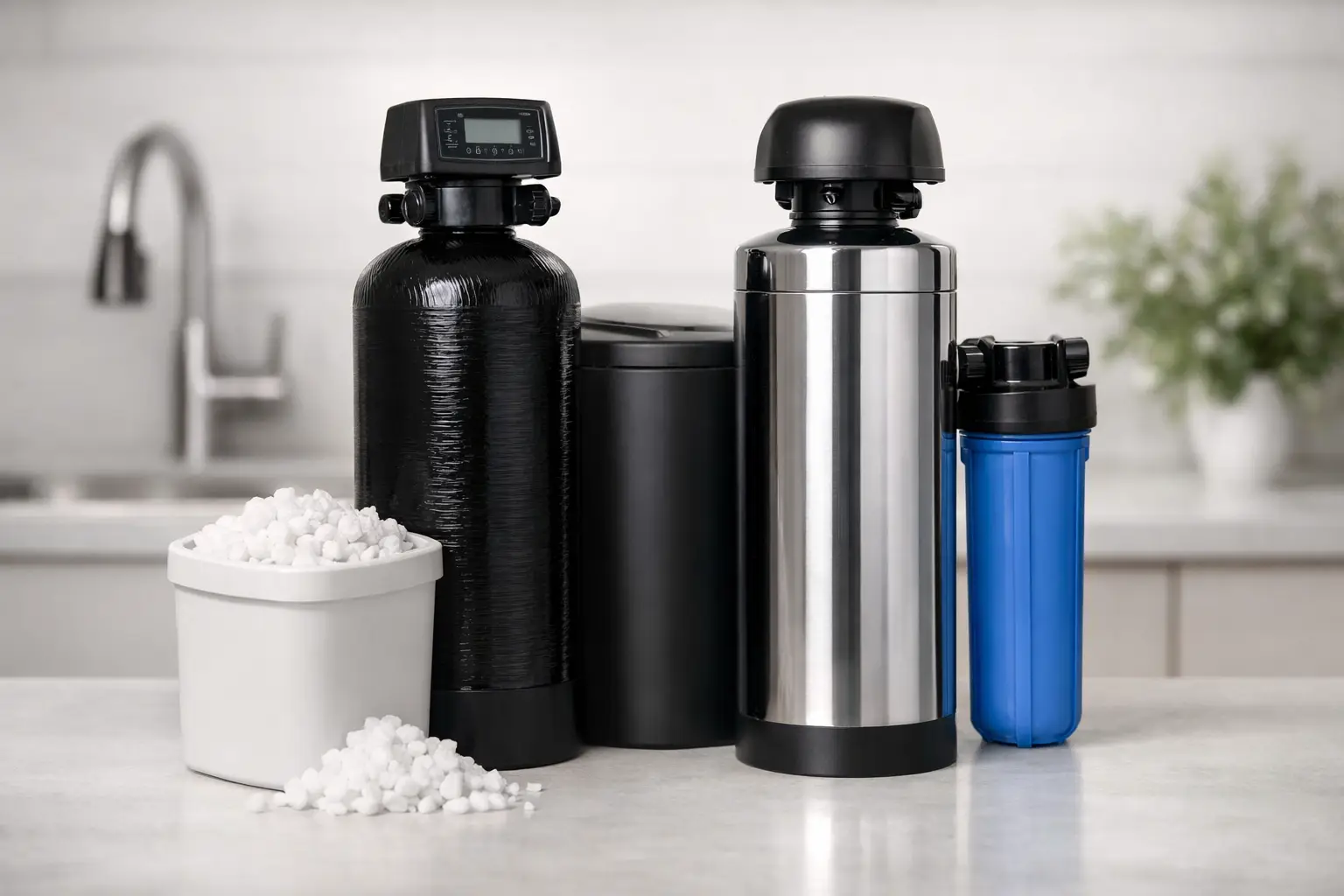
Hard water usually shows up before anyone tests it. You see white scale on fixtures, soap stops lathering properly, dishes dry with spots, and water-using equipment starts working harder than it should. When homeowners and property managers compare salt based vs salt free softeners, they are usually trying to solve those exact problems without overpaying or choosing the wrong system.
The key point is simple: these two systems do not do the same job in the same way. A salt-based system removes hardness minerals from the water. A salt-free system conditions the water to reduce scale buildup, but it does not actually remove calcium and magnesium. That difference affects everything from maintenance and operating cost to water feel and appliance protection.
Salt based vs salt free softeners: the core difference
A salt-based softener uses ion exchange. As hard water passes through the resin tank, calcium and magnesium are exchanged for sodium or potassium. The result is true soft water. You will usually notice it right away in the way soap performs, how laundry feels, and how much scale stops forming in plumbing fixtures and appliances.
A salt-free unit is more accurately called a water conditioner. Instead of removing hardness minerals, it changes how those minerals behave so they are less likely to stick to surfaces as hard scale. This can be useful in some properties, especially where scale prevention is the main goal, but it does not create soft water in the traditional sense.
That distinction matters because many buyers expect a salt-free system to deliver the same bathing, cleaning, and water-heater performance as a true softener. In many cases, it will not.
When a salt-based softener makes more sense
If your water is very hard, a salt-based system is usually the stronger solution. It directly addresses the mineral content that causes buildup in pipes, faucets, water heaters, boilers, dishwashers, and other equipment. In homes, that often means cleaner fixtures, better soap efficiency, and less time spent scrubbing tubs and shower glass. In commercial settings, it can also mean better equipment longevity and more predictable performance.
This is often the preferred option when water hardness is doing real damage or creating ongoing operating issues. If you run a business with water-dependent equipment, or if your home has recurring scale buildup despite regular cleaning, true softening can provide a more complete fix.
There are trade-offs. Salt-based systems require salt refills, periodic maintenance, and a drain connection for regeneration. They also use water during the regeneration cycle. Some property owners are fine with that because the benefit is stronger hardness removal. Others prefer lower-touch operation, even if the result is less complete.
When a salt-free system is worth considering
Salt-free systems appeal to buyers who want simpler maintenance and no salt handling. They do not regenerate the same way salt-based systems do, so there is no need to add bags of salt on a regular basis. For some households, that convenience matters.
They can also be a practical choice when the main concern is moderate scale control rather than full softening. If the water is not severely hard and the owner mainly wants to reduce mineral buildup on fixtures and water-using equipment, a salt-free conditioner may be enough.
Still, expectations need to be realistic. You may not get the slick feel on skin and hair that people associate with soft water. Soap performance may improve less than expected. If spotting, detergent use, and cleaning frustration are major pain points, a salt-free system may feel like a partial answer rather than a full one.
Performance in real homes and buildings
For most buyers, the decision is not about theory. It is about what changes after installation.
With a salt-based system, the water usually feels noticeably different. Soap lathers more easily, scale formation drops sharply, and mineral deposits inside appliances are reduced because hardness minerals are being removed from the water stream. That makes this option especially effective for protecting water heaters and improving overall cleaning performance.
With a salt-free system, the results are often more subtle. You may see less hard scale sticking to surfaces over time, but you are still dealing with hard minerals in the water. In some buildings that is enough. In others, especially where hardness is high, owners still notice spots on glassware, mineral residue, and reduced soap efficiency.
This is why water testing matters before choosing equipment. A system that works well for moderately hard municipal water may not perform the same way on a property with much higher hardness levels or a greater equipment load.
Cost is not just the purchase price
It is easy to compare these systems based on upfront price alone, but the more useful comparison looks at total ownership.
A salt-free system can be attractive because it often has lower routine input costs. There is no recurring salt purchase, and maintenance may feel simpler. That said, if the property continues to struggle with cleaning issues, fixture buildup, or reduced equipment efficiency, the lower operating effort may not equal better value.
A salt-based system usually has ongoing costs for salt, service, and water use during regeneration. But if it significantly reduces scale-related wear on plumbing and appliances, it may save money elsewhere. For homes with very hard water, the stronger treatment result often justifies the added maintenance.
For commercial operators and property managers, this calculation should include downtime risk, equipment replacement cycles, and housekeeping labor. In those settings, water treatment decisions can affect more than utility bills.
Maintenance and service expectations
Salt-based systems require more active ownership. The brine tank needs salt, the system should be checked periodically, and settings should match the property's water conditions and usage. If the unit is undersized or poorly maintained, performance drops.
Salt-free systems are generally lower maintenance, but lower maintenance does not mean no maintenance. Media life, prefiltration needs, and water quality conditions still matter. If sediment, iron, or other contaminants are present, they can affect performance and system lifespan.
This is where professional setup matters. A water treatment system should be sized to the property, matched to the water profile, and installed to support long-term reliability. The best equipment can still disappoint if the application is wrong.
Which system is better for Canadian properties?
There is no single answer because water conditions vary widely by region, building type, and source. In many areas, hardness is high enough that a salt-based softener delivers the more complete result. That is especially true for larger households, multi-unit properties, and commercial spaces where scale can quietly drive up maintenance costs.
Salt-free systems can still be a good fit where owners want a lower-maintenance setup and understand the limits. They are often better viewed as scale-control equipment than as direct replacements for true softening.
If your goal is to make water feel softer, improve soap performance, and remove hardness minerals, a salt-based unit is usually the right category. If your goal is lighter-touch scale management with fewer maintenance demands, salt-free may be worth a closer look.
How to make the right choice
The best buying decision starts with two questions: how hard is your water, and what problem are you actually trying to solve?
If you are dealing with major scale buildup, short appliance life, poor cleaning results, or very hard water readings, a salt-based system is often the safer investment. If you mainly want to reduce surface scale and prefer minimal routine maintenance, a salt-free conditioner may be enough.
It also helps to think beyond the equipment itself. Installation quality, sizing, and service support matter just as much as the label on the tank. A properly specified system should fit your water conditions, your usage pattern, and the level of protection your home or facility needs.
For buyers who want a clear answer without guesswork, professional testing and system matching are worth it. That is especially true when the property includes expensive fixtures, high-demand plumbing, or commercial equipment. Plumingo approaches water treatment the same way it approaches plumbing service - with expert assessment, transparent recommendations, and solutions built around long-term system performance.
The right system is the one that solves the problem you actually have, not the one with the simplest marketing claim.