
If your water tastes off, leaves scale on fixtures, or keeps spotting your dishes, the question usually comes down to RO filter vs water softener. They are not competing versions of the same product. They solve different water problems, and choosing the right one starts with knowing what is actually in your water.
That distinction matters more than most homeowners expect. Many people buy a softener hoping for better drinking water, or install reverse osmosis expecting it to stop hard water buildup. Then the real issue stays in place. A better decision starts with matching the system to the problem, not the label.
RO filter vs water softener: the core difference
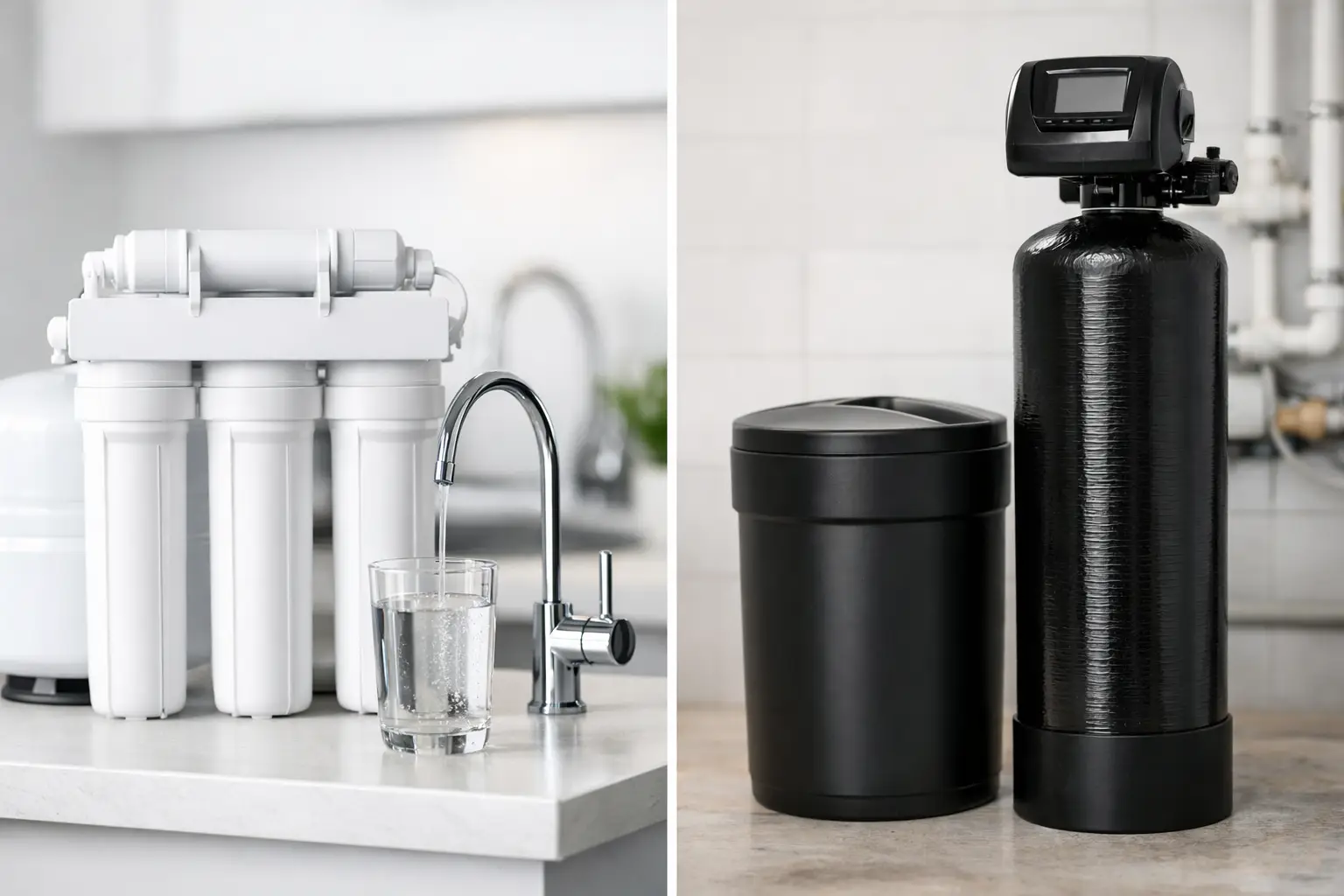
A water softener is built to treat hard water. Hard water contains elevated levels of calcium and magnesium, the minerals that create scale in pipes, water heaters, faucets, and appliances. A softener removes or exchanges those minerals so water is easier on plumbing and equipment.
An RO filter, short for reverse osmosis filter, is designed to improve water quality at the point of use, usually for drinking and cooking. It pushes water through a specialized membrane that reduces many dissolved contaminants, including certain salts, metals, and other impurities that affect taste and quality.
So if you want to protect your plumbing system, a softener is usually the answer. If you want cleaner drinking water at the tap, an RO system is usually the better fit. In many properties, the right answer is not either-or. It is both, installed for different purposes.
What a water softener actually does
A water softener treats one of the most common water issues in homes and commercial buildings: hardness. When calcium and magnesium stay in the water supply, they leave mineral deposits behind. That buildup can reduce water heater efficiency, shorten appliance life, clog fixtures over time, and make soap harder to rinse away.
Softened water helps protect the systems that move and heat water throughout the property. It can reduce scale in pipes, improve performance in water-using appliances, and make cleaning easier. Laundry often feels softer, glassware tends to spot less, and soap works more effectively.
What a softener does not do is purify water in the way many customers assume. It does not function like a full drinking water filtration system. It is not designed to remove the broad range of contaminants an RO unit targets. If your concern is taste, odor, or dissolved contaminants in your drinking water, a softener may help indirectly in some cases, but it is not the main solution.
What an RO filter actually does
An RO filter is focused on water quality at the tap where you drink or cook. These systems are typically installed under a sink and may include several filtration stages before and after the membrane. Their job is to reduce unwanted dissolved substances that can affect taste, odor, and overall water quality.
For homeowners, that often means better-tasting water without relying on bottled water. For property managers or commercial operators, it can mean a more controlled water source in kitchens, break rooms, or areas where water quality matters to staff and guests.
RO systems are precise, but they are not whole-property solutions in most standard setups. They do not soften all the water entering a building, and they do not stop hard water scale from forming in your plumbing infrastructure. If hard water is damaging fixtures and equipment, an RO system alone will not solve that problem.
Which problem are you trying to solve?
This is where the RO filter vs water softener decision becomes practical.
If you are seeing white scale around faucets, frequent water heater issues, dull laundry, or poor soap performance, hard water is likely the main problem. A water softener is the more relevant solution because it addresses the minerals causing that damage.
If your main concern is drinking water quality, such as unpleasant taste, odor, or concern about dissolved impurities at the kitchen tap, an RO filter is usually the better fit.
If both are happening at the same time, and that is common, then a combined setup may make the most sense. A softener protects the home or facility infrastructure, while an RO unit improves water at the point where people drink it.
RO filter vs water softener for homeowners
For homeowners, the choice usually depends on whether the priority is plumbing protection or drinking water quality.
A family dealing with hard municipal or well water may see the impact throughout the house. Shower doors collect scale, the dishwasher struggles to keep glassware clear, and the water heater works harder than it should. In that case, a softener delivers value across the entire property.
A homeowner who is mostly concerned with what comes out of the kitchen tap may lean toward RO. That is especially true if they buy bottled water, dislike the taste of tap water, or want more confidence in the water used for cooking.
Budget also matters. A whole-home softener typically affects more of the property and may involve different installation requirements than a point-of-use RO unit. But cost should be weighed against what the system is expected to do. A smaller system that solves the wrong problem is not the more affordable option in the long run.
RO filter vs water softener for commercial properties
Commercial settings add another layer of decision-making because water quality affects equipment, operations, and customer experience.
In a restaurant, café, office, or multi-unit property, hard water can create expensive maintenance issues. Scale buildup can impact water heaters, dishwashing equipment, boilers, and fixtures. In these cases, a water softener can help protect capital equipment and reduce service disruptions.
An RO filter has a different role. It is valuable where water quality directly affects consumption or process use, such as drinking stations, coffee preparation, ice production, or food service applications. It supports consistency and can improve the end-user experience, but it does not replace softening where hardness is the core issue.
For many commercial operators, the correct setup is strategic rather than simple. The system should match usage patterns, equipment load, water conditions, and maintenance expectations.
Can you use both together?
Yes, and in many cases that is the strongest setup.
A softener and an RO filter do different jobs, which means they can complement each other well. The softener handles hardness before it affects plumbing and appliances. The RO system then treats water for drinking or specialty use at the point of delivery.
This approach is often ideal for homes with hard water and high expectations for drinking water quality. It is also common in commercial settings where infrastructure protection and point-of-use water quality both matter.
There is another practical advantage. Softening water before it reaches certain filtration equipment can reduce scaling stress on the system. That can support performance and help avoid premature wear in the broader water treatment setup.
What to consider before installing either system
Water testing should come first. Without understanding whether the issue is hardness, dissolved contaminants, taste and odor concerns, or a combination, system selection is mostly guesswork.
You should also consider where the problem shows up. If it affects every tap and appliance, that points toward whole-property treatment such as softening. If it is mostly about drinking and cooking water, point-of-use RO may be the cleaner solution.
Maintenance is another factor. Softener systems need ongoing salt management and periodic service. RO systems need filter and membrane replacement on schedule to perform correctly. Neither system should be installed and forgotten.
Finally, think about the property as a system, not just a single fixture. Water treatment decisions affect plumbing performance, equipment longevity, service needs, and daily use. A professional assessment is often the fastest way to avoid overspending or under-solving the issue.
The better choice depends on your water
The right answer to RO filter vs water softener is rarely based on product preference alone. It depends on what your water is doing, what your property needs, and whether your priority is protection, purification, or both.
If hard water is wearing down fixtures and equipment, start with softening. If drinking water quality is the concern, start with RO. If both issues are present, a combined approach is often the more effective long-term investment.
Good water treatment should make the property easier to run, not more complicated. When the system matches the problem, everything from daily use to long-term maintenance gets simpler.