A well-maintained RO filter can make the difference between water that simply looks clear and water that has been carefully treated at the point of use. But reverse osmosis systems are not install-and-forget equipment. Their filters, membrane, storage tank, valves, and connections all need periodic attention to keep drinking water quality consistent and prevent avoidable plumbing issues.
For homeowners, property managers, and commercial operators, the practical question is not whether an RO system needs service. It is whether the system is being serviced before performance drops, leaks develop, or water quality becomes uncertain.
What an RO Filter Actually Does
Reverse osmosis, commonly called RO, uses pressure to push water through a specialized semipermeable membrane. That membrane helps reduce many dissolved contaminants, including salts, certain metals, and other unwanted particles. Most systems also use several pre-filters and post-filters to manage sediment, chlorine, taste, and odor.
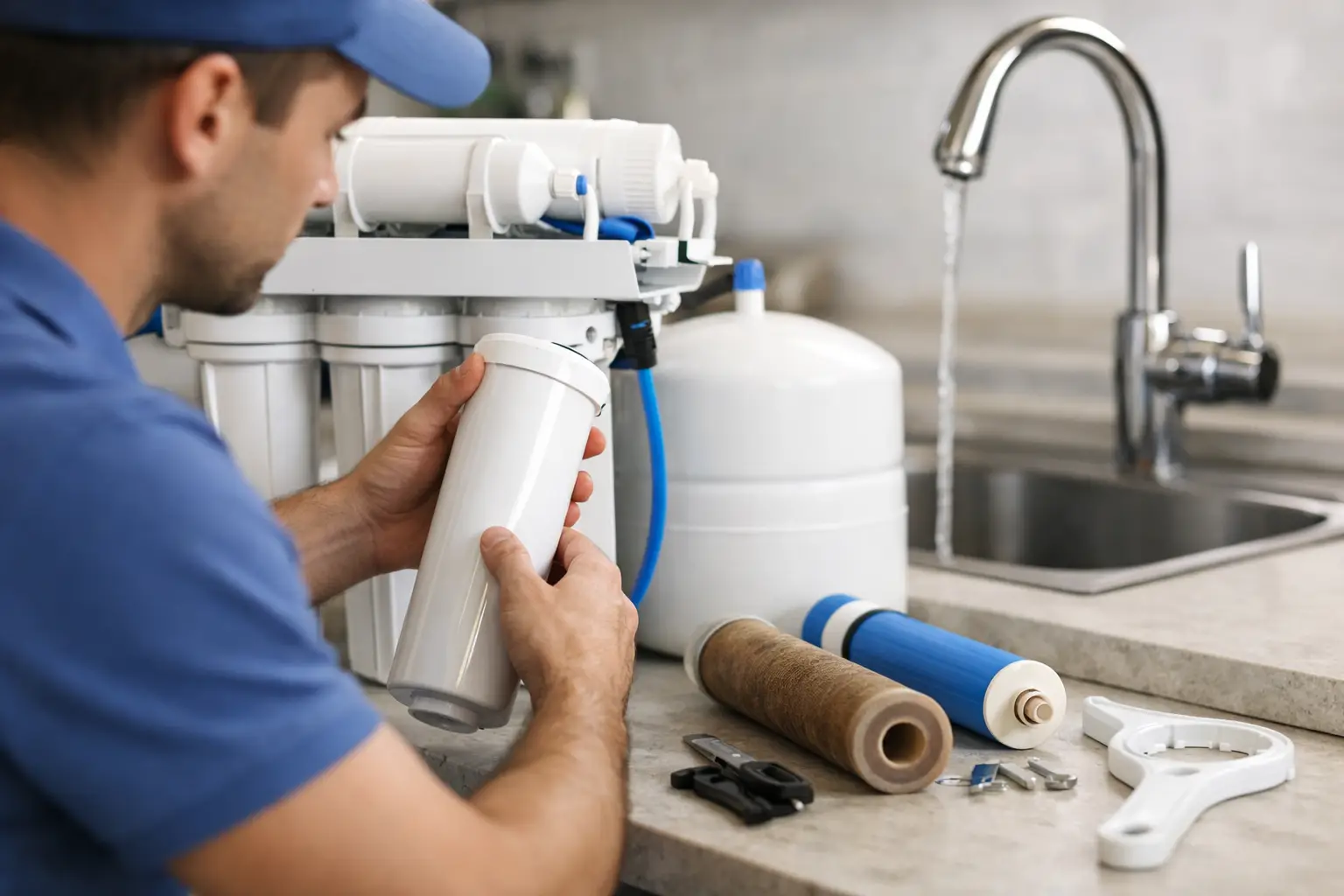
A typical under-sink RO system has a sediment pre-filter, carbon filters, an RO membrane, a storage tank, and a dedicated drinking-water faucet. Some systems add a polishing carbon filter or a mineral stage. Each part serves a different purpose, which is why replacing only one filter on an irregular schedule is rarely the best maintenance approach.
An RO system is usually designed for drinking and cooking water at one sink. It is not automatically a whole-property solution. If hard water, iron, sediment, or other issues affect water throughout the building, a water softener, pre-filtration system, or tailored treatment plan may be needed alongside the RO unit.
Signs Your RO Filter Needs Service
Slow water flow is one of the most common warning signs. If the tank takes much longer to fill, the faucet produces only a small stream, or the system seems unable to keep up with normal use, a clogged filter, worn membrane, low tank pressure, or restricted valve may be involved.
A change in taste or odor deserves attention as well. RO water should generally taste clean and neutral. A chlorine-like taste can point to depleted carbon filtration, while stale or unusual flavors may indicate overdue filter replacement, tank sanitation needs, or an issue with the post-filter.
Leaks should never be treated as a minor inconvenience. Water around the filter housings, tubing connections, shutoff valve, or storage tank can damage cabinetry and flooring over time. A professional can identify whether the cause is a loose fitting, a worn O-ring, a cracked housing, excessive pressure, or an installation issue.
Other signs include a continuously running drain line, cloudy water that does not clear, air sputtering from the faucet, or an unexpected increase in water waste. These symptoms do not always mean the membrane has failed. They do mean the system needs a proper inspection rather than a guesswork repair.
RO Filter Maintenance Is More Than a Filter Change
Filter replacement intervals vary by system design, incoming water quality, household usage, and the type of filters installed. In many residential systems, sediment and carbon pre-filters are replaced every 6 to 12 months. The RO membrane may last two to five years, while post-filters are often replaced annually. Manufacturer recommendations provide a starting point, but actual conditions should guide the final schedule.
For example, water with higher sediment levels can clog a pre-filter early. Water with chlorine can damage an RO membrane if carbon filters are exhausted. Hard water can cause mineral scale that shortens membrane life, particularly where a system does not have appropriate pre-treatment.
Professional maintenance generally includes more than changing cartridges. The technician should inspect filter housings and seals, assess tubing and fittings, check tank pressure, review drain flow, sanitize components when appropriate, and test water quality or system performance. This approach identifies small issues before they become service calls involving leaks, poor production, or a complete loss of filtered water.
Commercial systems require especially careful scheduling. Offices, food service operations, clinics, and multi-unit properties may put far more demand on equipment than a typical home. A maintenance plan should reflect daily volume, water source conditions, equipment capacity, and any operational requirements for water quality.
Why the RO Membrane Matters
The membrane is the working core of the system, but it is not a universal fix for every water concern. It relies on functioning pre-filters and adequate water pressure. When it becomes fouled or scaled, the system can produce water slowly, reject water inefficiently, or allow more dissolved material through than intended.
Replacing the membrane too early adds unnecessary cost. Replacing it too late can affect water quality and strain other components. Testing total dissolved solids, reviewing production rate, and inspecting the system condition give a clearer answer than using a calendar alone.
Common RO System Problems and the Right Response
A low-flow faucet may be caused by a clogged post-filter, low storage tank pressure, a closed valve, or a restricted line. A technician should rule out these simpler causes before replacing expensive components.
A system that continually sends water to the drain may have a faulty automatic shutoff valve, a damaged check valve, low tank pressure, or an aging membrane. Because RO systems naturally produce some reject water, the goal is not zero drain flow. The concern is drain flow that continues excessively or does not stop once the tank is full.
If there is no water from the faucet, start by checking whether the feed-water valve and tank valve are open. If they are, the issue may be a depleted tank, blocked filters, a failed bladder, or an internal restriction. Avoid forcing fittings or overtightening housings. These actions can create a leak where none existed.
When a system has been unused for an extended period, such as after a vacancy or renovation, it should be inspected and sanitized before returning to regular use. Stagnant water and aging filters can affect taste and system hygiene. Property managers should make this part of turnover planning rather than waiting for a new occupant to report a problem.
Choosing the Right RO Filter Service
Good service starts with clear information. You should know what filters or components are being replaced, why they are needed, what the work costs, and whether the system has any concerns that require follow-up. Transparent pricing matters because RO maintenance can range from a straightforward cartridge change to troubleshooting a leak, pressure issue, or failing tank.
Experience with water treatment matters just as much as general plumbing knowledge. An RO system connects to plumbing, but its performance depends on filtration stages, water chemistry, pressure, and proper configuration. The right provider can evaluate the entire setup, including whether pre-treatment or a different system capacity would better serve the property.
For urgent leaks or loss of water service, responsive plumbing support is valuable. For routine maintenance, scheduled service helps keep costs predictable and reduces the chance of disruption. Plumingo provides expert plumbing and water treatment care with clear service options for both planned maintenance and urgent needs.
Protecting Your System Between Visits
Keep the area under the sink dry and accessible. Do not store heavy cleaning products against tubing or filter housings, and do not ignore a small drip simply because the system still produces water. Note the date of each filter change and keep a record of the filter types used.
If your incoming water changes after municipal work, a well-water issue, or a move to a different property, have the system reviewed. An RO filter is only as effective as its condition, installation, and fit for the water it is treating. Timely service protects the equipment, supports better drinking water, and gives you confidence every time you fill a glass.