
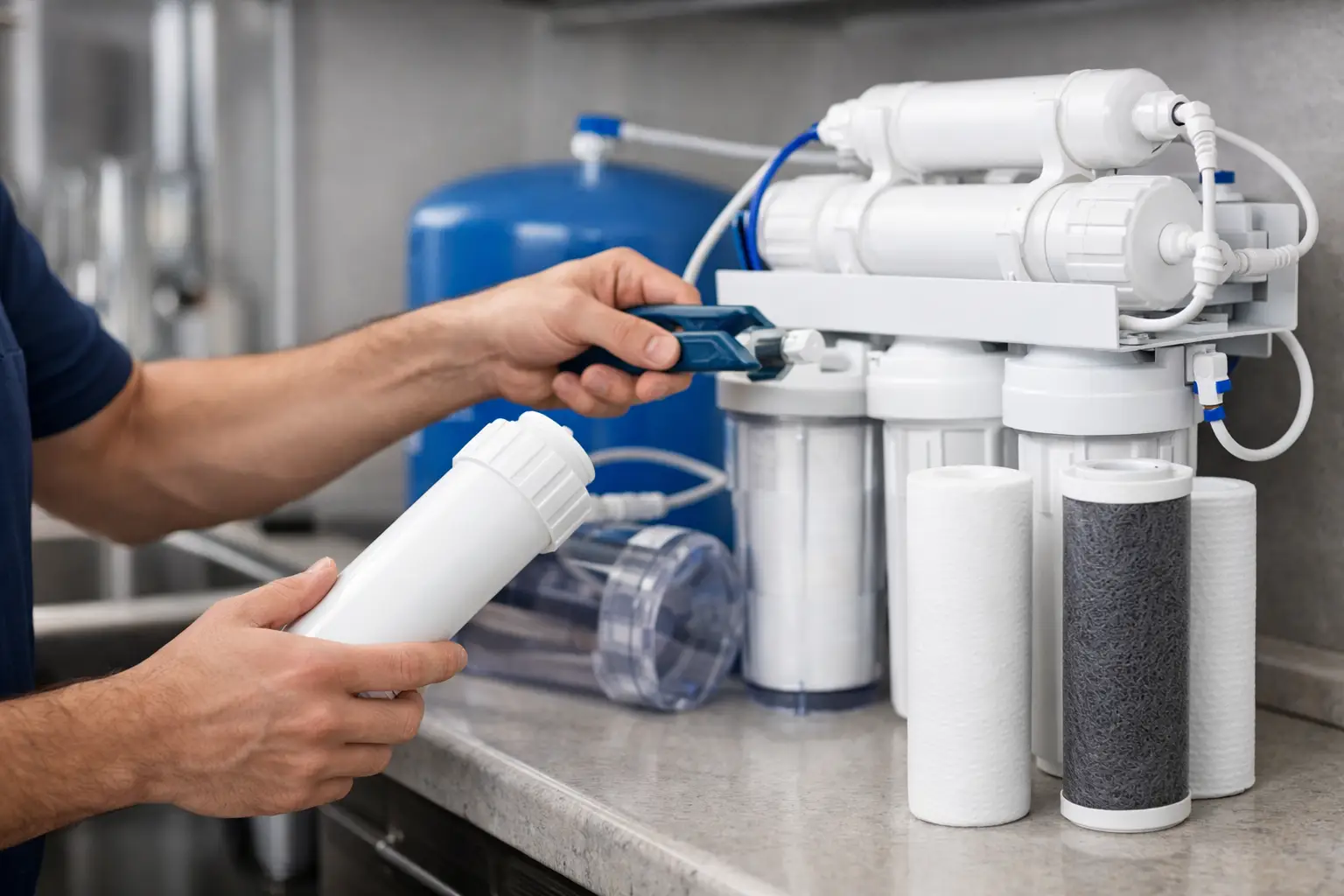
That glass of water can tell you a lot before a test kit ever does. If it starts tasting flat, the flow slows down, or the system runs longer than usual, it is often time for reverse osmosis filter service. For homeowners and facility managers, the issue is rarely just taste. Delayed service can affect water quality, strain system components, and turn a routine maintenance visit into a repair call.
Reverse osmosis systems are reliable when they are maintained on schedule. They are not maintenance-free. Sediment, chlorine exposure, mineral load, and day-to-day usage all affect how long filters and membranes perform as intended. A good service plan keeps the system doing its job without guesswork.
What reverse osmosis filter service actually covers
Many people assume service means swapping one cartridge and moving on. In practice, proper reverse osmosis filter service is broader than that. The goal is to protect the full system, not just one filter stage.
A standard service appointment usually includes inspection of the pre-filters, post-filters, membrane condition, storage tank performance, tubing connections, shut-off valve function, and faucet flow. Depending on the system and its condition, sanitizing the unit may also be part of the visit. This matters because an RO system is only as dependable as its weakest component. A clogged sediment filter, a depleted carbon filter, or a fouled membrane can all affect output.
For residential customers, service is often about restoring taste, clarity, and flow. For commercial operators, it is also about consistency. If your business depends on treated water for staff use, client-facing areas, food prep, or equipment protection, inconsistent filtration can create operational problems fast.
Why timing matters with reverse osmosis filter service
The most common mistake is waiting until the system feels obviously off. By that point, one small maintenance need may have already led to a larger issue.
Pre-filters are a good example. Their job is to catch sediment and chlorine before water reaches the membrane. If they are left in place too long, they can no longer protect the membrane effectively. Once that happens, the more expensive part of the system starts taking the wear. Replacing filters on time is significantly more cost-effective than replacing a membrane early.
There is also a performance issue. Delayed service can lead to slower refill times, reduced faucet pressure, odd taste, odor changes, or higher total dissolved solids in the treated water. None of those signs should be ignored, especially in properties where water quality expectations are high.
Service timing depends on the system, source water, and usage volume. A light-use household may follow a predictable replacement schedule. A busy office, multi-unit property, or location with challenging water conditions may need more frequent attention. That is why a fixed rule does not always work. The right schedule is based on actual operating conditions.
Signs your system needs service now
Some RO systems fail quietly. Others give clear warnings. If the water tastes different, takes longer to dispense, or the storage tank seems slow to refill, service should be scheduled soon. A drip, leak, or constant drain flow should be treated as a more urgent issue.
Cloudiness can also raise concern, although it does not always point to the RO unit alone. In some cases, the issue is trapped air after a filter change. In others, it may relate to a worn membrane or broader plumbing conditions. That is why inspection matters. The symptom may look simple, but the cause can vary.
For commercial properties, a change in water output or quality should be addressed before it affects staff, customers, or equipment. Even a minor drop in performance can become disruptive when water demand is steady throughout the day.
What a professional service visit should include
A professional visit should do more than replace parts. It should confirm that the system is working correctly, safely, and efficiently.
That starts with identifying the system configuration. Not every reverse osmosis unit uses the same number of stages, membrane type, or tank setup. A service technician should verify what is installed, assess wear, and replace the appropriate components based on condition and manufacturer guidance.
The visit should also include a pressure and connection check. Small leaks around fittings or housings may not be obvious at first, but they can lead to cabinet damage, mold risk, or wasted water over time. Proper service catches these issues early.
Sanitization is another detail that should not be skipped when conditions call for it. During filter replacement, the system can be cleaned and disinfected to reduce the risk of bacterial growth inside housings and lines. This is especially useful if the system has been sitting unused, has had inconsistent maintenance, or shows signs of odor.
When the work is done, customers should have a clear understanding of what was replaced, what condition the membrane is in, and when the next service is likely due. Transparent pricing and clear recommendations matter just as much as the parts themselves.
DIY versus scheduled reverse osmosis filter service
Some property owners prefer to replace filters themselves. That can work for straightforward systems and confident users, but it is not always the best choice.
The benefit of DIY is convenience if you know the exact parts, intervals, and installation steps. The trade-off is that problems can be missed. An aging tank, a failing shut-off valve, incorrect filter seating, or a membrane nearing the end of its life may not be obvious without experience. A system can appear to be running while still underperforming.
Professional service is often the better fit when water quality is a priority, the system serves a business, the unit has not been maintained consistently, or there are signs of leakage or pressure issues. In those cases, the value is not just labor. It is accurate diagnosis and full-system care.
For customers who want fewer surprises, scheduled service usually offers the strongest long-term result. It reduces the chances of missed intervals and helps avoid reactive repairs.
Residential and commercial needs are not always the same
A home under-sink unit serving a family kitchen has different service demands than a commercial setup supporting staff areas or equipment. Usage volume is the obvious difference, but it is not the only one.
Commercial systems often operate under tighter reliability expectations. Downtime is less acceptable, and water quality swings can affect operations more directly. That means service needs to be more proactive, more documented, and more responsive when issues appear.
Residential customers, on the other hand, usually want simplicity. They want clean water, clear pricing, and confidence that the work is done right. A service provider should be able to meet both expectations without overcomplicating the process.
This is where a specialized provider has an advantage. A company that handles both plumbing and water treatment can address filter replacement, leaks, pressure concerns, and related plumbing issues in one service path. For customers booking urgent support, that kind of coordination saves time.
Choosing a provider for reverse osmosis filter service
Not every plumbing company is equipped to handle filtration systems well. The difference shows up in the details.
Look for a provider that understands water treatment components, not just basic plumbing connections. They should be able to service filters, evaluate membrane performance, inspect tanks and valves, and explain recommendations clearly. Availability matters too. If a system leak or shutdown affects the property, slow scheduling can create avoidable disruption.
Customers also benefit from straightforward service standards. Transparent pricing, clear booking steps, and documented work make it easier to manage maintenance over time. For homeowners, that builds trust. For property managers and commercial operators, it supports planning and accountability.
Plumingo’s approach reflects that expectation - expert care, responsive scheduling, and service clarity built around both plumbing performance and water quality.
The smarter way to think about service
Reverse osmosis systems are often judged by one thing: whether the water tastes good. That is understandable, but it is too narrow. A well-maintained system protects water quality, supports stable performance, and reduces the chance of preventable repair costs.
If your RO system is overdue for attention, showing performance changes, or serving a property where reliability matters every day, service should not be treated as optional. The best time to address a filtration issue is before it becomes visible in the glass.