
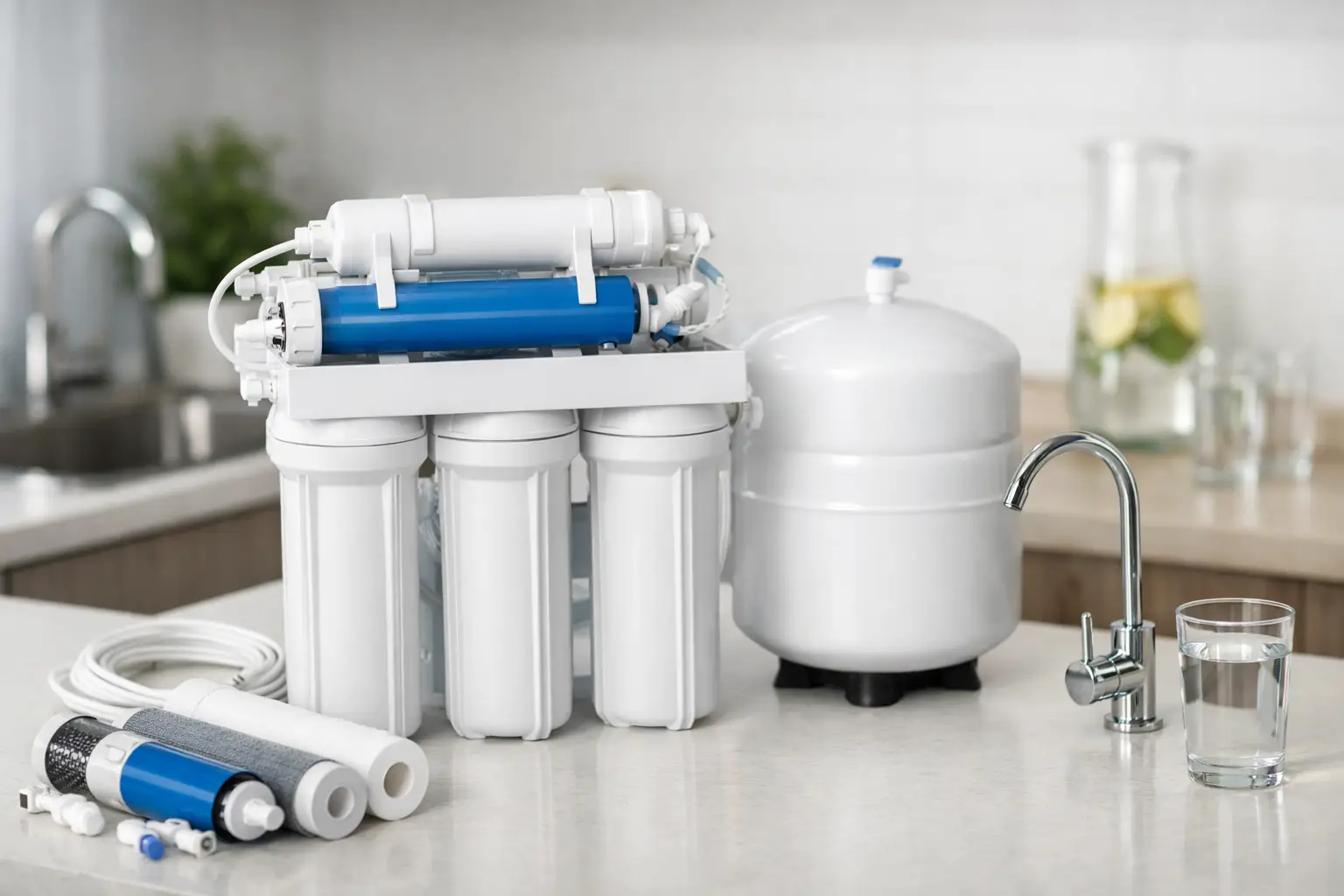
That glass of water can taste clean and still leave you with unanswered questions. A proper reverse osmosis filter review is less about marketing claims and more about what the system removes, how much maintenance it needs, and whether it fits the way your home or building actually uses water.
For homeowners, the goal is usually better-tasting, lower-contaminant drinking water at one tap. For property managers and commercial operators, the question is broader: reliability, service intervals, operating cost, and whether the system can keep up with demand. Those are not the same buying conditions, and they should not be reviewed the same way.
What a reverse osmosis filter review should actually cover
Many product roundups lean too hard on feature lists. That misses the practical side. A useful review starts with water quality, because reverse osmosis systems are not one-size-fits-all. Feed water with high sediment, chlorine, hardness, or dissolved solids affects both performance and filter life.
A serious review should also look at recovery rate, tank size if the unit uses one, membrane quality, replacement schedule, and service access. If a system produces very pure water but requires constant attention or struggles under normal household demand, that matters just as much as lab-level filtration results.
Noise, leak protection, and installation space deserve attention too. Under-sink systems often compete with garbage disposals, cleaning supplies, and existing plumbing. In commercial settings, footprint and serviceability matter even more because downtime has a cost.
Filtration performance matters, but context matters more
Reverse osmosis is highly effective at reducing many dissolved contaminants, including lead, arsenic, nitrates, fluoride, and total dissolved solids. That is the headline benefit. The finer point is that no system performs in a vacuum.
If incoming water pressure is too low, production can slow down. If sediment prefiltration is weak, the membrane can foul early. If hardness is high and untreated, scale can shorten membrane life. So when reading any reverse osmosis filter review, look past the claim that a membrane can remove a certain percentage of contaminants and ask what conditions are required for that result.
This is where many buyers get tripped up. They compare systems by removal percentages alone, when the better comparison is long-term performance under local water conditions. A strong unit in ideal testing can become an average unit in a real home with pressure fluctuations or mineral-heavy water.
Taste improvement is real, but not every user wants the same result
Most users notice taste first. Coffee tastes cleaner, ice smells better, and cooking water has less of the mineral or chlorine edge that municipal water sometimes carries. That said, some people find pure RO water flatter than expected.
That is why post-filtration stages can make a difference. Systems with a polishing carbon filter often improve taste noticeably. Some units also add remineralization, which can give water a more balanced profile. Whether that is a benefit depends on preference, not just technology.
Installation quality can make or break the system
An RO unit is only as good as its installation. Poor drain connections, weak fittings, bad shutoff valve placement, or cramped routing can create leaks, slow flow, and hard-to-service setups. The system itself may be fine while the user experience is not.
For residential buyers, under-sink systems are usually the most practical choice, but cabinet dimensions and access are often tighter than expected. For commercial properties, installation planning should include incoming pressure, production needs, drainage, and routine access for filter changes.
Professional installation usually costs more upfront, but it reduces the risk of callbacks, water damage, and premature wear caused by setup mistakes. That matters more with RO than with simpler filtration because the system has more stages, more connections, and tighter operating requirements.
Maintenance is where cheap systems often lose value
A low purchase price can look attractive until the first year of ownership. Pre-filters and carbon filters need routine replacement, and membranes eventually do too. If replacement parts are hard to source, expensive, or proprietary in a way that limits service flexibility, the bargain fades fast.
In any reverse osmosis filter review, maintenance should be treated as part of total cost, not an afterthought. A better system is usually one with clear service intervals, easy cartridge changes, dependable housing quality, and predictable filter availability.
Homeowners often prefer units with straightforward annual maintenance and clear indicators for filter life. Commercial users usually need a more disciplined schedule because water usage is higher and service interruptions are less acceptable. In both cases, skipping maintenance does not just reduce water quality. It can reduce flow rate, stress the membrane, and increase the chance of leaks or pressure-related issues.
Tank vs tankless systems
Tank-style RO systems remain common because they are proven and generally dependable. They store filtered water so it is available quickly, though they take up more space and can lose some pressure as the tank empties.
Tankless systems save space and often offer a cleaner layout. They may also reduce some of the stale-water concerns associated with storage tanks. But they are more sensitive to pressure and flow conditions, and performance depends heavily on the quality of the design and installation. For busy households or light commercial use, the right answer depends on peak demand and available space.
Water waste is a fair concern, but it needs a realistic view
One common criticism of reverse osmosis is wastewater. That concern is legitimate. RO systems reject a portion of incoming water as part of the filtration process, and some units are more efficient than others.
Still, the review should be balanced. Modern systems have improved in recovery efficiency, and waste ratios vary based on pressure, membrane design, and system type. If water conservation is a top priority, this should be part of the buying decision, but not the only one. Water quality goals, maintenance profile, and service life still matter.
For many users, the practical comparison is not between RO and a perfect zero-waste option. It is between RO and other filtration methods that may not address the same contaminants. The right choice depends on what needs to be removed and how consistently the system can do it.
Cost should be measured over years, not checkout price
A dependable RO system should be reviewed on total ownership cost: equipment, installation, annual filter changes, membrane replacement, and any related plumbing or pretreatment needs. If feed water is hard, for example, a water softener or other pretreatment can improve RO longevity. That adds cost, but it may also prevent frequent service issues.
For homeowners, a mid-range system installed properly often delivers the best balance. Ultra-budget systems can work, but quality control, fitting reliability, and long-term part availability are more variable. Premium systems tend to justify their price when they offer better leak protection, easier maintenance, quieter operation, and stronger support.
Commercial buyers should put even more weight on serviceability. The cheapest system can become the most expensive when it creates downtime, inconsistent water quality, or urgent maintenance calls.
Who should buy an RO system and who should pause
RO is a strong fit for homes and facilities dealing with dissolved contaminants, unpleasant taste, or a need for high-purity drinking water. It also makes sense when users want a point-of-use solution rather than whole-building treatment.
It may not be the first answer if the main issue is sediment alone, if the property has major pressure limitations, or if water usage patterns demand more capacity than a standard under-sink unit can deliver. In those cases, a broader water treatment plan may make more sense than installing RO by itself.
That is where a service-led evaluation has an advantage over product-only shopping. The right system is the one that matches the plumbing layout, water condition, and demand profile, not the one with the most aggressive marketing.
Final take on this reverse osmosis filter review
If you strip away the branding, the best RO systems tend to win on the same points: consistent contaminant reduction, manageable maintenance, reliable components, and installation that supports years of use rather than months of frustration. That applies whether you are protecting family drinking water at home or maintaining water quality standards in a business setting.
A good buying decision starts with honest questions about your water, your usage, and how much service support you want built into the experience. If you approach it that way, you are far more likely to choose a system that performs well after the sale, which is the only review that really counts.