
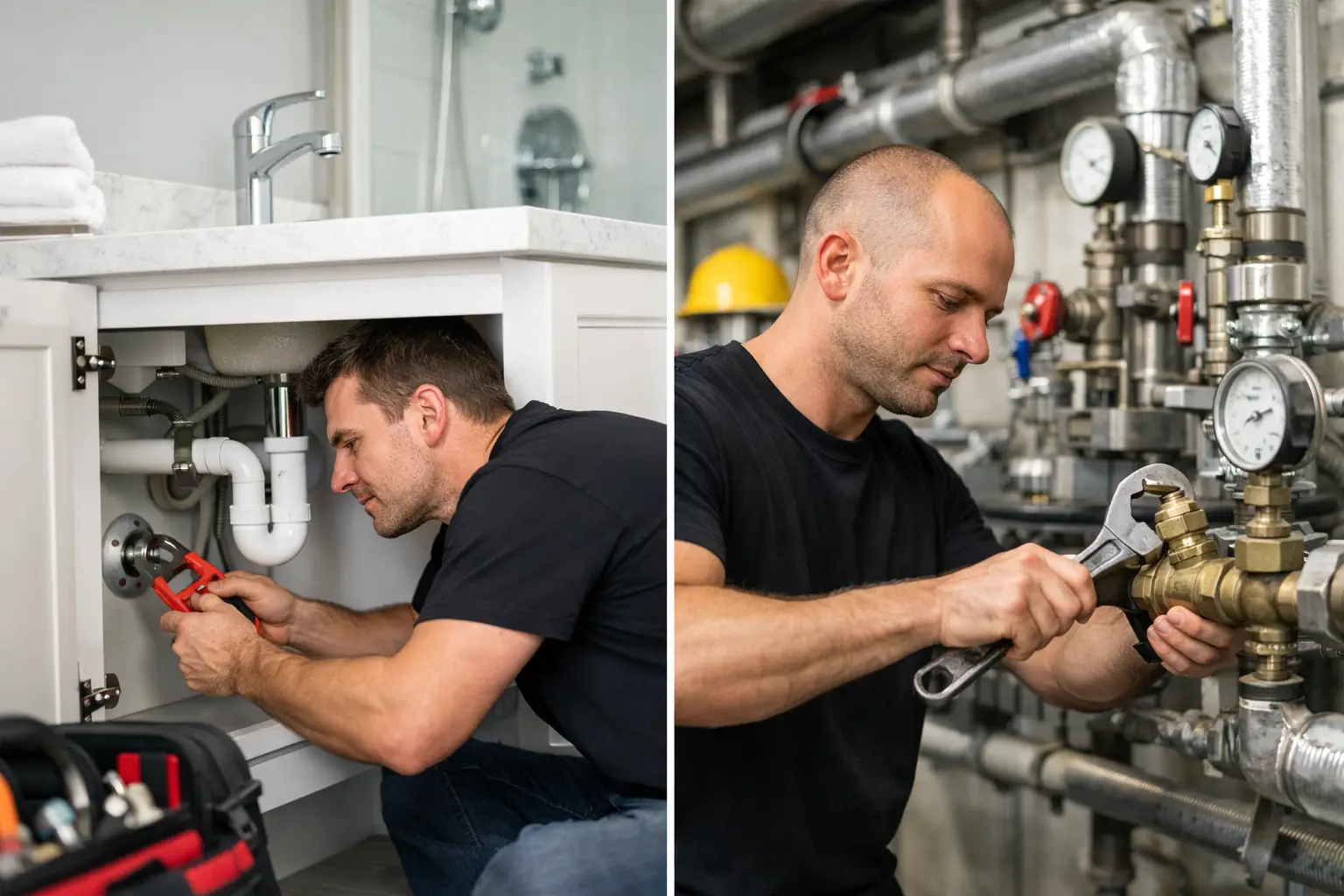
A kitchen drain that backs up at home and a restroom line issue in a busy office may look similar at first. The work behind the repair is often very different. Residential vs commercial plumbing involves different system sizes, usage patterns, access requirements, and planning standards. Understanding those differences helps homeowners, property managers, and business operators make clearer service and maintenance decisions.
Why the Difference Matters
Plumbing is not simply a network of pipes and fixtures. It is an operating system for a property. In a home, that system supports a relatively predictable number of people and appliances. In a commercial setting, it may support employees, customers, tenants, equipment, food service operations, or public restrooms throughout the day.
That difference affects how a plumber diagnoses a problem, selects materials, schedules work, and recommends maintenance. A repair that is appropriate for a single-family home may not be sufficient for a multi-unit building, retail space, restaurant, or office facility.
The right approach also depends on the property itself. A small professional office may have needs closer to a large home, while a busy restaurant or apartment building can require far more specialized planning. System use, occupancy, fixture count, and local requirements all matter.
Residential Plumbing: Built Around Daily Home Use
Residential plumbing serves the routines of a household: showers, toilets, laundry, dishwashing, cooking, and drinking water. Most homes have simpler pipe layouts and fewer fixtures than commercial properties, although larger homes and multi-unit residences can add complexity.
Common Residential Service Needs
Homeowners often call for leaking faucets, clogged drains, running toilets, sump pump concerns, water heater issues, and pipe leaks. These issues are disruptive, but a focused repair can often restore normal operation quickly when the source is identified early.
Residential work also frequently includes water quality services. Hard water can leave mineral buildup on fixtures and reduce the efficiency of water-using appliances. Reverse osmosis filtration can improve drinking water quality at a dedicated tap, while a water softener can help reduce the effects of hardness throughout the home.
Access is usually more straightforward in a house, but finished basements, cabinetry, walls, and landscaping can still affect how a repair is completed. A skilled technician should explain the issue, outline repair options, and be clear about what work is necessary before proceeding.
Maintenance Is Usually Preventive
For most homes, a practical maintenance plan focuses on small checks before they become larger disruptions. That can include watching for slow drains, testing shutoff valves, monitoring water pressure, and servicing water treatment equipment according to its needs.
Seasonal conditions also deserve attention. In areas with freezing winters, exterior hose connections, exposed pipes, and vacant properties need proper preparation. A short inspection before colder weather can help identify vulnerable areas without assuming every home needs major work.
Commercial Plumbing: Designed for Higher Demand
Commercial plumbing supports more people, more fixtures, and in many cases, more continuous use. A commercial system may serve a restaurant kitchen, medical office, warehouse, retail location, apartment building, school, or office complex. Each has distinct operational requirements.
A facility with several restrooms, staff kitchens, floor drains, utility sinks, and mechanical equipment places greater demand on water supply and drainage systems than a typical residence. Higher volume also means that a small restriction, leak, or failed fixture can affect more people and interrupt business operations.
Planning Around Operations
Commercial plumbing work must often be scheduled around customers, tenants, employees, deliveries, or safety procedures. A repair may need to happen before opening, after closing, or in stages to keep essential areas available.
Property managers also need documentation, clear scope details, and predictable communication. When multiple parties are involved, from building owners to tenants and facility teams, clarity helps prevent delays and keeps responsibility organized.
Commercial systems may include specialized components such as backflow prevention devices, grease management equipment, booster systems, commercial water heaters, and larger drainage networks. These systems need service that accounts for the building's use, not just the immediate symptom.
The Main Differences Between Residential and Commercial Plumbing
Scale and Water Demand
The most obvious difference is scale. Commercial properties generally use more water and generate more wastewater during normal operation. Pipes, drains, water heaters, and supply lines may need greater capacity to handle that demand.
A home may experience peak use in the morning and evening. A restaurant, gym, or office building can have sustained demand for hours. That sustained use influences fixture selection, pipe sizing, maintenance intervals, and the consequences of downtime.
System Complexity and Access
Commercial plumbing is often more complex because systems extend across larger spaces and may connect multiple tenant areas or floors. Equipment can be located in utility rooms, ceiling spaces, mechanical areas, or service corridors. Access may require coordination with site staff and consideration for building safety procedures.
Residential repairs are often more contained, but they can still be technically challenging. Older homes, renovations completed over different decades, and hidden piping can create unexpected conditions. The difference is not that one type of work is always harder. It is that the constraints are different.
Codes, Health Requirements, and Documentation
Both residential and commercial plumbing must meet applicable codes, but commercial environments may have additional requirements based on occupancy and business activity. Food service, health care, lodging, and multi-tenant properties can involve specific sanitation, drainage, and backflow considerations.
Requirements vary by jurisdiction and property type. A qualified plumbing professional evaluates the site conditions and completes work with the relevant standards in mind. For commercial operators, proper records of inspections, repairs, and equipment service can also support building management and future planning.
Maintenance Frequency
A household may benefit from periodic inspections and prompt attention to visible changes. Commercial properties typically need more structured maintenance because daily use can accelerate wear. Drain cleaning, fixture servicing, leak checks, and water treatment maintenance may need to occur on a schedule rather than only after a problem appears.
This does not mean replacing equipment that is still repairable. Good maintenance starts with an accurate assessment. Sometimes a targeted repair, adjustment, or cleaning is the right solution. Replacement makes sense when condition, reliability, efficiency, or repair history supports it.
Water Quality Has Different Priorities, Too
Water quality matters in both settings, but the goal may differ. At home, families often focus on drinking water taste, hardness, mineral residue, and protecting appliances. Reverse osmosis systems and water softeners can address specific concerns when selected and maintained correctly.
Commercial properties may focus on employee and customer drinking water, equipment protection, and consistent performance. Hard water can affect coffee equipment, dishwashers, ice machines, boilers, and other water-dependent systems. Filtration needs should be matched to the water source, equipment requirements, and volume of use.
Treatment equipment is not a set-it-and-forget-it installation. Filters, membranes, salt levels, settings, and system condition require regular attention. Service intervals depend on water quality and usage, so a tailored plan is more useful than a one-size-fits-all schedule.
Choosing the Right Plumbing Support
When comparing residential vs commercial plumbing services, start with the property's operating needs. A homeowner may prioritize a clear repair explanation and advice on protecting fixtures and water quality. A property manager may need scheduled maintenance, detailed communication, and minimal disruption to tenants or operations.
For either type of property, look for a provider that asks practical questions: What is the issue? When did it begin? Which fixtures are affected? Is water use or drainage interrupted? Has the system been repaired before? These details help narrow the diagnosis and ensure the service plan fits the actual problem.
For Kitchener homeowners and commercial operators, Plumingo provides expert plumbing and water treatment support with transparent service guidance for scheduled needs and urgent issues. The goal is straightforward: restore performance, protect water quality, and give you a clear understanding of the work being done.
A slow drain, changing water pressure, unexplained moisture, or declining filtration performance is easier to address when it is documented early. Keep a simple record of what you notice, schedule an assessment when needed, and let the condition of the system guide the next step.