
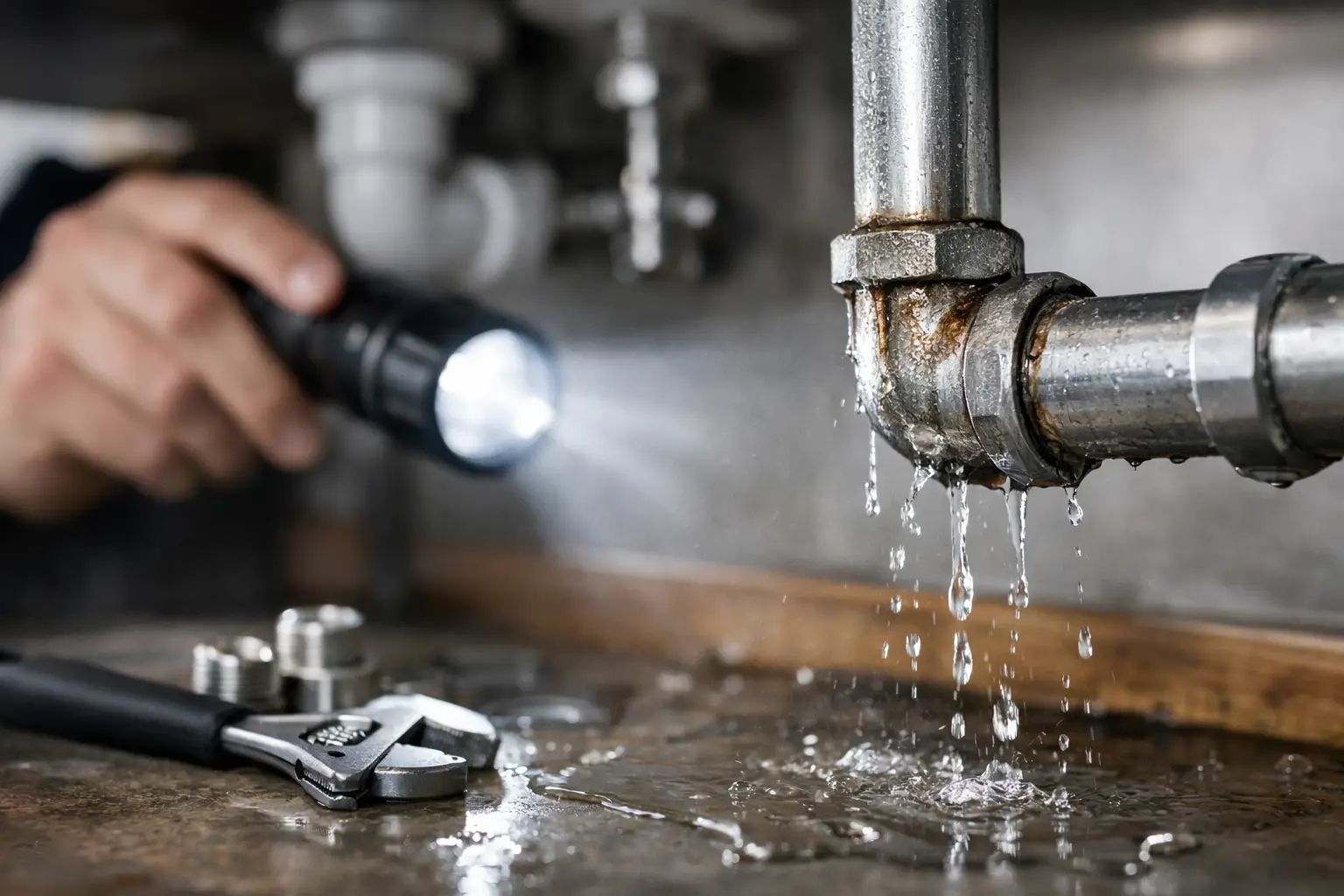
A small leak rarely stays small for long. What starts as a faint stain under a sink or a slight drop in water pressure can turn into drywall damage, flooring issues, mold growth, and a much larger repair bill. Knowing the most common pipe leak warning signs helps you act before the damage spreads.
For homeowners, property managers, and commercial operators, the challenge is not always finding a major burst pipe. It is catching the quieter problems early enough to avoid disruption. Some signs are obvious. Others show up gradually in moisture patterns, water use, or changes in how your plumbing system performs.
Why pipe leak warning signs get missed
Leaks often start in hidden areas - behind walls, under slabs, above ceilings, or inside utility spaces that are not checked often. In residential properties, that can mean a slow leak under a bathroom floor goes unnoticed until tile loosens or baseboards swell. In commercial spaces, it may show up first as ceiling discoloration, a musty odor, or an unexplained utility increase.
Another reason leaks get missed is that not every symptom points neatly to one cause. Low water pressure, for example, might come from a fixture issue, mineral buildup, or a supply problem. A higher water bill could reflect seasonal use, irrigation demand, or a leak. That is why pattern recognition matters more than any single symptom on its own.
9 pipe leak warning signs to watch for
1. Unexplained increase in your water bill
A rising water bill is often one of the earliest indicators of a hidden leak, especially when usage habits have not changed. If your monthly costs climb without a clear reason, your plumbing system may be losing water somewhere out of sight.
This sign is especially useful in properties with predictable occupancy. A family home with steady routines or a commercial site with stable usage can often spot abnormal changes faster. One unusually high bill does not confirm a pipe leak, but a repeated pattern deserves attention.
2. Water stains on walls, ceilings, or floors
Discoloration is one of the clearest visible pipe leak warning signs. Yellow, brown, or copper-toned stains can point to water collecting behind surfaces for days or weeks. In some cases, the area may feel soft, warped, or slightly cool to the touch.
Ceiling stains under bathrooms, kitchens, and mechanical rooms are common. On lower levels, watch for cupping floors, bubbling paint, and drywall seams that start to separate. Cosmetic damage is usually the later stage of a leak, not the first.
3. Musty odors that do not go away
A persistent damp smell often means water is sitting where it should not. That odor tends to build in enclosed areas such as vanity cabinets, utility rooms, basements, and wall cavities. If cleaning the room does not fix the smell, moisture may still be present.
This is where slow leaks become expensive. Long-term dampness can affect insulation, framing, and indoor air quality before you ever see standing water. The smell itself is a warning that conditions are staying wet longer than they should.
4. Lower water pressure in one area or throughout the property
When pressure drops suddenly, most people think first about the fixture. Sometimes that is correct. Aerator buildup, valve issues, or equipment wear can all affect flow. But if pressure changes appear in multiple fixtures or get worse over time, a leak in the supply line may be reducing available pressure.
The location matters. Low pressure at one sink suggests a local issue. Low pressure in several bathrooms or across a commercial unit may point to something larger. The right response depends on how broad the symptom is.
5. Sounds of running water when nothing is on
If you hear water moving through pipes after all fixtures and appliances are off, take it seriously. Hidden leaks can create a faint hissing, trickling, or rushing sound behind walls and under floors. In quieter spaces, especially at night, these sounds are easier to notice.
Not every noise means a leak. Some plumbing systems make normal expansion and contraction sounds. But repeated water movement without active use is worth investigating, particularly if it appears with higher bills or moisture stains.
6. Mold or mildew in unusual places
Bathrooms naturally deal with humidity, so mildew near a shower is not always alarming. Mold on a hallway wall, near a ceiling corner, under flooring, or around cabinetry is different. These spots can indicate hidden moisture from a leaking pipe.
Surface treatment alone will not solve the root issue. If mold returns after cleaning, the underlying moisture source likely remains. At that stage, delay tends to increase both repair scope and restoration cost.
7. Wet spots, pooling water, or soft flooring
When water becomes visible, the leak may already be well established. You might notice damp carpet, a glossy patch on tile grout, or a floor section that feels spongy underfoot. Around sinks, toilets, and appliances, this can be caused by local fixture leaks. In open floor areas, the source may be hidden below.
Commercial properties should also pay attention to recurring wet areas near service rooms, restrooms, and kitchens. If staff are repeatedly drying the same area, the issue is probably not accidental splashing.
8. Cracks in foundation or slab with moisture nearby
This is a more serious scenario, but it can begin subtly. A leak under a slab may show up as unexplained warm spots, floor damage, or moisture collecting along cracks in concrete surfaces. In some buildings, it appears as persistent dampness where there should be none.
Not every crack points to a plumbing issue. Buildings settle. Concrete moves. But when moisture, odor, or water use changes appear alongside those cracks, leak detection should move up the priority list.
9. Corrosion, rust, or mineral buildup on exposed pipes
Pipes do not always leak dramatically at the point of failure. Sometimes the early sign is oxidation around joints, valves, and fittings. Green staining on copper, rust on steel components, or white mineral deposits around connections can all indicate slow seepage.
This is one of the most useful signs because it appears before major water damage develops. If an exposed section shows repeated moisture or residue, the affected fitting may be close to failing completely.
What to do if you notice pipe leak warning signs
Start by narrowing down whether the issue is isolated or system-wide. Check nearby fixtures, visible piping, ceilings below plumbing areas, and utility spaces. If your property has a water meter, compare the reading when all water use is off. If the meter keeps moving, water may be escaping somewhere in the system.
Do not rely on surface drying or patch fixes if the source is unclear. A hidden leak behind a wall or under a floor can continue causing damage even when the visible symptom fades. The cost difference between early detection and delayed repair is usually significant.
For businesses and multi-unit properties, speed matters even more. Ongoing leaks can affect operations, tenant satisfaction, insurance claims, and restoration timelines. It is usually more cost-effective to confirm the cause early than to wait for clearer damage.
When a professional inspection makes sense
If you have more than one symptom at the same time - such as odor, low pressure, and a rising bill - professional assessment is the safer move. The same applies if the suspected leak involves a slab, ceiling cavity, mechanical room, or any area where water damage can spread without being visible.
There is also a water quality angle that gets overlooked. In some cases, pipe damage, corrosion, or long-term moisture issues can affect the performance of connected plumbing systems and treatment equipment. That matters in homes with filtration systems and in commercial settings where water consistency supports operations.
A qualified plumbing team can determine whether the problem is a leaking pipe, a failing fixture connection, equipment-related discharge, or a pressure issue that only looks like a leak. That distinction matters because the right repair depends on the actual cause, not just the symptom.
Plumingo supports both urgent plumbing needs and scheduled system care, which is often the difference between a contained repair and a larger property disruption. Fast action protects more than pipes. It protects surfaces, air quality, equipment, and the normal use of your space.
If something feels off, trust the pattern. Plumbing problems rarely improve by waiting, and the earliest signs are usually the least expensive moment to respond.