
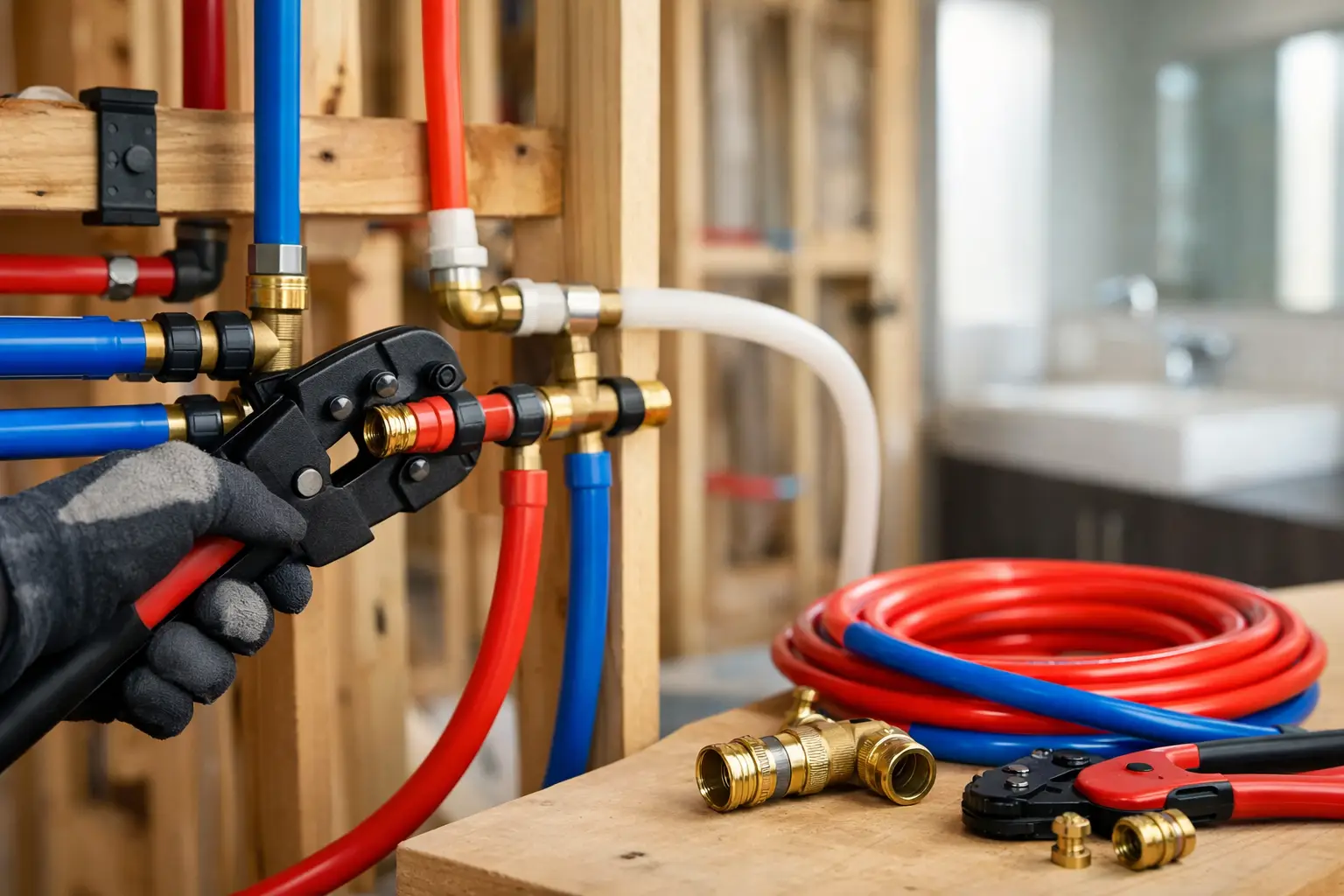
A home’s plumbing usually gets attention only when it leaks, loses pressure, or delivers discolored water. That is often when homeowners start asking about pex residential plumbing systems, especially during repipes, remodels, or new construction. PEX has become a common choice because it is efficient to install, dependable in many residential settings, and often more cost-effective than rigid piping materials.
That said, PEX is not a one-size-fits-all answer. The right plumbing system depends on the home’s age, local code requirements, water conditions, fixture layout, and how long you expect the system to perform without major intervention. If you are evaluating a piping upgrade, the best decision comes from understanding where PEX excels, where it has limits, and what proper installation actually looks like.
What PEX means in a residential plumbing system
PEX stands for cross-linked polyethylene, a flexible plastic piping material used to supply hot and cold water throughout a home. In residential plumbing, it is commonly used for branch lines to sinks, toilets, showers, tubs, laundry connections, and water heaters. It can also be configured in home-run systems, where each fixture has a dedicated line from a central manifold.
The main reason pex residential plumbing systems gained traction is practical performance. PEX is easier to route through framing than copper or CPVC, which can reduce installation time and minimize the number of fittings hidden behind walls. Fewer fittings can mean fewer potential leak points, provided the design and workmanship are sound.
For many homeowners, the value is not just the pipe itself. It is the combination of speed, flexibility, and serviceability. In a repipe project, that can translate into less disruption to drywall, faster completion, and more predictable labor costs.
Why homeowners choose PEX residential plumbing systems
Cost is one of the biggest drivers. PEX material is generally less expensive than copper, and labor is often lower because the pipe bends around obstacles and uses longer continuous runs. In a full-house repipe, that difference can be significant.
PEX also performs well in homes where routing is difficult. Older houses, finished basements, and remodels often leave limited access for rigid materials. Flexible piping makes it easier to navigate joists, wall cavities, and utility spaces without adding unnecessary joints.
Freeze resistance is another factor, though it should be understood correctly. PEX can tolerate some expansion better than rigid pipe when water freezes, which may reduce the chance of an immediate split. It does not make a plumbing system freeze-proof. Poor insulation, unheated spaces, and extended cold exposure can still cause serious damage.
Noise reduction can also be an advantage. PEX tends to transmit less sound than metal piping, which may make water movement less noticeable in walls and ceilings. That is a smaller benefit than durability or cost, but homeowners often appreciate it after installation.
Where PEX performs well and where it does not
In most interior residential water supply applications, PEX is a strong option. It works well for hot and cold domestic water distribution, additions, bathroom remodels, basement finishing, and full repipes. It is especially useful when a plumber needs to update aging galvanized or polybutylene piping with minimal disruption.
Its limits matter just as much. PEX should not be exposed to direct UV light for extended periods, which means it is not suitable for long-term outdoor exposure or storage in sunlight before installation. It also needs appropriate protection where it passes through framing, near sharp edges, or close to heat sources. Around water heaters, code may require metallic transition piping before connecting to PEX.
Water quality can also influence long-term results. Aggressive water conditions affect every plumbing material differently. If a home has scale buildup, sediment issues, or broader water quality concerns, the piping decision should be part of a larger system conversation that includes treatment equipment, pressure management, and fixture protection.
Installation quality matters more than material alone
A well-installed system usually outperforms a poorly installed one, regardless of the pipe material. That is why evaluating pex residential plumbing systems should include more than asking whether PEX is good. The better question is whether the system design, fittings, routing, support, and pressure conditions are right for the home.
PEX uses specific connection methods, including crimp, clamp, expansion, and push-to-connect fittings in certain applications. Each has its place, but consistency matters. Mixing methods without a clear plan can complicate future service. Proper support spacing, protection plates at stud penetrations, and clean routing all affect system reliability.
Pressure and temperature control are just as important. If a home has high incoming water pressure, pressure-reducing valves may be needed to protect the piping, fixtures, and appliances. Thermal expansion also needs attention in closed systems, particularly when water heaters are involved.
Good installation also accounts for access. Manifolds, shutoff valves, and service points should be placed where future maintenance is practical. A plumbing system is not truly efficient if it becomes difficult to isolate a fixture or diagnose a problem later.
PEX vs copper in residential plumbing
Copper still has a strong reputation, and in some homes it remains the preferred material. It is rigid, time-tested, and suitable for many water supply applications. Some property owners prefer it for its long track record and perceived durability.
PEX, however, often wins on installation efficiency and project cost. In a remodel or repipe, that can make a meaningful difference without sacrificing day-to-day performance. PEX also avoids some of the corrosion concerns that can affect metal systems under certain water conditions.
The trade-off is that copper handles UV exposure better and may be preferred in specific visible or exposed areas, depending on code and layout. Material selection is rarely about one pipe being universally better. It is about fit, environment, service expectations, and budget.
What to expect during a PEX repipe
A residential repipe starts with assessment. The plumber looks at the home’s existing piping, fixture count, access points, water pressure, and any signs of leaks, corrosion, or flow restrictions. From there, the layout is planned to reduce unnecessary wall openings while maintaining reliable fixture service.
During the work, parts of the home’s water supply may need to be shut down in phases. In many cases, a skilled team can keep disruption manageable and restore service section by section. The exact process depends on the size of the house, the number of bathrooms, and how accessible the existing plumbing paths are.
After installation, pressure testing and inspection are critical. This is where premium service stands out. Homeowners should expect clear communication, clean workmanship, and transparent pricing before the work starts, not surprises after walls are opened.
When a PEX system should be paired with water treatment
Not every plumbing issue starts with the pipe. Hard water, sediment, chlorine, and other water quality factors can shorten fixture life, affect appliance performance, and leave homeowners thinking they have a plumbing problem when the root cause is broader.
That is why a smart residential plumbing plan may include water treatment alongside piping upgrades. A new PEX system can improve delivery, but if the home still has hard water scale or filtration issues, faucets, valves, and water-using appliances may continue to underperform. Looking at plumbing and water quality together usually leads to better long-term results.
For homeowners who want one provider to evaluate both sides of the system, that integrated approach saves time and reduces guesswork. Plumingo operates in that space, combining plumbing expertise with water treatment support so the solution matches the whole home, not just one component.
Is PEX right for your home?
Often, yes. If you are replacing aging supply lines, updating a home during renovation, or building out new fixture connections, PEX is a strong candidate. It is efficient, widely used, and well-suited to modern residential plumbing work.
But the right answer still depends on conditions inside your property. Existing pipe material, freeze risk, utility layout, water pressure, local code, and water quality all matter. A fast quote based only on square footage will not tell you enough.
The best next step is a professional assessment that looks at the system as a whole. When the piping choice, installation method, and water conditions are aligned, you get more than new pipe. You get a plumbing system that works the way it should, quietly, reliably, and without demanding constant attention.