
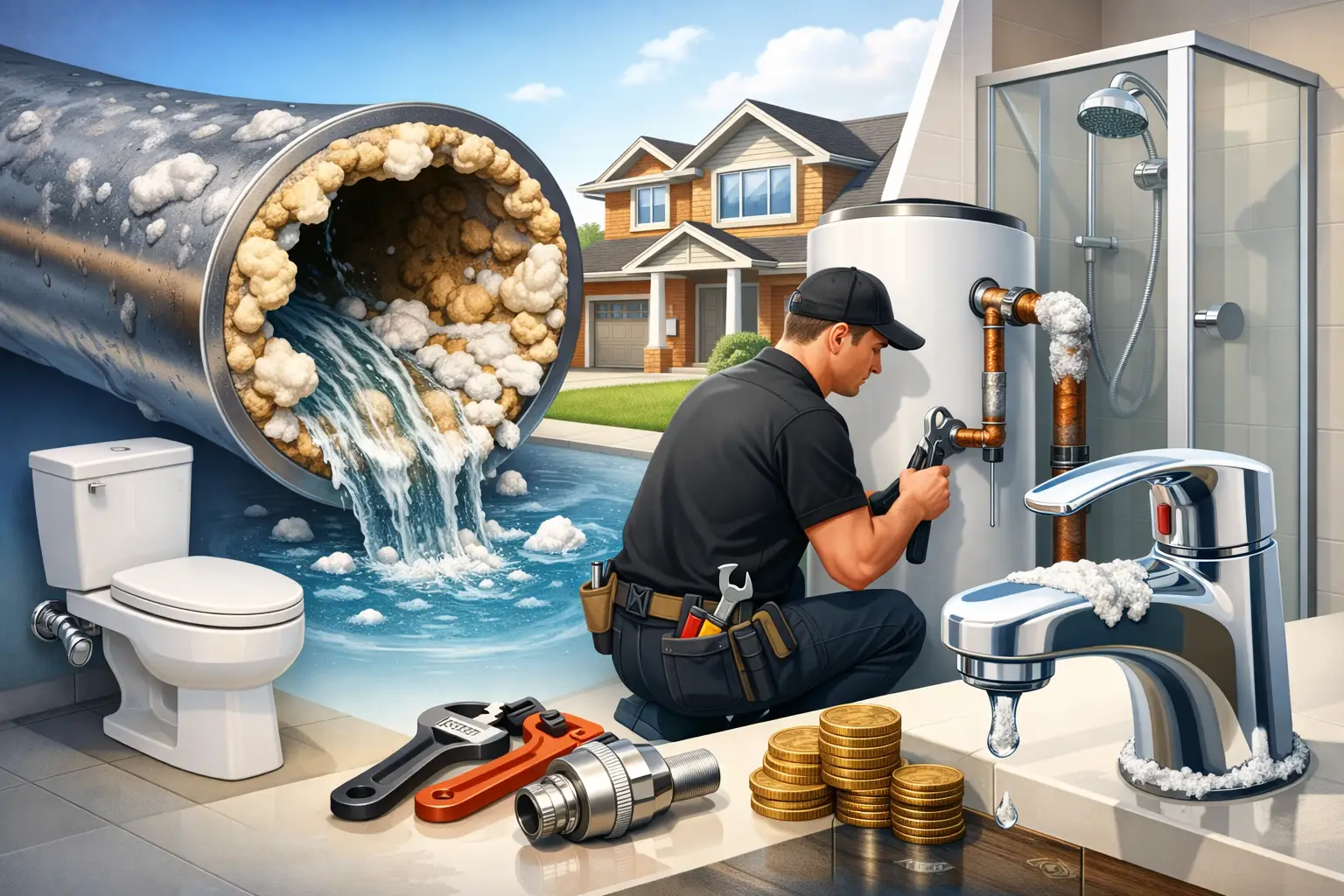
A white crust around a faucet is easy to dismiss as a cleaning problem. Inside the plumbing system, though, those same minerals can collect on pipe walls, valves, appliance parts, and water-heating equipment. So, is hard water bad for plumbing? Often, yes - not because hard water immediately damages a sound system, but because years of mineral scale can reduce performance, shorten component life, and make routine plumbing problems more expensive to resolve.
Hard water is common in many areas, and the right response depends on the water’s mineral level, the age and material of the plumbing, household or building water use, and the equipment already in place. A clear assessment helps distinguish a manageable maintenance issue from a system that would benefit from water treatment.
What hard water does inside plumbing
Hard water contains elevated levels of dissolved minerals, primarily calcium and magnesium. When water is heated, evaporates, or sits in certain parts of a plumbing system, those minerals can come out of solution and form scale. The chalky buildup visible on shower doors, faucets, and dishes is the exterior sign. The buildup inside pipes and equipment is less visible, but more consequential.
Scale does not usually create a sudden leak or clog overnight. It develops gradually. That is why hard-water damage can go unnoticed until a water heater takes longer to recover, a shower loses pressure, or a fixture cartridge begins to stick.
The main concern is restriction. Mineral deposits reduce the effective opening inside aerators, showerheads, supply lines, valves, and appliance connections. In older plumbing, where some internal narrowing may already exist, hard-water scale can compound the problem.
Is hard water bad for plumbing fixtures and pipes?
Hard water can be tough on fixtures, but the impact varies by component. Faucet aerators and showerheads are often the first places homeowners notice buildup because their small openings catch mineral deposits. Water may spray unevenly, flow more slowly, or come out in multiple directions. These parts can often be cleaned or replaced without major work.
Cartridge-style faucets, mixing valves, toilet fill valves, and shutoff valves may also develop mineral interference. Scale can prevent moving parts from sealing or operating smoothly, leading to drips, inconsistent temperature control, slow filling, or a valve that becomes difficult to turn. In many cases, a qualified plumber can repair the affected component rather than replace the full fixture.
Pipes are more nuanced. Modern copper, PEX, and PVC systems do not all react to hard water in the same way, and a moderate level of hardness will not necessarily cause meaningful pipe restriction during the life of the system. However, hot-water lines, smaller-diameter pipes, and high-use commercial systems are more vulnerable to buildup. Older galvanized steel piping can be especially susceptible because internal corrosion and scale may develop together.
If water pressure is low at one fixture, the issue may be a clogged aerator or cartridge. If pressure is lower throughout the property, or mainly on the hot side, the cause may involve larger plumbing components or the water heater. A proper diagnosis matters before any treatment or replacement decision is made.
Water heaters often feel the effects first
Water heating equipment is one of the most common places for hard-water problems to become noticeable. Heating water speeds up scale formation. In a tank water heater, minerals settle at the bottom and can form a layer of sediment. In tankless units, scale can accumulate in the heat exchanger’s narrow passages.
That buildup acts as insulation between the heating source and the water. The equipment must work longer to deliver the same result, which can affect energy use and recovery time. Sediment in a tank can also contribute to popping or rumbling sounds as water becomes trapped beneath the mineral layer.
A tankless water heater may show reduced flow, inconsistent hot water, or service alerts when scale is significant. These systems are efficient, but they require periodic flushing based on water conditions and manufacturer guidance. Skipping that maintenance can reduce performance and may affect warranty requirements.
For a traditional tank water heater, flushing can help remove loose sediment, particularly when it is completed as part of regular maintenance. It may not remove every hardened deposit in an older unit, so expectations should be realistic. Service should focus on the condition of the equipment, its age, and whether maintenance can restore reliable operation.
The everyday signs of a hard-water plumbing issue
Hard water is not always the sole cause of a plumbing complaint. Still, several patterns are worth paying attention to:
- White or tan deposits around faucets, showerheads, appliances, or drain openings
- Soap that seems difficult to rinse away, along with spots on dishes and glassware
- Reduced water flow at fixtures despite normal pressure elsewhere
- Recurring faucet drips, stiff handles, or toilet components that wear prematurely
- A water heater that is noisier, slower, or less consistent than before
Soap scum is another clue. Minerals react with soap and reduce its ability to lather and rinse cleanly. This is more than a housekeeping frustration. It can leave residue on fixtures, shower walls, and glass, increasing the time needed to keep bathrooms and kitchens clean.
Commercial properties may see the effects in different ways. Restaurants, salons, healthcare facilities, and multi-unit buildings can experience scale in water-using equipment, fixture valves, and hot-water systems at a faster rate because of higher demand. A maintenance plan can be more cost-effective than waiting for repeated component failures.
When a water softener makes sense
A water softener is designed to reduce hardness minerals before the water moves through the plumbing system. Most conventional softeners use ion exchange to replace calcium and magnesium with sodium or potassium ions. This reduces scale formation and can help protect fixtures, water heaters, dishwashers, laundry equipment, and other water-using systems.
A softener is often a practical choice when testing confirms high hardness and there is a clear pattern of scale, appliance maintenance, or water-heater sediment. It can be especially valuable for homes with frequent hard-water cleaning issues or businesses that rely on consistent equipment performance.
However, a softener is not automatically necessary for every property. Moderately hard water may be manageable with focused maintenance, regular water-heater service, and cleaning of fixtures. A softener also needs appropriate sizing, a drain connection, salt or potassium replenishment, and periodic servicing. For some owners, those ongoing needs are worthwhile; for others, a targeted approach may be sufficient.
Water softening and drinking-water filtration solve different problems. A reverse osmosis system is commonly used to improve water quality at a drinking-water tap by reducing a broad range of dissolved contaminants. It does not replace a whole-property softener when the goal is to protect plumbing from hardness scale. In some properties, the two systems work well together because they address different water concerns.
Start with testing, not assumptions
The appearance of scale strongly suggests hard water, but water testing provides the clarity needed to choose a solution. A professional assessment can measure hardness and identify other conditions that influence plumbing decisions, such as iron, manganese, pH, or total dissolved solids.
Testing is particularly useful before installing a water softener, replacing a water heater, or investing in commercial treatment equipment. It helps determine whether hard water is the real source of the problem and allows the system to be sized for actual water conditions and demand.
If scale is already present, treatment does not instantly remove old buildup from every pipe or fixture. It helps prevent new deposits from forming and may gradually improve certain conditions over time. Existing damaged valves, heavily restricted aerators, or worn water-heater components may still need service.
Practical ways to limit hard-water damage
The most effective approach is consistent, proportionate maintenance. Clean aerators and showerheads when flow changes. Follow the manufacturer’s maintenance schedule for water heaters, dishwashers, humidifiers, and tankless systems. Watch for changes in hot-water performance rather than waiting for complete failure.
For property managers and commercial operators, document service intervals and recurring fixture issues. Patterns across multiple suites, restrooms, or equipment areas can reveal a water-quality concern that individual repairs will not solve.
If hard water is affecting your fixtures, water heater, or daily water use, a plumbing and water treatment assessment can provide a practical next step. The goal is not to replace equipment prematurely. It is to protect the system you have, improve water performance where it matters, and make informed decisions before mineral buildup becomes a larger repair issue.