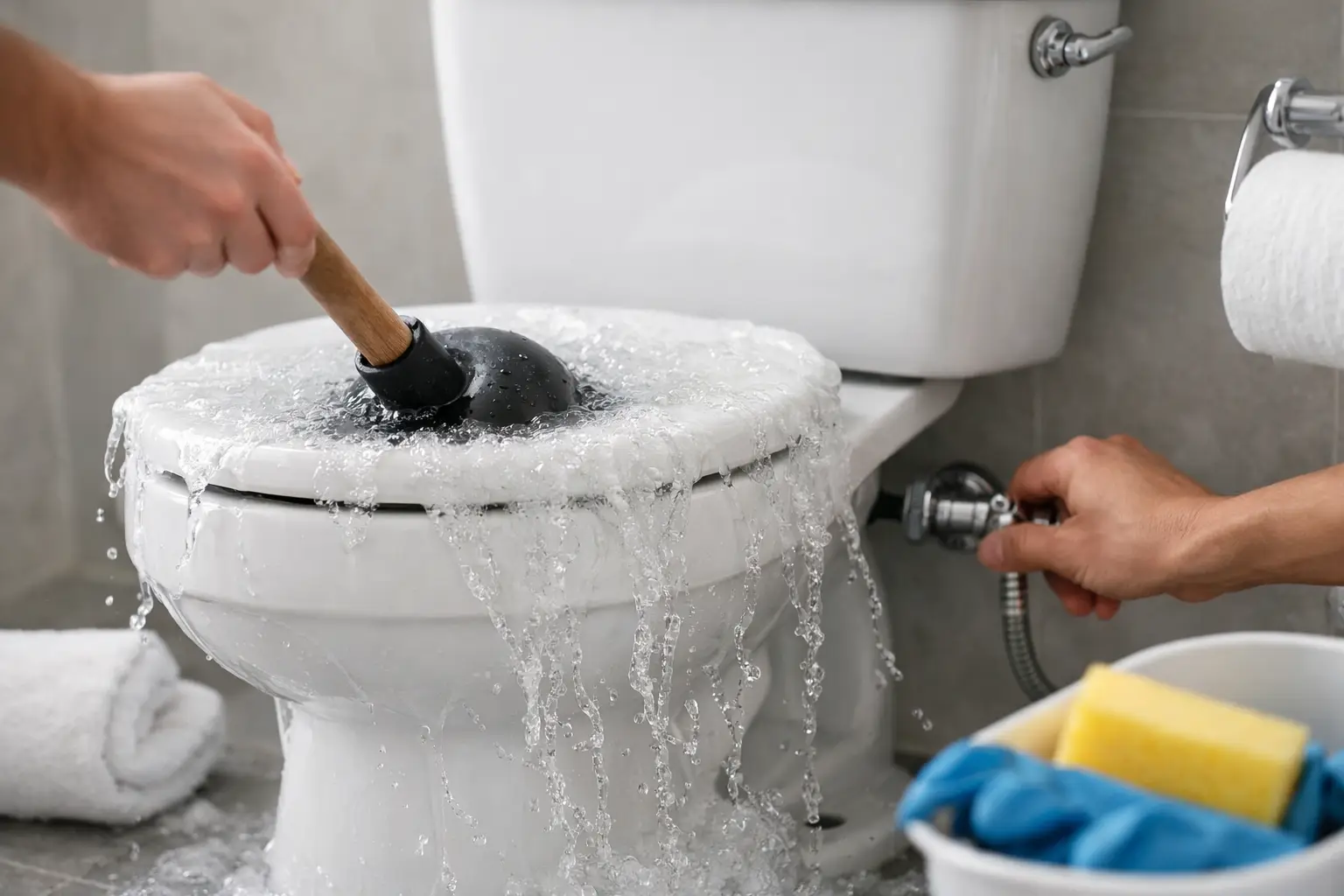
A toilet starts rising fast, and you usually have seconds - not minutes - to keep dirty water off the floor. If you need to know how to stop toilet overflow fast, the priority is simple: stop the incoming water, avoid flushing again, and contain the mess before it spreads.
Most overflows happen because of a clog in the toilet trap or drain line. Sometimes the bowl fills after a flush and drains slowly. Other times it rises immediately and keeps climbing. In both cases, acting quickly matters more than diagnosing the exact cause in the first 30 seconds.
How to stop toilet overflow fast in the first minute
Your first move is to stop more water from entering the bowl. If the toilet is still running, remove the tank lid carefully and lift the float. In many toilets, raising the float stops the tank from feeding more water into the bowl. If that works, hold it in place until the water level in the bowl stops rising.
If you can reach the shutoff valve, turn it clockwise. The valve is usually on the wall or floor behind the toilet. This is the most reliable way to stop the water supply. If the valve is stiff, do not force it so hard that you risk breaking it. A damaged valve creates a larger plumbing problem than the overflow itself.
Do not flush again to "see if it clears." That second flush is what turns a manageable clog into a floor-level emergency. If the bowl is already high, wait. Let the water settle and assume the blockage is still there.
If water has already spilled over, use towels or absorbent cloths to block it from reaching nearby flooring, trim, or vents. In bathrooms with wood, laminate, or shared walls, fast containment can reduce cleanup costs.
What usually causes a toilet to overflow
In most homes, the issue is a simple blockage caused by too much toilet paper, wipes, paper towels, hygiene products, or a child-safe object that was never meant to be flushed. Commercial settings often see similar problems, just with heavier use and less visibility into what went down the drain.
There are also cases where the toilet itself is not the only problem. A main drain line issue can make one or more fixtures drain slowly, bubble, or back up. If your tub, sink, or another toilet is also acting strangely, the overflow may be part of a larger blockage deeper in the system.
That distinction matters. A basic toilet clog can often be cleared with the right tool. A drain line backup usually needs professional service, especially if wastewater is coming back through multiple fixtures.
Clear the clog safely
Once the water level is stable and no longer rising, you can try to clear the blockage. The best tool is a flange plunger, not a flat sink plunger. A toilet plunger creates a better seal around the drain opening and gives you the pressure needed to move the clog.
Place the plunger into the bowl so the rubber head fully covers the drain. If there is not enough water in the bowl to cover the plunger cup, add a little - but not so much that you risk another overflow. Push down gently first to remove trapped air, then plunge with firm, controlled strokes. After several pumps, pull back and watch the bowl.
If the water drains normally, the blockage may be cleared. Even then, test carefully. Turn the shutoff valve back on if you closed it, let the tank refill, and flush once while staying nearby. If the bowl rises again, stop and move to the next step.
When a toilet auger makes more sense
If plunging does not work, a toilet auger is usually the next practical tool. It is designed to move through the toilet trap without damaging the porcelain when used correctly. This is often the better option for denser clogs or objects lodged farther in.
Feed the auger slowly into the bowl opening and crank it as directed. Do not jam it aggressively. If you meet hard resistance that does not give, you may be hitting a solid object rather than a paper clog. At that point, more force is not always better. You can crack the toilet or wedge the obstruction tighter.
What not to do during an overflow
Fast action helps, but the wrong fix can make the repair more expensive. Chemical drain cleaners are a common mistake. They are often ineffective on toilet clogs, and they add safety risk if the bowl is already full. Hot water is another bad idea if it is near boiling, since porcelain can crack under thermal shock.
Do not keep flushing in hopes that pressure will push the clog through. It may, but more often it sends more contaminated water onto the floor. Also avoid using improvised tools like wire hangers. They can scratch the bowl and still fail to reach the blockage.
If you have used chemicals already, that is important information for any plumber. It changes how the toilet can be serviced safely.
Signs the problem is bigger than one toilet
A single clogged toilet is frustrating but usually isolated. If other fixtures are involved, the situation changes. Gurgling drains, water backing up into tubs or showers, sewage odor, or repeated toilet overflows all suggest a system-level drainage issue.
Property managers and commercial operators should be especially cautious here. In a shared building or customer-facing space, a recurring overflow is not just a plumbing inconvenience. It can affect sanitation, flooring, downtime, and occupant confidence. Fast escalation is usually the right call.
This is also where experience matters. A plumber can determine whether the issue is in the toilet trap, branch drain, or main line and use the correct method from the start. That saves time and often prevents repeat service.
How to clean up after the overflow
Once the water is under control, cleanup should be treated seriously. Toilet overflow water may contain contaminants, especially if the bowl had waste in it or if the problem is tied to a drain backup. Wear gloves, remove soaked towels promptly, and disinfect all affected surfaces.
Porous materials are the main concern. Baseboards, drywall edges, bath mats, grout lines, and wood cabinetry can hold moisture longer than they appear to. If a large volume of water escaped, dry the area thoroughly and watch for lingering odor or swelling over the next day or two.
In commercial restrooms, cleanup standards should be higher still. A visible surface wipe-down is not enough if water reached adjacent traffic areas or seeped under partitions.
When to call a plumber immediately
If you cannot stop the water with the valve, if plunging fails, or if the toilet overflows more than once, it is time for service. The same is true if you suspect a foreign object, if multiple drains are backing up, or if the shutoff valve is damaged or stuck.
There is also a practical point to consider. Some homeowners are comfortable using a plunger or auger. Others are not, and that is reasonable. A fast, professional repair is often the cheaper option compared with damaged flooring, repeat clogs, or a cracked toilet from an overaggressive DIY attempt.
For urgent situations, a provider with 24/7 response and transparent pricing matters. That is particularly true for businesses, rental properties, and households with only one working bathroom. Plumingo handles these calls with the kind of structured response that keeps a messy plumbing issue from turning into a broader property problem.
Prevent the next overflow
The best prevention is simple but consistent. Flush only toilet paper and waste. Keep wipes, paper towels, cotton products, and hygiene items out of the system even if packaging says flushable. In homes with children, a toilet lid lock can prevent accidental blockages.
If your toilet clogs often, do not assume it is normal. A low-flow toilet with weak performance, early scale buildup, partial drain obstruction, or venting issue can all contribute to repeated problems. Older commercial restrooms can show the same pattern under heavy use. A toilet that overflows once may be an accident. A toilet that does it twice is usually telling you something.
A toilet overflow feels urgent because it is. The right response is fast, controlled, and focused on stopping water before anything else. Once the immediate risk is contained, the best next step is the one that solves the actual cause - not just the mess you can see.