
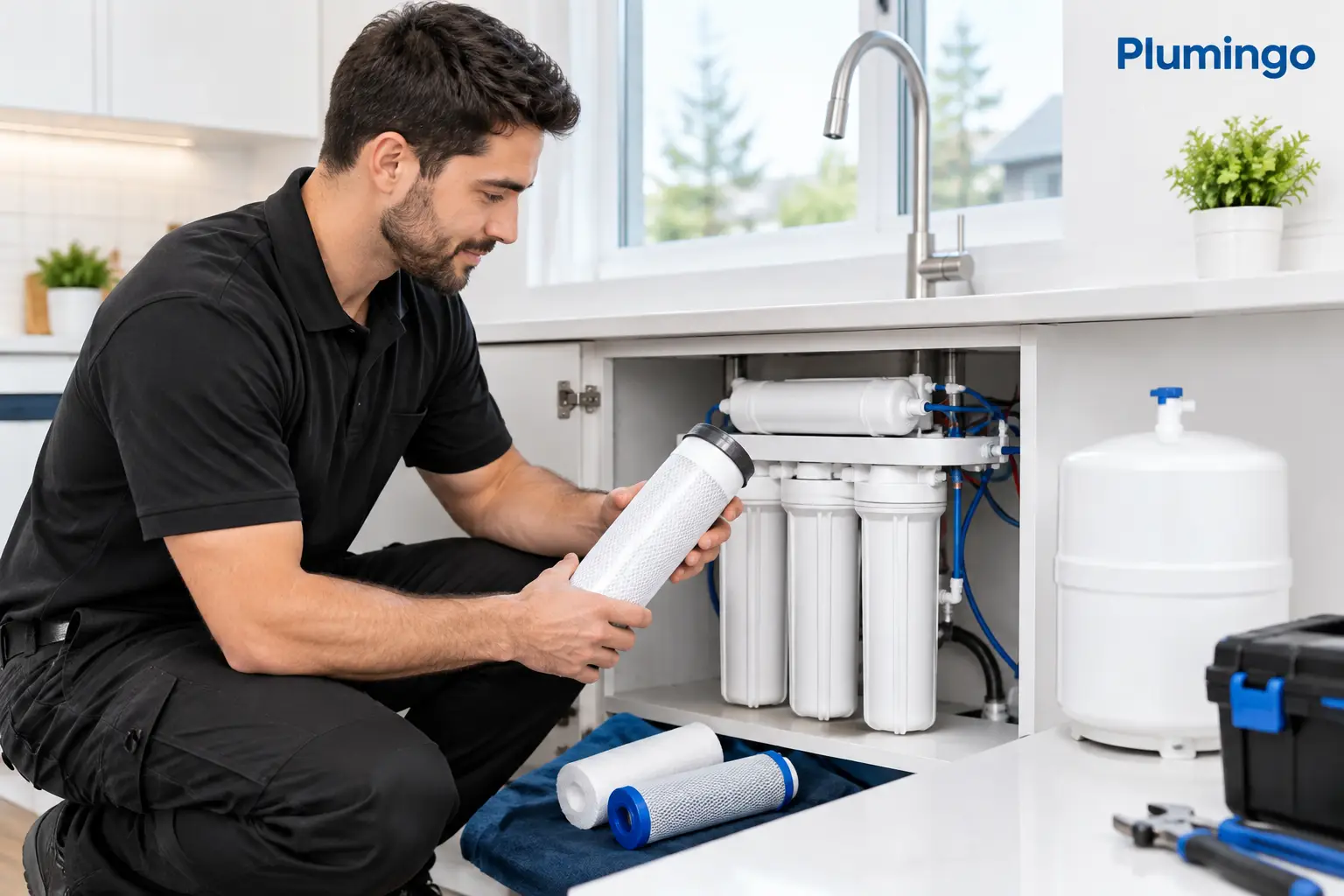
A reverse osmosis system can quietly do its job for years, but only when its filters receive routine care. Knowing how to maintain RO filters helps protect water quality, preserve water pressure, and avoid putting unnecessary strain on the membrane or storage tank. For homeowners, property managers, and business operators, a simple maintenance plan is usually more effective than waiting until the water starts tasting different.
RO systems are not all built the same. Filter stages, replacement intervals, and shutoff arrangements vary by model. Your system manual should always guide the exact parts and service procedure, but the principles below apply to most under-sink and point-of-use RO units.
Know What Each RO Filter Does
Most residential RO systems use several stages to reduce sediment, chlorine, dissolved solids, and other contaminants. The first filters protect the more expensive RO membrane, which is the system’s primary purification component.
A sediment pre-filter captures sand, rust, silt, and other particles that may enter through the water supply. A carbon pre-filter reduces chlorine and certain chemical compounds. This step matters because chlorine can damage many standard RO membranes. The membrane then separates a large portion of dissolved minerals and contaminants from the water. Finally, a post-filter, often carbon-based, improves the taste and odor of water before it reaches the faucet.
When an early-stage filter becomes clogged or overdue, the rest of the system works harder. Water flow may slow, waste water can increase, and the membrane may wear out sooner than expected. Replacing a reasonably priced pre-filter on time is usually far more practical than replacing a membrane early.
Set a Replacement Schedule That Fits Your Water Use
There is no single calendar that suits every RO system. Water quality, household size, daily use, and local water treatment methods all affect filter life. Still, these intervals offer a useful starting point:
- Sediment filters often need replacement every 6 to 12 months.
- Carbon pre-filters commonly require replacement every 6 to 12 months.
- Post-carbon filters are often replaced about once a year.
- RO membranes may last 2 to 3 years, sometimes longer with good pre-filtration and favorable source water.
A large household or busy workplace may use enough filtered water to shorten those intervals. Conversely, a lightly used system may appear fine past its suggested service date, but appearance alone is not a reliable measure. Carbon filters can lose their chlorine-reduction capacity without showing obvious discoloration.
Write the installation date on each filter housing or keep a maintenance record near the unit. Property managers can include RO service dates in the same schedule used for plumbing inspections, softener checks, and fixture maintenance. That small step prevents missed replacements when responsibilities change.
Watch for Signs Your RO System Needs Attention
Scheduled maintenance is the best approach, but your system may also signal a problem between appointments. A slower-than-usual flow from the RO faucet is one of the most common signs. It can point to a clogged pre-filter, a tired post-filter, low tank pressure, or a partially closed supply valve.
Changes in taste or odor deserve attention as well. Filtered water should generally taste clean and neutral. A chlorine taste, musty odor, or noticeable shift in flavor can indicate that carbon filtration is overdue or that the system needs inspection. Do not assume a new taste means the membrane has failed. The issue could be a simpler filter replacement or sanitation need.
Look under the sink periodically for moisture around filter housings, tubing connections, and the faucet base. A slow leak can damage cabinetry before it becomes obvious. Also listen for constant draining. RO systems produce some reject water during normal operation, but continuous drain flow after the storage tank is full may indicate a valve, membrane, or pressure issue that needs professional diagnosis.
Replace Filters Carefully and Keep the System Clean
Before replacing filters, turn off the feed-water supply and close the tank valve if your system has one. Open the RO faucet to relieve pressure, then follow the manufacturer’s instructions for opening the filter housings. Keep a towel and shallow container nearby because some water remaining in the housings is normal.
Use replacement filters designed for your specific system. Similar-looking cartridges are not always interchangeable, and the wrong size or seal can cause leaks or allow water to bypass the filtration media. Check O-rings for cracks, flattening, or debris before reassembling the housings. A food-safe lubricant may be appropriate for some O-rings, but only if the manufacturer recommends it.
After fitting new filters, turn the water back on slowly and inspect each connection. Let the system refill and flush the recommended amount of water before drinking it. Many systems require one or more full tank flushes after filter or membrane service. This removes air, carbon fines, and residual water from installation.
Avoid over-tightening filter housings. A secure hand-tight fit is often sufficient, while excessive force can damage threads or make the next service difficult. If a housing leaks after proper assembly, stop and inspect the O-ring position rather than tightening it repeatedly.
Do Not Skip Annual Sanitization
Filter replacement and sanitization are related but different tasks. Filters capture contaminants, while sanitization addresses potential microbial growth inside empty housings, tubing, and storage components. Many manufacturers recommend sanitizing an RO system annually, especially when filters are changed or the unit has been idle for an extended period.
Because sanitizing solutions, dosing, and flushing procedures differ by system, this is a task worth handling carefully. Never mix cleaning chemicals or use household products that are not approved for potable-water equipment. A qualified water treatment technician can sanitize the system, inspect seals and tubing, and confirm that each stage is operating as intended.
This is particularly useful in rental properties, offices, and other shared spaces where usage patterns can be inconsistent. A documented annual service visit provides a clearer maintenance history and can catch small issues before they affect water delivery.
Protect the RO Membrane From Hard Water and Chlorine
The membrane is effective but not indestructible. Its service life depends heavily on what reaches it. Sediment and carbon pre-filters must be changed on schedule because they serve as the membrane’s first line of protection.
Hard water can also contribute to mineral scale, especially where water has elevated calcium and magnesium levels. In some properties, pairing an RO system with a properly maintained water softener can reduce scaling pressure on plumbing fixtures and water treatment equipment. It is not necessary for every home, and the right setup depends on the source water and system design.
Municipal water supplies may use chlorine or chloramine for disinfection. Standard carbon filters address chlorine effectively, but chloramine treatment can require a filter specifically rated for it. If your local water utility changes its disinfectant process, or if you are unsure what your system is designed to handle, have the filter configuration reviewed before replacing parts.
Check Performance Instead of Guessing
A basic total dissolved solids, or TDS, meter can help compare the water entering the system with the water leaving it. It does not identify individual contaminants or replace laboratory testing, but it can provide a useful performance trend. A sudden increase in filtered-water TDS may suggest that the membrane, seals, or flow controls need evaluation.
Use readings as one part of the picture, not the only answer. A low TDS reading does not confirm that every filter stage is fresh, and a higher reading can be influenced by temperature, water pressure, and system design. Taste changes, flow rate, maintenance dates, and visible leaks still matter.
For commercial or multi-unit settings, periodic professional testing and service records offer greater confidence than informal checks alone. They also help managers plan maintenance around operating hours rather than responding after a disruption.
When Professional RO Service Makes Sense
Routine cartridge changes are manageable for many homeowners who have the correct filters and clear manufacturer instructions. Professional service is a better fit when there is recurring leakage, poor production, continuous drain flow, unusual noise, a suspected membrane issue, or uncertainty about sanitation.
A technician can assess supply pressure, tank operation, filter compatibility, membrane performance, and drain connections without replacing components that still have useful life. Plumingo can help homeowners and property operators maintain RO systems with clear service recommendations and transparent next steps.
A well-maintained RO system should feel simple: clean water at the faucet, a record of what was serviced, and confidence that the equipment is being cared for before small issues become inconvenient.