
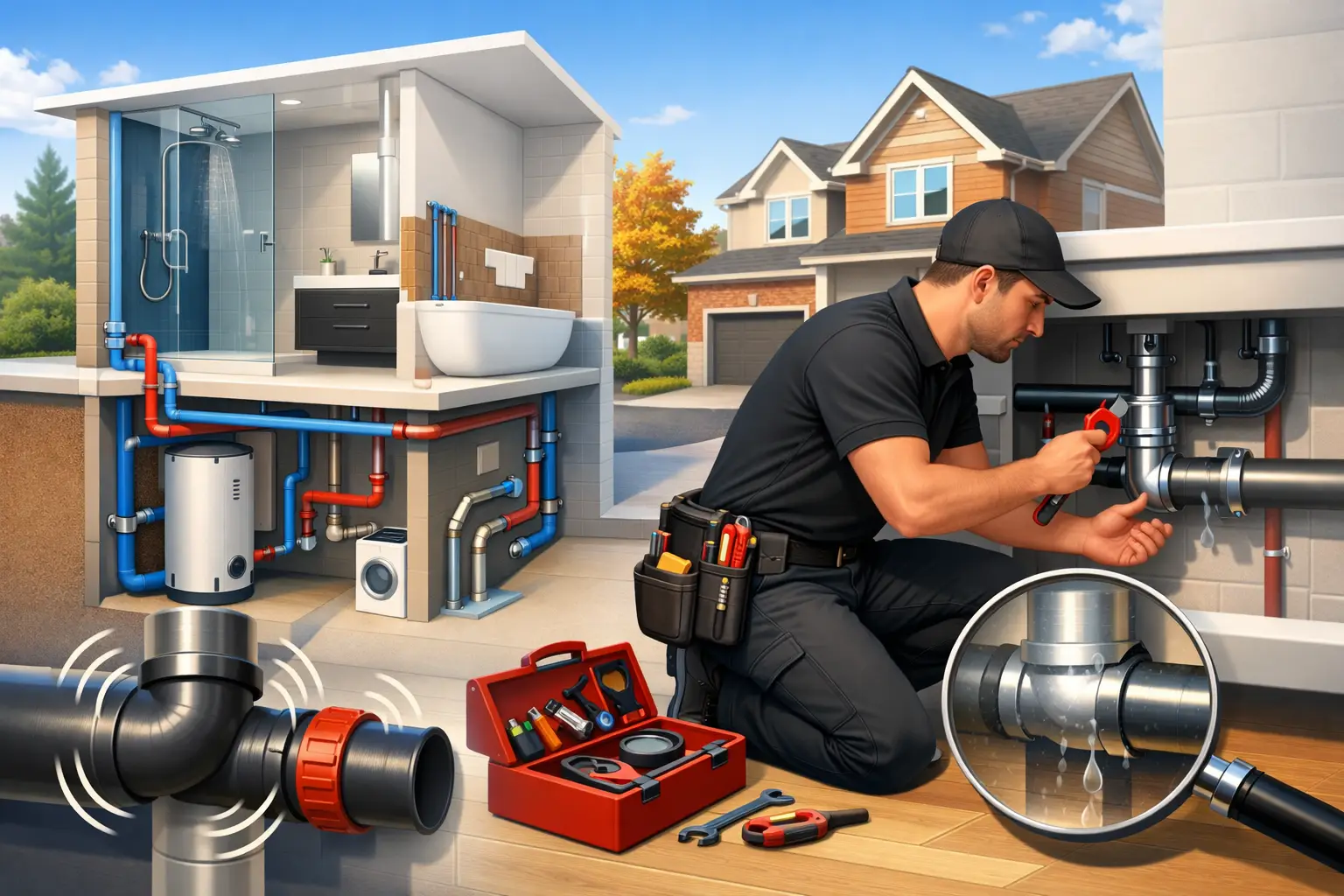
A sharp bang after a toilet finishes filling, a whistle when the shower starts, or a steady rattle behind a wall can make a plumbing issue feel larger than it is. Learning how to fix noisy pipes starts with identifying when the sound happens and what kind of sound it is. The noise often points to a specific cause, but the right repair depends on your piping, water pressure, fixtures, and the age of the system.
Some pipe sounds are minor and easily corrected. Others signal conditions that can wear on valves, fittings, or appliances over time. Start with the least invasive checks, avoid opening walls prematurely, and bring in a qualified plumber when the source cannot be safely confirmed.
How to Fix Noisy Pipes by Matching the Sound
The timing of the noise is as useful as the noise itself. Listen for whether it occurs when water first starts flowing, while it is running, or immediately after a valve closes. Also note which fixture triggers it. A sound isolated to one bathroom fixture is usually a different problem than noise heard throughout the building.
Banging or thudding after water stops
A single bang or a series of thuds after a faucet, washing machine, dishwasher, or toilet valve shuts off is commonly called water hammer. It happens when moving water stops abruptly and creates a pressure surge inside the pipe. Fast-closing solenoid valves on appliances are frequent causes.
First, make sure exposed supply pipes are secured. Pipes that move against framing, ductwork, or one another can turn a small pressure event into a loud bang. A plumber may add or replace pipe clamps, using proper cushioning so metal pipes do not rub directly against building materials.
If the issue persists, the system may need a water hammer arrestor. This device contains an air chamber that cushions the pressure surge. Older plumbing systems may have simple vertical air chambers, but these can lose their air charge and become less effective. Resetting them can sometimes help, although a properly installed mechanical arrestor is often a more durable solution where repeated hammering occurs.
High water pressure can make water hammer worse. Pressure that is too high places added strain on supply lines, valves, appliance hoses, and water treatment equipment. A professional can test the pressure, inspect the pressure-reducing valve if one is installed, and recommend an adjustment or repair when needed.
Whistling, squealing, or high-pitched noise
A whistle usually means water is being forced through a restricted opening. The cause may be a partially closed shutoff valve, a worn faucet cartridge, a failing toilet fill valve, mineral buildup in an aerator, or an issue with a pressure regulator.
Begin with the fixture that creates the sound. Remove and rinse a faucet aerator if the whistle occurs only at that faucet. If the noise is connected to a toilet, the fill valve is a likely suspect, especially when the sound begins during refilling and stops once the tank is full. Replacing a worn fill valve is often a straightforward repair.
Check that nearby fixture shutoff valves and the main water valve are fully open. Do not force a stiff or corroded valve. A valve that resists movement may need service, and forcing it can create a leak. If whistling happens at several fixtures, the restriction may be farther upstream, and a pressure or valve inspection is the better next step.
For properties with hard water, mineral deposits can gradually narrow screens, cartridges, and fixture components. Regular maintenance of water softening or filtration equipment can support better flow, but it will not repair a worn valve or blocked pipe on its own.
Rattling, tapping, or vibrating pipes
Rattling often occurs while water is flowing and may become more noticeable when a pump, washing machine, dishwasher, or shower is operating. In many cases, a pipe has insufficient support and shifts slightly as water moves through it.
If you can safely access the pipe in a basement, utility room, or under a sink, look for obvious contact points. A loose pipe may tap against wood framing or another line. Securing accessible sections with suitable pipe supports can reduce the noise. Avoid overtightening clamps, particularly on plastic piping, because pipes need room for normal expansion and contraction.
Tapping that appears only when hot water is used may be thermal expansion. Hot pipes expand slightly as they warm, then contract as they cool. When the pipe passes tightly through a stud, floor plate, or cabinet opening, that movement can create a repetitive ticking sound. An accessible penetration can sometimes be adjusted or fitted with an appropriate protective sleeve. When the affected section is enclosed behind finished walls or ceilings, a plumber can help locate the source before any invasive work is considered.
Check the Simple Causes Before Calling for Repair
Not every plumbing noise requires immediate repair, but it should not be ignored if it is new, getting louder, or accompanied by reduced water flow, leaks, or changing water pressure. A short observation period can make a service visit more efficient.
Write down the fixture involved, the time the noise occurs, whether hot or cold water triggers it, and whether it happens while water runs or after it stops. If you have a water softener, reverse osmosis system, recirculation pump, or filtration equipment, note whether the sound coincides with a regeneration cycle or a tank refill. These details help separate a fixture issue from a broader supply-line concern.
You can also check for visible leaks under sinks, around toilets, near appliance connections, and at accessible valves. Do not remove access panels, disconnect water treatment lines, or alter pressure controls unless you understand the system. A small installation error can create a larger water issue later.
When Noisy Pipes Need Professional Attention
Call for professional plumbing service when banging is frequent, pipes visibly move, water pressure changes unexpectedly, or the sound occurs at multiple fixtures. Persistent vibration can loosen fittings over time, while excessive pressure can affect much more than the noisy line.
A professional assessment is also appropriate when the source is inside a wall, ceiling, or commercial utility area. Opening finished surfaces without confirming the cause can add unnecessary repair costs. A plumber can inspect accessible lines, test pressure, assess valves and arrestors, and determine whether the repair is localized or system-wide.
For commercial properties, report the affected area and operating conditions clearly. Noise tied to restroom banks, commercial dishwashing equipment, mechanical rooms, or water treatment systems may appear only during certain demand periods. Scheduling an inspection when the issue can be reproduced often leads to a faster diagnosis.
Plumingo can help homeowners and property managers assess pipe noise with a practical focus on the underlying cause, whether that involves fixture repair, pressure control, pipe support, or water treatment equipment.
Preventing Pipes From Becoming Noisy Again
Preventive maintenance is mostly about controlling pressure, securing vulnerable lines, and addressing worn fixture components before they fail completely. Have pressure concerns checked rather than guessing at adjustments. Replace aging appliance hoses according to their condition and manufacturer guidance, and keep shutoff valves operable through appropriate periodic service.
In colder climates, proper insulation also matters. Pipes that are poorly supported or pressed tightly against framing may become more noticeable as seasonal temperature changes affect building materials and pipe movement. Insulation protects against cold exposure while helping reduce contact noise in some accessible areas.
The most useful next step is simple: notice the pattern, document it, and address it before a minor sound becomes a daily disruption. Clear information and a targeted inspection usually lead to a quieter, better-performing plumbing system.