
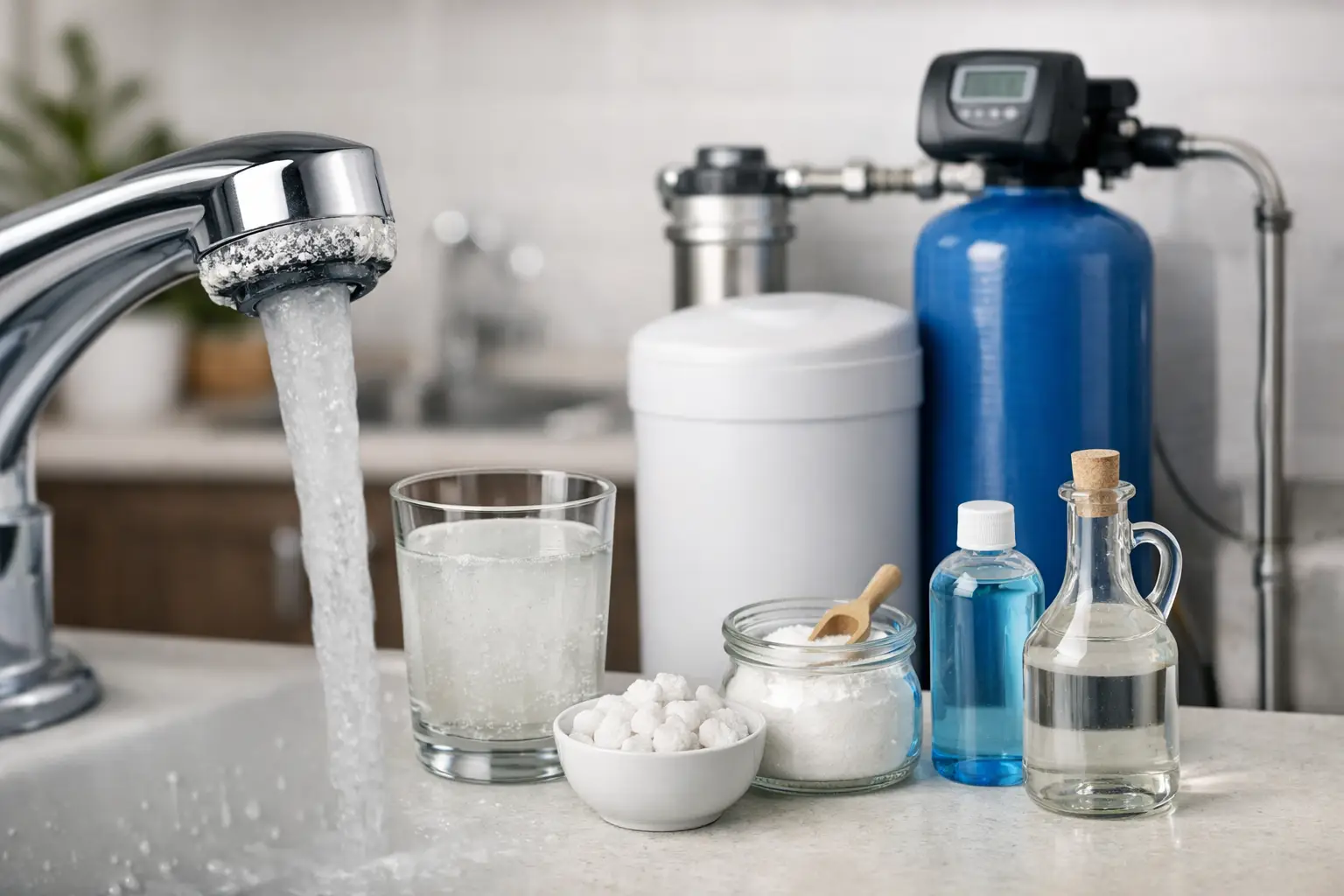
Your dishes come out cloudy, the shower door never looks clean, and your skin feels dry no matter what soap you buy. That is usually the point where people start asking how to fix hard water - not because of one stain, but because the problem keeps showing up across the entire plumbing system.
Hard water is not dangerous in most cases, but it is hard on fixtures, appliances, and daily comfort. The minerals in hard water, mainly calcium and magnesium, leave scale behind as water moves through pipes, water heaters, faucets, dishwashers, and coffee machines. Over time, that buildup can reduce efficiency, shorten equipment life, and make routine cleaning feel like a constant chore.
For homeowners, the issue often starts with soap scum and spotty glass. For property managers and commercial operators, it becomes a maintenance cost problem. Either way, the right fix depends on how severe the hardness is, where it is affecting the property, and whether you need a whole-building solution or a point-of-use upgrade.
How to fix hard water the right way
The first step is confirming that hard water is actually the issue. Scale around faucets, white residue on fixtures, stiff laundry, reduced lather, and premature appliance wear are strong signs, but testing matters. A simple water hardness test can tell you whether the mineral level is mild, moderate, or severe. That result changes the recommendation.
If the hardness level is low, smaller corrective steps may improve the experience enough. If the hardness is moderate to high, temporary cleaning fixes will not solve the underlying problem. In those cases, treatment equipment is usually the better investment.
There is no single answer for every property. A condo unit, a detached home, a restaurant, and a multi-unit building may all have hard water for different reasons and need different system designs.
Start with the source of the problem
Municipal and well water can both be hard. In many areas, the hardness comes from groundwater passing through mineral-rich rock before it reaches the property. That means the problem starts before the water enters your pipes. Cleaning fixtures helps with surface scale, but it does nothing to remove the minerals that keep causing new buildup.
This is why many people spend months treating the symptoms instead of the water. Descaling showerheads, scrubbing sinks, and flushing appliances can help restore performance, but those are maintenance steps, not full solutions.
Match the fix to the impact
If hard water is affecting only drinking water taste, a reverse osmosis system may help at a single tap. If the issue is scale throughout the building, a water softener is usually the more direct answer. If equipment already has mineral buildup, you may need both treatment and corrective service to restore plumbing performance.
The most effective solution: water softeners
If you want to know how to fix hard water across the entire property, a water softener is typically the standard approach. Softening systems remove hardness minerals before the water circulates through the plumbing network. That protects fixtures, improves soap performance, and reduces scale formation inside appliances and pipes.
Most conventional softeners use ion exchange. In simple terms, the system captures calcium and magnesium and replaces them with sodium or potassium. The result is water that behaves better in daily use and is less likely to leave mineral deposits behind.
For most homes with moderate or severe hard water, this is the most complete long-term fix. It addresses the cause, not just the visible residue.
That said, system selection matters. An undersized unit will struggle during peak demand. An oversized or poorly programmed unit can waste salt and water. Commercial properties also need a more careful assessment because flow rates, occupancy, and equipment loads are different from a single-family home.
When a softener makes the most sense
A softener is usually worth considering when you see recurring scale on faucets and glass, white crust around fixtures, reduced water heater efficiency, dry skin after bathing, or frequent maintenance on water-using appliances. It is also a strong option when you want to protect plumbing infrastructure over time instead of reacting to damage later.
For households with high hot water use, hard water often hits the water heater first. Mineral scale can coat heating elements and tank interiors, forcing the system to work harder. In commercial settings, that same problem can affect boilers, dishwashing equipment, and other water-dependent systems.
What about filters and reverse osmosis?
This is where many property owners get mixed signals. Standard water filters are not the same as water softeners. A sediment filter can remove dirt and debris. A carbon filter can improve taste and odor. A reverse osmosis system can reduce many dissolved contaminants at a specific tap. None of those automatically solve whole-home hard water.
Reverse osmosis is excellent for drinking water quality when properly installed and maintained, but it is not designed to protect every pipe and appliance in the building. If your dishwasher, water heater, shower valves, and laundry equipment are showing signs of mineral buildup, you need a broader treatment plan.
In some properties, combining systems is the best route. A softener can treat the full water supply, while reverse osmosis can improve drinking and cooking water at the kitchen sink. That combination is especially useful when water quality concerns go beyond hardness alone.
Short-term ways to manage hard water
If you are not ready to install treatment equipment immediately, there are still ways to limit damage. These are management steps, not permanent fixes.
Regular descaling of showerheads, faucet aerators, coffee machines, and kettles can keep fixtures working properly. Flushing the water heater may help remove sediment and reduce efficiency loss, although heavy scale may require professional service. Cleaning mineral deposits with the right solution can improve appearance and water flow.
You can also switch to detergents and soaps formulated for hard water. They will not remove the minerals, but they may reduce residue and improve washing results.
This approach makes sense when the hardness is mild, when you are waiting on a full installation, or when you are managing a temporary property. It is less practical when hard water is already affecting major plumbing components.
Hard water and plumbing damage
One reason this issue gets underestimated is that much of the damage happens out of sight. Scale can narrow internal pipe diameter, reduce fixture performance, and interfere with valves and heating components. What starts as annoying spotting on glass can turn into pressure issues, appliance inefficiency, and repair costs.
In commercial properties, the financial impact is usually clearer. Downtime, service calls, and equipment replacement add up quickly. In homes, the cost is more gradual, but it is still real. Water heaters, dishwashers, washing machines, and tankless systems all perform better with properly treated water.
That is why hard water should be treated as a system issue, not just a cleaning issue.
When professional help is the better move
If you are unsure how to fix hard water in your specific property, professional testing and system sizing are the smartest place to start. The right recommendation should account for hardness level, plumbing layout, occupancy, water usage, and whether there are other water quality concerns in the supply.
This matters because some properties need more than a basic install. Existing scale may require descaling or plumbing service. Older systems may need upgrades to support new treatment equipment. Businesses may need solutions that minimize disruption and maintain reliable output during operating hours.
A qualified provider should also explain maintenance clearly. Softener systems need salt or other regeneration support, periodic checks, and proper setup. RO systems need filter changes and membrane service. The goal is not just installation, but consistent performance over time.
For customers who want one provider to handle both plumbing performance and water treatment, a service platform like Plumingo can simplify that process. It brings system care, treatment support, and responsive service into one conversation instead of splitting the issue across multiple vendors.
Choosing the right fix for your property
The best solution depends on what hard water is costing you now and what you want to prevent next. If the problem is isolated to drinking water quality, point-of-use filtration may be enough. If hard water is affecting bathing, cleaning, fixtures, and equipment across the property, whole-home or whole-building softening is usually the better answer.
For many owners, the practical decision comes down to this: keep paying for the effects of hard water, or treat the water and reduce the strain on the system. When the signs are already showing up in appliances, fixtures, and maintenance calls, delaying the fix rarely makes it cheaper.
A good water treatment plan should make daily use easier, protect the plumbing behind the walls, and give you fewer surprises from the systems you depend on every day. That is the kind of fix that holds up long after the water spots are gone.