
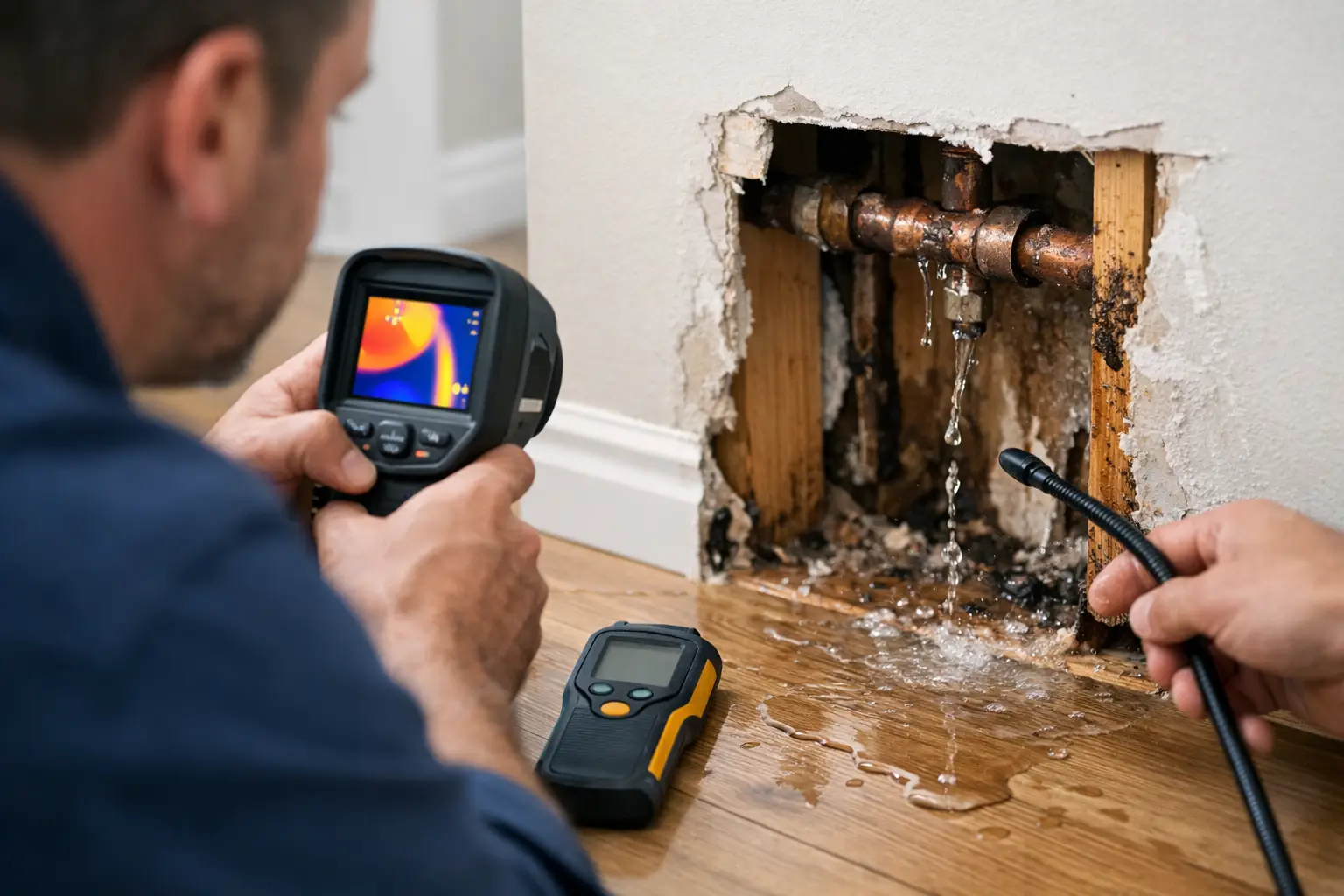
A water bill jumps, a wall starts smelling musty, or one area of the floor feels slightly warmer than the rest. That is often how hidden plumbing problems begin - quietly, then all at once. If you are trying to learn how to detect hidden water leaks, the goal is not just to find moisture. It is to catch system failure early, before drywall, flooring, insulation, and indoor air quality are affected.
Some leaks are obvious. A dripping faucet or a supply line under a sink usually gives itself away. Hidden leaks are different. They develop behind walls, under slabs, above ceilings, or along irrigation and supply lines where daily visibility is limited. For homeowners, that means rising repair costs. For property managers and commercial operators, it can also mean tenant complaints, service disruption, and preventable damage across multiple units or occupied spaces.
How to detect hidden water leaks before damage spreads
The first step is knowing what counts as a leak signal. Many people wait for visible water, but by then the issue is rarely small. Early detection usually comes from patterns - changes in usage, sound, smell, temperature, or surface condition.
Start with your water bill. If usage has increased and your household or building routine has not changed, that is worth investigating. A hidden toilet leak, a pinhole in a supply pipe, or a slow slab leak can waste a surprising amount of water without leaving obvious puddles.
Next, pay attention to smell. A persistent damp or musty odor in a bathroom, utility room, basement, or cabinet often points to trapped moisture. That does not always mean an active plumbing leak. It could be poor ventilation or condensation. But when the odor is localized and persistent, plumbing should be ruled out quickly.
Visual changes matter too. Paint that bubbles, drywall that stains, warped baseboards, lifting vinyl, and darkened grout lines can all point to moisture moving where it should not. In commercial spaces, watch for ceiling tile staining, wall discoloration, or recurring dampness near restrooms, kitchens, mechanical rooms, and service corridors.
Then there is sound. If you hear running water when no fixture is in use, do not ignore it. In a quiet house or building, that faint hiss behind a wall can be one of the clearest signs of a concealed leak.
Check the water meter for hidden leak activity
One of the most reliable ways to confirm a hidden leak is with a basic meter test. It is simple, fast, and useful for both homes and small commercial properties.
First, shut off all water use inside and outside the property. That means faucets, dishwashers, washing machines, irrigation, ice makers, and any process equipment tied to the water supply. Once everything is off, locate the water meter and note the reading. If your meter has a leak indicator, check whether it is moving.
Wait 30 minutes to an hour without using any water, then read the meter again. If the reading changes, water is moving somewhere in the system. That strongly suggests a leak.
This test will not tell you exactly where the problem is. It simply confirms that water loss is happening. From there, the next move is isolation. In some properties, you can narrow the issue by shutting off fixture valves or zone valves one by one and repeating the test. In others, especially larger buildings, professional leak detection equipment is the faster and more accurate option.
Common places hidden leaks develop
Not every part of a plumbing system fails at the same rate. Some areas are more vulnerable because of pressure, movement, age, or constant exposure to moisture.
Behind showers and tubs is a common trouble spot. Small failures in supply lines, drain seals, or grout and caulk systems can let water migrate into framing and subflooring. Under sinks, leaks may stay hidden if they are slow and tucked behind stored items or cabinet liners.
Walls that contain kitchen, laundry, or bathroom plumbing are another high-risk area. In colder climates, pipes along exterior walls are also more exposed to freeze-thaw stress and insulation issues. Basements and utility rooms deserve close attention because many supply lines, shutoffs, and treatment systems pass through these spaces.
In some buildings, the biggest concern is below the floor. Slab leaks can be difficult to detect without specialized tools. Signs may include warm spots on the floor, unexplained moisture, cracked flooring, or the sound of running water when the system is otherwise quiet.
Outdoor lines can also be the source. If the ground stays wet in one area, pavement shifts, or irrigation zones lose pressure, the leak may be outside the structure rather than inside it.
Warning signs that often get misread
A hidden leak does not always look like a plumbing emergency. Sometimes it shows up as a maintenance issue people try to solve cosmetically.
For example, repainting a stained wall does not solve the source of the moisture. Re-caulking a tub may help in some cases, but if the leak is in the supply line or drain connection, the problem continues behind the surface. Running a dehumidifier can reduce moisture in the air, yet it will not stop water entering from a failed pipe or fitting.
Higher humidity indoors is another clue that gets overlooked. If windows start fogging more often, a room feels damp, or mildew returns shortly after cleaning, hidden moisture may be feeding the problem.
There is also the issue of intermittent leaks. Some only appear when a fixture is used, when hot water runs through a line, or when a toilet refills. That can make the source harder to track without testing under real operating conditions.
Tools that help and where DIY reaches its limit
If you want to investigate safely before booking service, a few tools can help. A flashlight, paper towels, and a moisture meter are useful for checking under sinks, around exposed shutoffs, near water heaters, and along basement walls. Thermal imaging can sometimes reveal cooler or warmer moisture-affected areas, though interpretation takes experience.
Food coloring can help test toilets. Add a few drops to the tank and wait without flushing. If color appears in the bowl, the toilet is leaking internally. That is not a hidden wall leak, but it is a common source of unexplained water loss.
For more concealed problems, professional methods are more dependable. Acoustic listening equipment can detect pressurized leaks behind finishes or underground. Pressure testing can isolate line failures. Camera inspection helps with drain and sewer-related issues. Thermal and moisture mapping can define how far water has spread, which matters when repairs involve drywall, flooring, or insulation.
The limit of DIY is usually access and certainty. If you have confirmed water loss at the meter but cannot locate the source, opening walls blindly is rarely the best first move. It adds repair cost and still may not find the exact problem.
When to call a professional leak detection service
There are times when speed matters more than investigation. If you see active staining spreading across a ceiling, flooring that is buckling, mold odor getting stronger, or water pressure dropping without explanation, it is time to bring in a licensed professional.
The same applies if the leak may involve a slab, a main supply line, or a commercial plumbing system where downtime affects operations. In those settings, precise detection saves time and reduces unnecessary demolition.
A professional should also be your next call if you have shut off obvious fixtures, confirmed movement at the meter, and still cannot identify the source. That usually means the problem is concealed within the structure or outside the immediate living area.
For property managers and business operators, response timing has added importance. What starts as a small concealed leak can become a tenant issue, a claims issue, or a service interruption. Fast diagnosis protects both the building and the schedule.
Preventing future hidden leaks
The best leak detection strategy starts before water escapes. Regular inspection of supply lines, shutoff valves, water heaters, filtration systems, and softener connections helps reduce surprises. If your property has older piping, recurring pressure issues, or a history of freeze damage, planned maintenance is especially valuable.
It also helps to know your normal baseline. Review monthly water usage, pay attention to pressure changes, and do a simple meter test if something feels off. In larger properties, documenting plumbing zones and shutoff locations can make response much faster when a problem appears.
If you use water treatment equipment, appliance hookups, or booster systems, those connections should be checked as part of routine plumbing care. Specialized systems improve performance and water quality, but they still rely on sound fittings, proper pressure, and clean installation.
When hidden leaks are found early, the repair is usually more controlled, less invasive, and less expensive. That is the real value of knowing what to watch for. A small signal today is often the best chance to avoid major restoration work next month. If something feels off, trust the pattern and act on it early.