
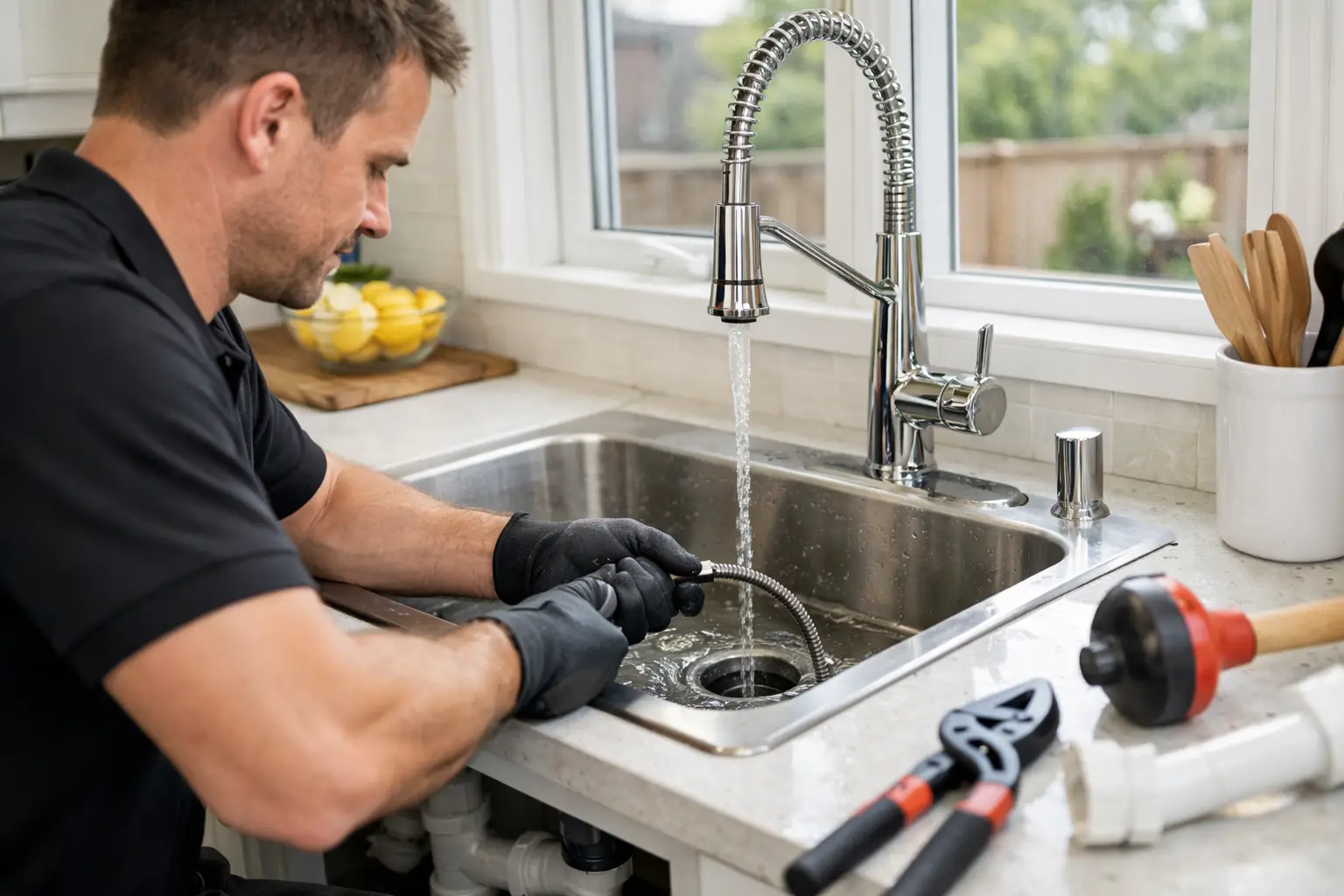
A kitchen sink that drains slowly can turn meal prep and cleanup into a frustrating stop-and-start routine. Knowing how to clear kitchen clog issues safely can restore normal drainage without creating a larger problem inside the pipes. The key is to start with the simplest cause, use the right method for your plumbing, and stop before force or chemicals damage a fitting, disposal, or drain line.
Start by Identifying the Type of Kitchen Clog
Kitchen clogs rarely appear without a reason. Grease that cools inside a pipe, food particles, coffee grounds, soap residue, and mineral buildup can gradually reduce the drain opening. A sudden blockage may also be caused by an item caught in the sink strainer, garbage disposal, or P-trap beneath the sink.
First, look at the symptom. If one bowl of a double sink drains poorly while the other drains normally, the blockage may be near that sink's branch line. If both bowls fill up or water rises in one side when the other drains, the clog is usually farther down the shared drain. A dishwasher that leaves standing water can also point to a kitchen drain restriction, especially if the dishwasher connection shares the same line.
If multiple fixtures in the home are draining slowly, do not assume the kitchen sink is the only issue. That can indicate a larger drainage concern that needs professional diagnosis.
How to Clear a Kitchen Clog Step by Step
Before starting, remove dishes, place a bucket and towels under the sink, and avoid running the dishwasher or disposal. If there is standing water, scoop out enough to work comfortably around the drain opening.
Check the strainer and disposal first
Remove the sink strainer and clear visible food debris. Never reach into a garbage disposal, even when it is switched off. Turn off power at the breaker before inspecting it, then use tongs or pliers to remove anything visible.
If the disposal hums but does not turn, it may be jammed rather than clogged. Many units have a reset button on the bottom and can be turned manually using the manufacturer-approved wrench slot. Do not force the unit or use chemical drain cleaners in a garbage disposal. Those products can splash back and may damage internal components.
Use a plunger correctly
A sink plunger can clear soft blockages close to the drain. For a double-bowl sink, seal the unused drain tightly with a wet cloth or stopper. Add enough water to cover the rubber cup of the plunger, then make several firm, controlled plunges.
Keep the motion steady rather than aggressive. Excessive force can push water through weak connections below the sink, particularly in older cabinets or recently repaired plumbing. After 15 to 20 plunges, remove the plunger and test the drain with warm water. If the water begins moving freely, continue flushing for a minute or two.
Flush with hot tap water and dish soap
Grease is one of the most common contributors to kitchen drain blockages. If the sink is draining slowly but not completely blocked, add a small amount of grease-cutting dish soap, then run hot tap water for several minutes.
Use hot tap water rather than repeatedly pouring boiling water down the drain. Very hot water can be hard on some pipe materials, seals, and older connections. This method is most useful for mild grease buildup, not a dense blockage or an object lodged in the line.
Clean the P-trap when the clog is nearby
The curved pipe under the sink, called the P-trap, catches debris and holds water that helps prevent sewer gas from entering the room. It is also a common place for food matter and grease to collect.
Place a bucket beneath the trap, then loosen the slip nuts by hand if possible. Empty the contents into the bucket and inspect the trap for buildup. Clean it with a brush, rinse it, and reinstall it carefully. Make sure the washers are seated correctly, then run water slowly and check every connection for leaks.
If the pipes are corroded, glued in place, difficult to access, or connected to a commercial sink setup, it is better to leave trap removal to a plumbing professional. A simple clog should not become a cabinet leak or a damaged drain assembly.
Use a hand auger for deeper obstructions
When plunging and trap cleaning do not work, a small hand auger can reach farther into the drain line. Feed the cable slowly into the pipe after removing the P-trap. Turn the handle gently as you advance it, then withdraw it carefully to remove debris.
Do not use excessive force. A cable can snag, scratch certain piping, or become stuck if it is pushed through difficult bends. Stop if you meet solid resistance that does not give with gentle rotation. That may be a compacted clog, pipe scale, or a problem beyond the reach of a household tool.
What Not to Put Down a Kitchen Sink
The best way to reduce future clogs is to treat the kitchen drain as plumbing, not a food disposal system. Even homes with garbage disposals benefit from keeping difficult materials out of the sink.
Avoid sending these items down the drain:
- Cooking oil, grease, butter, and fatty sauces
- Coffee grounds and loose tea leaves
- Rice, pasta, flour, and dough-like food scraps
- Eggshells, fibrous vegetables, and produce peels
- Bones, fruit pits, and non-food items
Let grease cool in a disposable container and place it in the trash. Wipe greasy pans with a paper towel before washing. Use a sink strainer to capture food scraps, then empty it into the garbage or compost as appropriate. These small habits make a noticeable difference in how often a kitchen line needs attention.
Why Chemical Drain Cleaners Are Usually a Poor First Choice
Chemical drain cleaners may seem convenient, but they are not a dependable solution for many kitchen clogs. They often fail to remove grease buildup completely, and they can create safety concerns when mixed with other products or left in standing water. Some formulas may also be harsh on aging pipes, rubber seals, and disposal components.
They are especially risky if you later need to plunge the sink or open the P-trap, because the chemical can splash onto skin or into eyes. If a cleaner has already been used, tell the plumbing technician before any work begins. That information helps them choose a safer service approach.
Enzyme-based drain maintenance products can be a gentler option for routine care, but they are not a substitute for removing a physical blockage. Read the label carefully and use products only as directed.
When a Kitchen Clog Needs Professional Service
Some kitchen clogs are straightforward. Others point to a drain issue that requires specialized equipment and a clear diagnosis. Arrange professional service if the clog returns soon after you clear it, water backs up into the other sink bowl, the dishwasher drains poorly, or you notice leaks beneath the cabinet.
Gurgling sounds, unpleasant drain odors that persist after cleaning, and slow drainage in nearby fixtures also deserve attention. For property managers and commercial operators, recurring kitchen drainage issues can disrupt staff routines, sanitation procedures, and equipment use. Addressing the underlying buildup or line condition is more effective than repeating temporary fixes.
A qualified plumber can inspect the trap, branch line, disposal connection, and drain condition to determine whether cleaning, cabling, repair, or maintenance is appropriate. Plumingo provides expert plumbing support with transparent service guidance for homeowners and businesses that need a dependable next step.
Keep the Drain Moving After the Clog Is Gone
Once the sink is draining properly, run hot tap water after washing greasy cookware and keep the strainer clear. Do not overwork the garbage disposal with large quantities of food at once. Feed small amounts gradually with cold water running, then allow the water to continue briefly after the disposal stops.
A clear kitchen drain is usually the result of consistent habits, not harsh treatments. When a blockage resists the safe steps above or keeps coming back, professional care can protect the plumbing system and help prevent a minor disruption from becoming a repeat problem.