
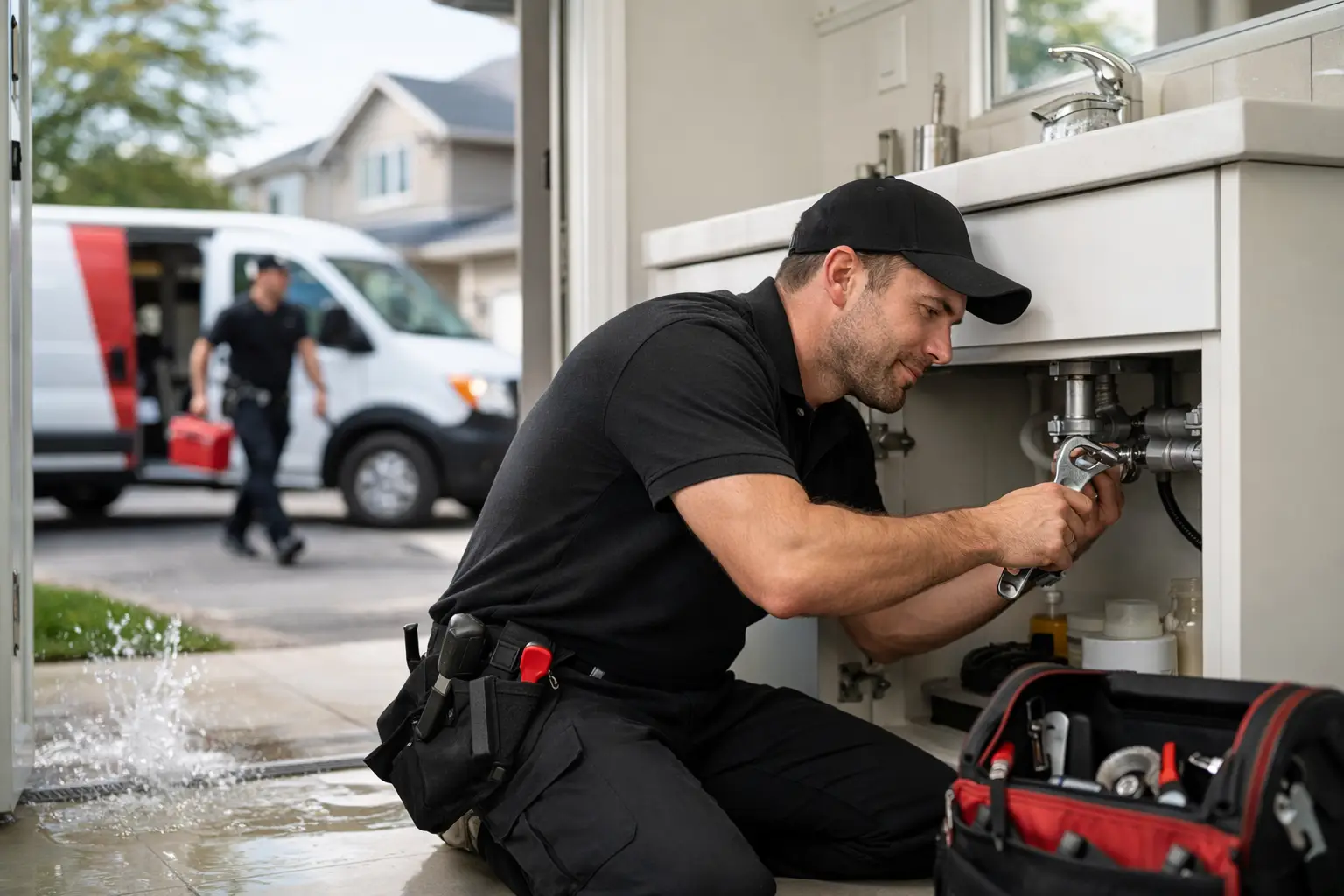
A burst supply line under the sink, water backing up across a commercial washroom floor, or a sudden loss of water can interrupt a normal day quickly. Knowing how to book emergency plumbing helps you move from disruption to a clear next step without guessing what details matter or what you can safely do while help is on the way.
Not every plumbing concern needs an urgent visit. A slow faucet drip or a fixture that has been running for weeks can often be scheduled during regular service hours. Active leaks, sewage backups, flooding, no water where it affects operations or basic sanitation, and a suspected failed water heater are different. They deserve prompt professional assessment because the condition can affect the building, water use, or occupant comfort.
Start by Making the Area Safer
Before you call or submit a booking request, take a moment to limit damage if it is safe to do so. Do not attempt a repair that requires tools, electrical work, or dismantling plumbing components under pressure. Your priority is to protect people and property, not diagnose every cause.
For a localized leak, turn off the fixture's nearby shutoff valve if you can identify it and it moves normally. If water is spreading quickly, use the main water shutoff for the property when appropriate. Homeowners often find it near the water meter, where the main line enters the building, or in a utility area. Property managers should make sure staff know where relevant shutoffs are located before an incident occurs.
Move electronics, documents, inventory, and soft furnishings away from the affected area. Place towels or a container under a small, contained drip only if doing so does not put you at risk. If water is near outlets, appliances, electrical panels, or exposed wiring, stay clear of the area and arrange qualified help. For a sewage backup, keep people and pets away from contaminated water and avoid using toilets, sinks, showers, dishwashers, or laundry equipment until the issue has been assessed.
How to Book Emergency Plumbing Clearly
A good booking gives the service team enough information to prioritize the situation and arrive prepared. You do not need plumbing vocabulary. Describe what you can see, hear, smell, and safely observe. Clear facts are more useful than a guess about which part has failed.
When booking emergency plumbing, have these details ready:
- Your address and access information. Include unit number, gate codes, loading instructions, parking constraints, or the best entrance for a commercial site.
- What is happening now. Explain whether water is actively flowing, where it is coming from, how long it has been happening, and whether you have shut off the water.
- Which systems are affected. Mention sinks, toilets, drains, water heaters, filtration equipment, water softeners, or multiple areas of the property.
- Any immediate safety concerns. Report water near electrical equipment, sewage exposure, a lack of water for an occupied building, or damage affecting business operations.
- The best contact person on site. Provide a phone number for someone who can answer questions and provide access when the technician arrives.
Photos or a short video can help when the booking platform allows uploads, particularly for visible leaks, water around equipment, or drain backups. They are not a substitute for an on-site inspection, but they can give useful context. Never delay contacting a plumbing professional just to capture a perfect image.
Choose the Right Service Request
The right request type helps distinguish an active issue from work that can be planned. An emergency request is generally appropriate when there is ongoing water release, a blocked or backed-up drain affecting sanitation, no reliable water supply, or a plumbing failure that is interrupting essential building use.
A scheduled request may be a better fit for a faucet replacement, a minor drip that can be isolated, a toilet that works but needs adjustment, or routine filter and water softener service. This distinction matters because it keeps urgent capacity available for conditions that cannot reasonably wait while ensuring non-urgent work still receives professional attention.
For homes and businesses with water treatment equipment, mention it during booking if the issue involves reduced water flow, unusual taste or odor, a leak around the system, or an alert on the equipment. Reverse osmosis filters, softeners, and associated valves require the right assessment. A technician can determine whether the problem is related to the treatment system, the plumbing supply, or another component rather than recommending a replacement before the cause is known.
Ask for Clarity Before Work Begins
Urgent situations can make it tempting to approve work without questions. A professional service experience should still be clear. Once the immediate issue is stabilized, ask what was found, what repair is recommended, and whether there are practical options based on the condition of the system.
Transparent pricing begins with a clear explanation of the service process. The final scope can depend on access, the source of the problem, part availability, and what is discovered after inspection. For example, a visible ceiling leak may originate from a supply connection, a drain line, a fixture above, or condensation from equipment. Diagnosis is what separates the symptom from the repair.
For commercial operators, ask whether the repair can be completed with minimal disruption to customers, staff, or tenants. In some cases, isolating one fixture or section of piping can keep the rest of the building operational. In others, a brief shutdown is the safer choice. The right approach depends on the system layout, sanitation requirements, and the nature of the failure.
What to Expect After You Book
After your emergency plumbing request is received, keep your phone available and confirm that someone can grant access. If the situation changes significantly, such as water begins spreading faster or an area becomes unsafe, update the service team. Accurate updates help them respond with the right information in mind.
Avoid turning water back on to test the issue unless a qualified technician advises you to do so. It can be difficult to tell whether a leak has stopped because the pressure has dropped temporarily or because the underlying fault has been resolved. Similarly, avoid chemical drain cleaners during a backup. These products may not clear a serious obstruction and can create handling concerns for anyone working on the line.
When the technician arrives, point out the affected areas, explain what happened before the problem started, and note anything you have already done, such as shutting off water or attempting to clear a drain. If you have noticed recurring symptoms, such as repeated clogs in the same location, low pressure after filter service, or a water softener that is no longer cycling properly, share that history. It can make diagnosis more efficient.
Prevent the Next Urgent Call Where You Can
Some plumbing failures cannot be predicted, but routine attention lowers the chance that a small warning becomes a larger interruption. Check under sinks and around water treatment equipment for moisture, corrosion, or loose connections. Know where the main shutoff is and make sure it remains accessible. In colder conditions, protect exposed piping and address drafts in utility spaces before temperatures drop.
Property managers and commercial operators benefit from keeping a simple record of past repairs, equipment ages, water treatment service dates, and recurring drain concerns. This is not paperwork for its own sake. It gives a service technician a useful picture of the building and can help identify patterns before they affect tenants or operations.
For homeowners, an annual look at visible supply lines, shutoff valves, water heater connections, and filtration equipment is a practical habit. If something appears worn or behaves inconsistently, schedule an assessment while you still have time to choose a convenient appointment.
When an active plumbing issue interrupts your home or workplace, provide the facts, take safe containment steps, and book qualified help promptly. A calm, well-documented request gives the technician a stronger starting point and helps protect the systems you rely on every day.