
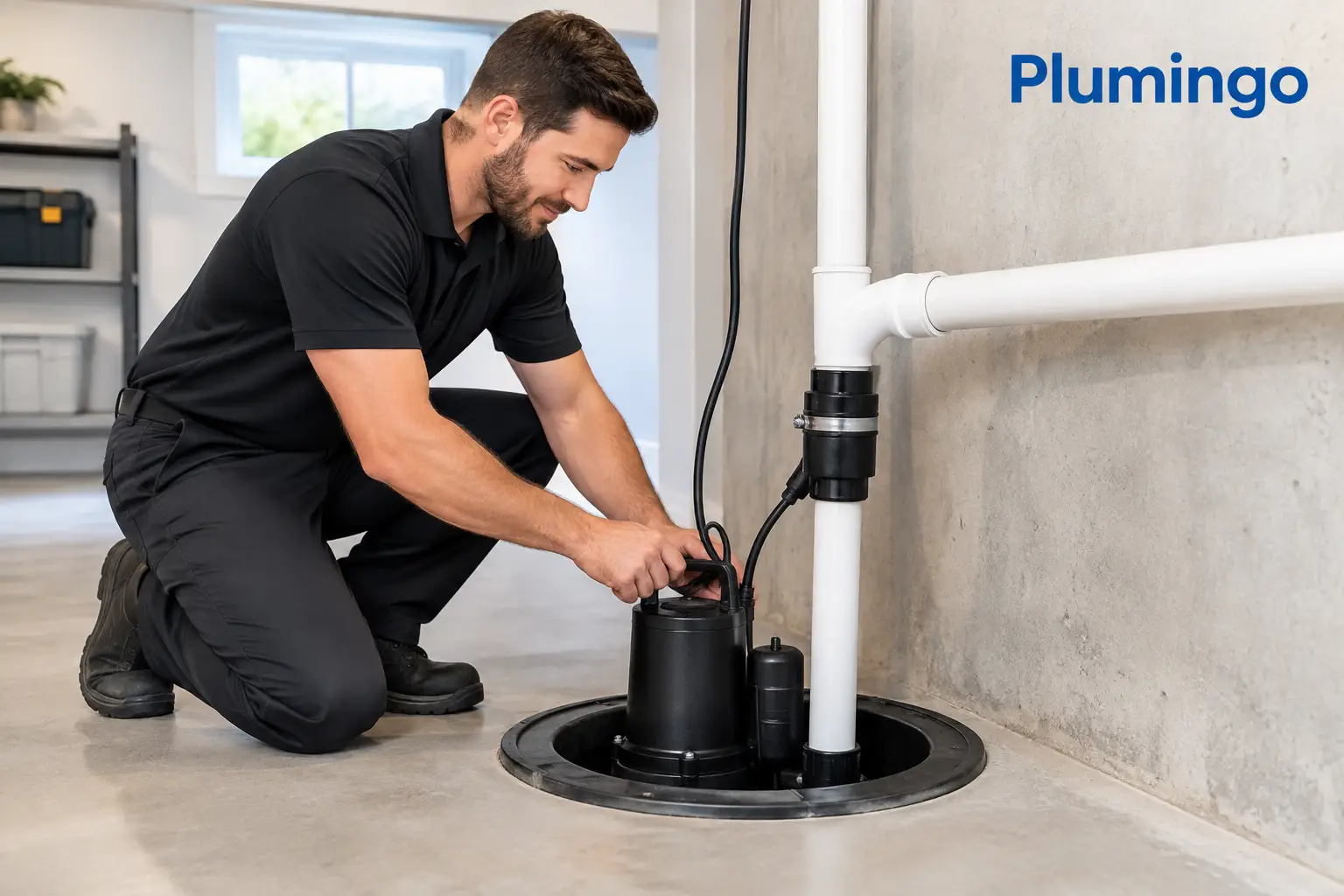
A basement can stay dry for years, then face its first real test during a rapid thaw or several days of heavy rain. Sump pumps are designed for that moment: moving collected groundwater away from the foundation before it can rise into the basement. They are a practical part of many drainage systems, but their performance depends on more than simply switching on.
For homeowners, property managers, and commercial operators, knowing how a sump system works makes it easier to spot concerns early and plan maintenance at the right time. A pump that is properly sized, tested, and discharged correctly can help protect finished spaces, stored materials, and building equipment without creating unnecessary service calls.
How sump pumps manage groundwater
A sump pump sits inside a sump pit, usually located in the lowest area of a basement or crawl space. Perimeter drainage around the foundation directs groundwater into that pit. As the water level rises, a float switch activates the pump. The pump then sends water through a discharge pipe to an appropriate exterior drainage location.
The pump does not stop water from reaching the foundation. Its job is to manage water that has already been collected by the drainage system. That distinction matters. If exterior grading sends surface water toward the building, downspouts empty beside the foundation, or footing drains are obstructed, even a capable pump may have to work harder than intended.
Most systems include a check valve on the discharge line. This small component prevents water in the vertical pipe from falling back into the pit when the pump shuts off. Without it, the pump may cycle more often, creating extra wear and noise.
Signs a sump pump needs attention
A sump system often gives warning signs before it fails completely. The most obvious is a pump that does not start when water reaches the float. A pump that runs continuously is also worth checking, particularly if the pit is not filling or the discharge line is clear. Continuous operation can point to a stuck float, a failed check valve, or a pump that is struggling against a blocked or frozen discharge line.
Other signs are less dramatic. Repeated short cycles, unusual vibration, a loud rattling sound, visible rust, or water remaining high in the pit can all indicate that service is needed. A musty smell near the pit may be related to standing water, though the source should be assessed rather than assumed.
Property managers should pay particular attention to pumps in utility rooms, mechanical spaces, and lower-level storage areas. These locations can be overlooked until water affects adjacent equipment or tenant space. A scheduled inspection is usually simpler than responding after a storm exposes a neglected component.
Testing a sump pump before wet weather
A basic test can be completed in a few minutes when the system is accessible. First, confirm that the pump is plugged into a working outlet and that its power cord is in good condition. Then slowly pour water into the pit until the float rises and activates the pump.
Watch what happens next. The pump should start, lower the water level, and shut off once the float drops. Check outdoors to confirm water is leaving through the discharge point. If the pump runs but little or no water exits, the line may be obstructed, disconnected, frozen, or routed improperly.
Avoid testing with dirty water, debris, or a large volume dumped in all at once. The goal is to verify normal operation, not overwhelm the system. If the pump fails to start, trips the circuit, makes an unusual sound, or cannot clear the pit, stop the test and arrange a professional inspection.
Keep the pit and float clear
Sediment can collect in a sump pit over time. So can small stones, construction debris, and loose items that interfere with the float switch or pump intake. During routine checks, make sure the float can move freely and the lid is secure.
A sealed or properly fitted cover helps reduce moisture, odors, and debris in the pit. It can also improve safety in homes with children or pets. The exact cover style depends on the pit, discharge pipe, and drainage layout, so it should not restrict access for future service.
Choosing the right type of sump pump
The two most common residential styles are submersible and pedestal pumps. A submersible pump sits inside the pit and is typically quieter because the motor is below the cover. It is often a strong choice where the pit is large enough and homeowners want a more contained installation.
A pedestal pump has its motor above the pit, with the pumping section below. It can be easier to access for service and may suit a smaller pit, although it is usually more visible and can be louder. Neither style is automatically better. The right option depends on pit dimensions, expected water volume, access, and the building's drainage conditions.
Pump capacity should also be matched to the site. Choosing the largest available pump is not always the answer. An oversized unit may cycle too quickly in a small pit, while an undersized unit may not keep up during peak water flow. Lift height, discharge pipe length, pipe diameter, and turns in the line all affect real-world pumping performance.
A qualified plumber can assess these details before recommending repair or replacement. If an existing pump is functioning well but has a worn float switch or check valve, a targeted repair may be the sensible option.
Backup power deserves a practical plan
A primary sump pump depends on electricity, which creates a clear limitation during a power outage. Homes with frequent outages, finished basements, or significant groundwater flow may benefit from a backup system. Battery-powered backup pumps can provide short-term protection when the primary pump cannot run, while water-powered backups may be an option where municipal water pressure and local requirements allow.
Backup systems have trade-offs. Batteries require testing and eventual replacement. Water-powered systems use potable water and are not appropriate for every property. A backup pump also does not correct poor exterior drainage or a blocked discharge line. It is a secondary layer of protection, not a substitute for maintaining the main system.
An alarm can add useful notice by alerting occupants when water in the pit reaches an unusually high level. This is especially valuable in vacant properties, rental buildings, and commercial spaces where someone may not regularly enter the basement.
The discharge line is part of the system
A dependable pump can still have limited value if the discharge line sends water too close to the foundation. Water should be directed away from the building in accordance with local drainage requirements, without creating ice hazards, affecting neighboring properties, or overloading a sanitary sewer connection.
In cold climates, discharge pipes need special attention. Exterior sections can freeze when temperatures drop, preventing the pump from moving water. The solution is not always more insulation. Proper pipe routing, a suitable discharge location, and an appropriate air gap or connection method are more important than a quick seasonal patch.
Never assume that connecting sump discharge to a floor drain or sanitary line is acceptable. Local plumbing rules and property conditions matter. A professional assessment can confirm a compliant route that supports the system's long-term performance.
A simple maintenance schedule
For many properties, testing the pump at least twice a year is a reasonable starting point: once before the wet spring season and again before periods of heavy fall rain. Homes with high groundwater or a history of frequent cycling may need more regular checks.
During each check, test activation, inspect the power connection, confirm the float moves freely, and look at the exterior discharge area. Clear leaves, soil, snow, or other obstructions that could restrict water flow. If a battery backup is installed, follow the manufacturer's maintenance guidance rather than waiting for an outage to reveal a weak battery.
Professional service is useful when the system is older, the pit fills unusually fast, the pump has changed its operating pattern, or drainage concerns extend beyond the pump itself. Plumingo can help assess sump pump performance alongside the broader plumbing and drainage conditions that affect it.
A sump pump is easy to ignore when the basement is dry. Giving it a short, planned check before the next wet stretch is one of the simplest ways to keep a small system from becoming a larger property concern.