
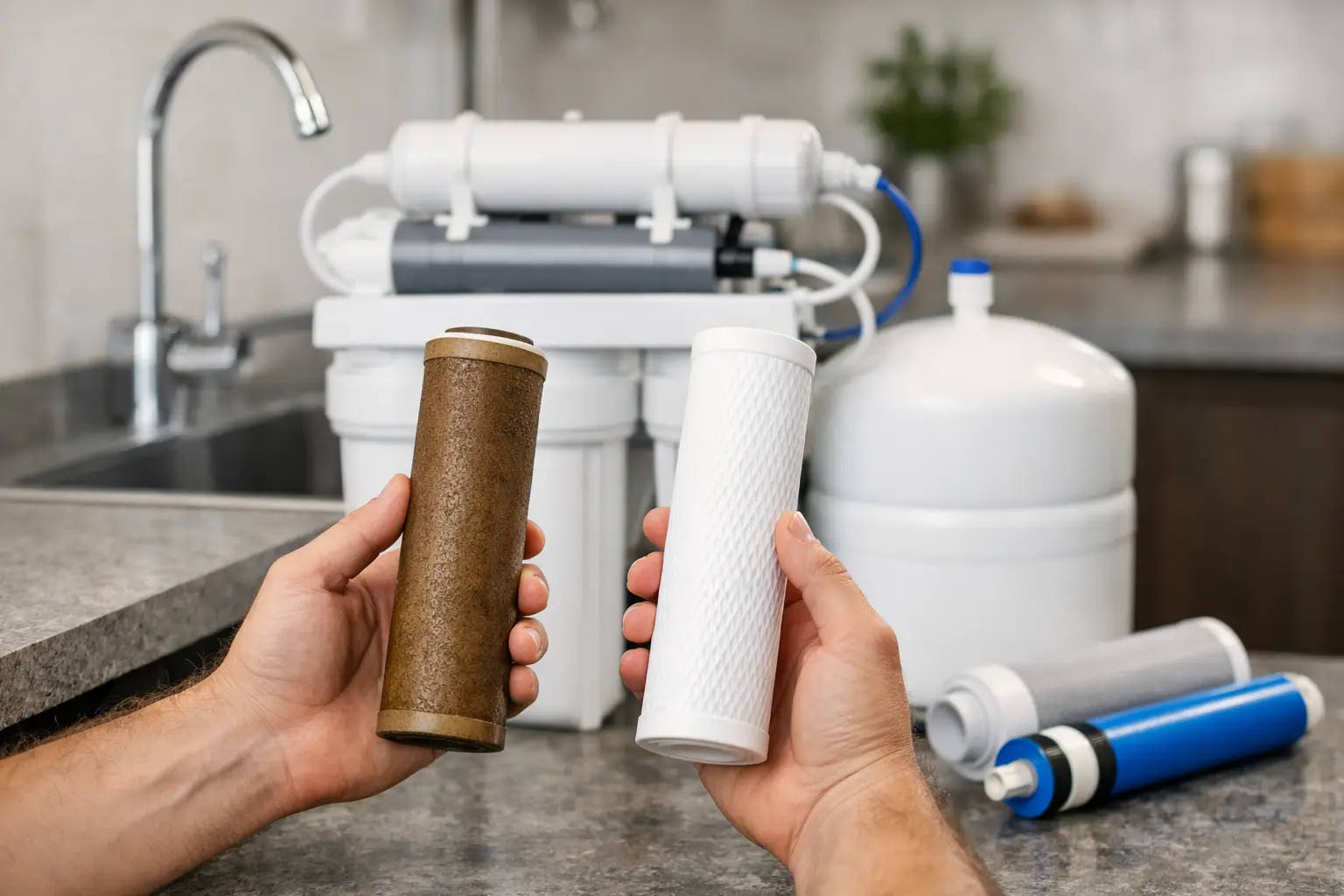
That glass of water can look perfectly clear while your RO system is already overdue for maintenance. If you are wondering how often to replace RO filters, the short answer is every 6 to 12 months for most pre-filters and post-filters, while the RO membrane usually lasts 2 to 3 years. The real answer depends on water quality, usage, and whether the system is being maintained on schedule.
How often to replace RO filters in real use
A reverse osmosis system does not rely on one filter. It works as a sequence. Sediment and carbon filters protect the membrane, and the membrane does the heavy lifting by reducing dissolved contaminants. In many systems, a final polishing filter improves taste before the water reaches your faucet.
Because each stage does a different job, replacement timing is not the same across the system. Sediment filters often need replacement around every 6 months, especially where incoming water carries silt, rust, or other visible particulates. Carbon filters are commonly changed every 6 to 12 months, depending on chlorine levels and water use. The membrane usually lasts longer, often 24 to 36 months, if the earlier filters are changed when they should be.
That timeline is a starting point, not a rule that fits every home or business. A family of five will wear through filters faster than a couple in a condo. A commercial coffee station or office kitchen can put far more demand on a system than a standard residential setup. If your source water is harder, more chlorinated, or more sediment-heavy, replacement intervals can shorten.
The standard replacement schedule for most RO systems
For many residential systems, a practical service schedule looks like this.
Sediment filter
Replace about every 6 months. This filter catches dirt, sand, rust, and debris before those particles reach more sensitive components. If it clogs, water pressure can drop and the rest of the system has to work harder.
Carbon pre-filter
Replace about every 6 to 12 months. Carbon reduces chlorine and certain chemicals that can damage the membrane and affect taste. In municipal water systems with higher chlorine levels, waiting too long can shorten membrane life.
RO membrane
Replace about every 2 to 3 years. Some membranes last longer, but only when the system is well maintained and incoming water is within expected conditions. If pre-filters are neglected, the membrane can fail much sooner.
Carbon post-filter
Replace about every 12 months. This stage is mainly about taste and odor. If water starts tasting flat or unusual after treatment, this filter may be spent.
If your system includes specialty cartridges such as remineralization, UV, or alkaline stages, those parts may follow different service intervals. Manufacturer guidance matters, but so does actual system performance.
Why replacement timing changes from one property to another
Two homes can have the same RO unit and need service on completely different schedules. That is normal.
The biggest factor is incoming water quality. If your water carries heavy sediment, your sediment filter will fill faster. If chlorine levels are high, carbon stages will be consumed more quickly. If you are on well water, iron, manganese, and biological concerns may also affect maintenance needs.
Usage is the next major factor. A lightly used drinking water system in a small household may stay within the longer end of the replacement range. A busy family, multi-unit property, or commercial setting may need shorter intervals because more gallons are moving through the system every day.
System size and design matter too. Some units are built for lower residential demand. Others are sized for higher output. If the system is undersized for the way it is being used, filters often wear out faster and performance problems show up sooner.
Signs your RO filters need to be replaced sooner
You do not always need to wait for the calendar. In many cases, the system tells you it needs attention.
A drop in water flow is one of the most common signs. If the faucet is producing less water than usual, a clogged sediment or carbon filter may be restricting flow. A change in taste or odor can point to an exhausted carbon stage or a membrane that is no longer performing properly.
Cloudiness, unusual noise, or a storage tank that takes much longer to fill can also signal service needs. In some systems, increased wastewater production is another clue that components are under strain. If you notice scale, leaks, or repeated pressure issues, it is worth having the full system checked rather than replacing one filter and hoping the issue stops there.
For commercial operators and property managers, consistency matters even more than taste alone. If staff or tenants begin reporting slower dispensing, odd flavor, or reduced confidence in water quality, the safest move is to schedule service before the issue affects operations.
What happens if you wait too long
Putting off filter replacement usually does not save money. It tends to shift the cost downstream.
When pre-filters are left in place too long, the membrane is exposed to contaminants it was not meant to handle on its own. Chlorine can damage the membrane. Sediment can clog stages and reduce overall efficiency. Once the membrane is compromised, replacement is more expensive than routine filter maintenance.
Water quality also becomes less predictable. That may mean bad taste, poor odor control, lower contaminant reduction, or all three. In a business setting, that can affect staff use, customer-facing beverage equipment, and general trust in facility maintenance.
There is also a plumbing performance angle. Restricted filters can contribute to pressure complaints, slow output, and strain on connected components. Regular service protects both water quality and system reliability.
How often to replace RO filters if you have hard water or heavy use
If your water is hard, your maintenance schedule may need to be more aggressive. Hard water can increase scaling on the membrane, which reduces efficiency and shortens service life. In those cases, homeowners often benefit from pairing RO with upstream water treatment such as softening, especially when overall household water conditions are known to be challenging.
Heavy-use settings should also plan around actual demand, not generic timelines. An office break room, medical space, salon, café, or shared residential building may run through filters much faster than standard residential guidance suggests. In these environments, waiting for obvious symptoms can mean avoidable disruption.
A better approach is scheduled service based on usage patterns, local water conditions, and system type. That keeps replacement predictable and reduces the chance of emergency calls tied to preventable filter failure.
Should you replace filters yourself or book service?
Some property owners handle routine cartridge changes themselves. That can work when the system is accessible, the replacement parts are correct, and the service schedule is well documented. But DIY replacement has limits.
The challenge is that not every issue is a simple expired filter. Low pressure can come from multiple causes. Poor taste may point to a post-filter, a membrane issue, storage tank pressure, or source water changes. If cartridges are installed incorrectly, leaks and performance problems can follow.
Professional service is often the better option when the system has been neglected, the water quality has changed, the unit is used commercially, or there is any uncertainty about membrane condition. A qualified technician can assess performance across the whole system, verify pressure, inspect housings and connections, and make sure replacement intervals are based on real operating conditions rather than guesswork.
That is especially useful for customers who want clear service records, predictable maintenance, and transparent pricing. For many homes and businesses, that level of support is worth more than stretching one more month out of a filter.
A practical maintenance plan that works
The easiest way to stay ahead of RO issues is to stop treating filter changes as an occasional task. Put the system on a service schedule from the start. Track installation dates. Pay attention to changes in flow, taste, and fill time. If your water source or occupancy changes, revisit the schedule.
For most properties, replacing sediment and carbon filters every 6 to 12 months and checking membrane performance regularly is the right baseline. From there, adjust based on usage and water quality. If you are not sure what your system needs, a professional inspection can quickly tell you whether your current schedule is protecting the equipment or putting it at risk.
Clean water depends on more than having an RO system installed. It depends on keeping that system in working order, on time, before small performance issues turn into bigger service problems.