
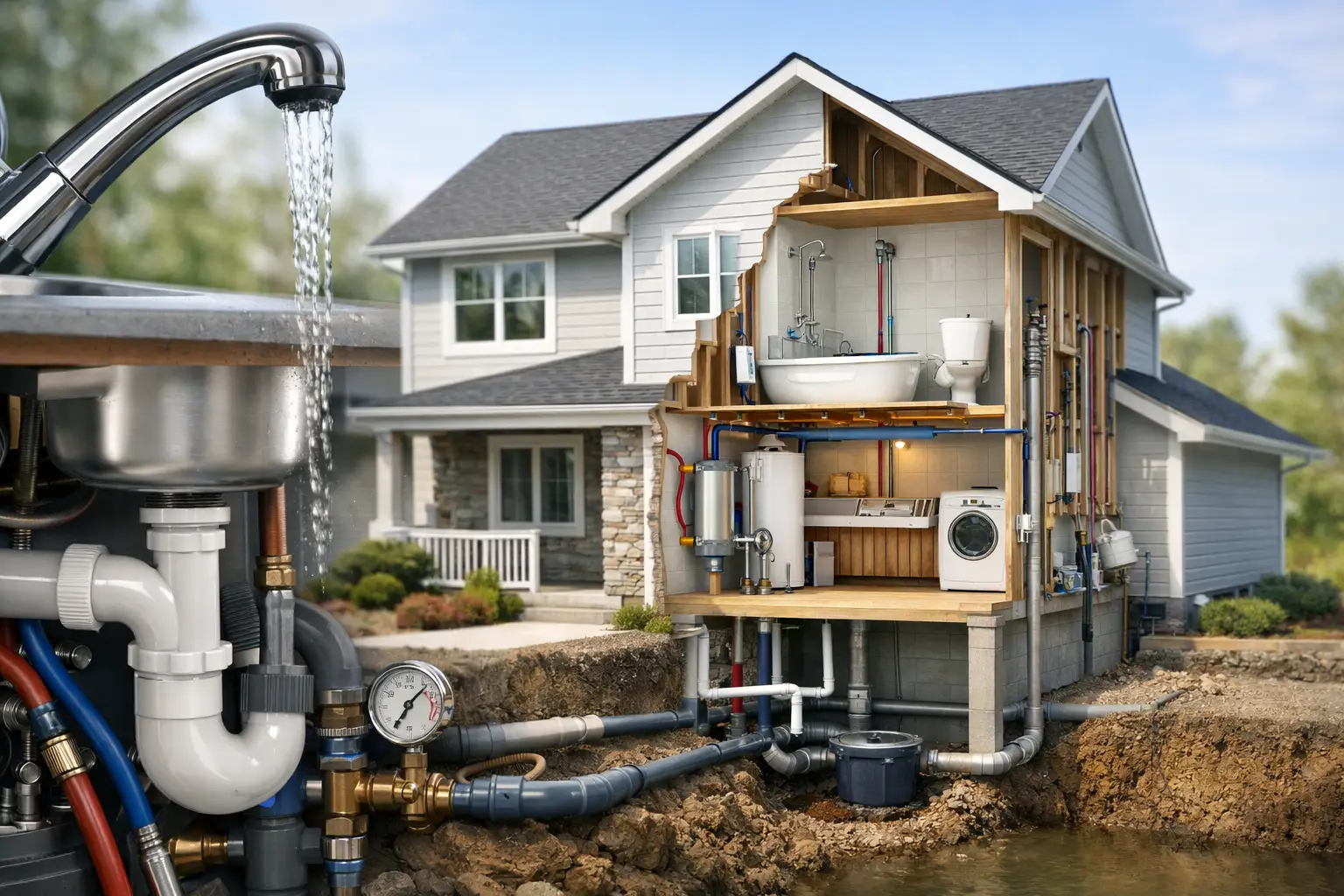
A plumbing problem rarely starts where you notice it. The drip under a sink, the weak shower pressure, or the slow basement drain is usually just the visible part of a larger system doing exactly what it was designed to do - or struggling because one part is failing.
If you have ever wondered how does a house plumbing system work, the short answer is this: clean water comes in under pressure, gets distributed where you need it, and wastewater leaves through a separate drain system that relies mostly on gravity and venting. That sounds simple, but a well-functioning home plumbing system depends on several connected parts working in balance.
How does a house plumbing system work from start to finish?
A house plumbing system has two main jobs. First, it brings fresh water into the home for drinking, cooking, bathing, cleaning, and appliances. Second, it removes wastewater safely and directs it into the municipal sewer or a private septic system.
These two sides of the system stay separate. Supply pipes carry clean water in. Drain, waste, and vent piping carries used water out. When homeowners run into trouble, it is often because they think of plumbing as fixtures only - faucets, toilets, tubs, and sinks - when the real system starts before water enters the building and continues well beyond the drain opening.
In most homes, water enters through a main supply line. Once inside, it passes a shutoff valve and often a water meter, then branches off to cold water fixtures and to the water heater. The heater supplies hot water to showers, sinks, dishwashers, and washing machines. After use, wastewater flows into drainpipes, through vented stacks, and out to the sewer or septic connection.
The water supply side
The supply side is the pressurized half of the system. In city-served homes, water usually comes from a municipal main. In rural properties, it may come from a well system with a pump and pressure tank. Either way, the goal is the same: deliver clean water consistently and at usable pressure.
Once water enters the home, the main shutoff valve becomes your first line of control. If a pipe bursts or a fixture supply line fails, shutting off this valve limits water damage fast. From there, water moves through a network of pipes to each fixture and appliance.
Modern homes often use copper, PEX, or CPVC piping. Older homes may still have galvanized steel, which can restrict flow over time as mineral buildup narrows the inside of the pipe. That is one reason two homes with the same municipal supply can have very different pressure at the tap.
Cold and hot water distribution
Cold water lines feed toilets, outdoor hose bibs, and cold sides of faucets. A portion of the cold water supply also goes to the water heater. After heating, hot water travels through a separate branch network to the fixtures that need it.
The layout matters. In a compact home, hot water may reach fixtures quickly. In a larger home, long pipe runs can mean noticeable delay and wasted water before hot water arrives. Recirculation systems can reduce that wait, but they add equipment and maintenance considerations.
Water pressure and flow
Pressure pushes water through the supply system, but pressure and flow are not the same thing. You can have acceptable pressure at one fixture and still experience poor overall flow if pipes are undersized, partially blocked, or shared heavily during peak use.
This becomes especially relevant when multiple bathrooms, laundry, and kitchen fixtures operate at once. A well-designed plumbing system accounts for fixture demand, pipe sizing, and pressure regulation. If pressure is too high, it can shorten the life of valves, supply lines, and appliances. If it is too low, daily use becomes frustrating and system performance suffers.
The drain side of the plumbing system
Unlike supply piping, drain lines are not pressurized. They depend mostly on slope and gravity. Every time you flush a toilet or empty a sink, wastewater moves into larger drainpipes that lead away from the home.
This part of the system is often called the DWV system - drain, waste, and vent. The drain and waste sections carry water and solids away. The vent section manages air pressure so wastewater can flow freely.
How wastewater leaves the house
Each fixture connects to a branch drain. Those branch drains tie into larger building drains, which then connect to the main sewer line or septic outlet. The system must be pitched correctly. Too little slope can slow movement and cause buildup. Too much slope can let water outrun solids, which also increases the chance of blockage.
Toilets are designed to move waste efficiently with a rapid water release. Sinks, tubs, and showers send mostly graywater into the drain system, though hair, grease, soap residue, and food waste can create clogs over time. Kitchen lines are especially prone to buildup because grease may leave the sink warm but solidify farther down the pipe.
Why vents matter more than most homeowners realize
One of the most misunderstood parts of home plumbing is the vent system. Plumbing vents usually extend upward through the roof and allow air into the drain system. Without that airflow, drains can gurgle, empty slowly, or pull water out of trap seals.
That trap seal is important. The curved section under a sink or built into a toilet holds a small amount of water that blocks sewer gases from entering the home. If venting is poor, negative pressure can siphon water from the trap, leaving the home vulnerable to odors and potentially unsafe gases.
This is why a drain problem is not always a clog. Sometimes the issue is vent-related, especially when several fixtures drain poorly at the same time or make bubbling sounds.
Fixtures, traps, and shutoff points
Fixtures are where most people interact with the system, but each one includes small components that matter. Toilets use fill valves, flappers, and trapways. Faucets rely on cartridges or valves. Washing machines and dishwashers use dedicated supply connections and drain paths.
Most fixtures should also have local shutoff valves. These let you isolate a sink, toilet, or appliance without cutting water to the entire home. When they work properly, repairs are faster and less disruptive. When they seize or leak, a minor repair can become more complicated than expected.
Traps under sinks and behind some fixtures catch debris and hold water to block sewer gas. They are simple but essential. If a sink smells bad, the trap may be dry, dirty, or affected by a vent issue upstream.
Where the water heater fits in
The water heater sits at the center of the hot water side of the system. Tank heaters store and heat a set volume of water. Tankless systems heat water on demand. Both can work well, but each has trade-offs.
Tank systems are familiar and often less expensive upfront, but they take space and can run out of stored hot water during heavy use. Tankless systems provide hot water as needed and can improve efficiency, but performance depends on proper sizing, incoming water temperature, and maintenance. In cold-climate regions, those details matter even more.
Sediment buildup inside a tank heater can reduce efficiency and shorten service life. Hard water can also affect heating equipment, fixtures, and valves throughout the home. That is why water treatment, including softeners and reverse osmosis systems where appropriate, is not separate from plumbing performance. It is part of protecting the system as a whole.
Common failure points in a house plumbing system
When homeowners ask how does a house plumbing system work, they are often really asking where it is most likely to fail. In practice, problems tend to show up in predictable places.
Supply lines under sinks, aging shutoff valves, water heater connections, toilet seals, drain traps, and the main sewer line are all common trouble spots. In colder areas, frozen pipes are a serious risk if lines run through unconditioned spaces. In older homes, corrosion and outdated materials can create hidden weaknesses behind walls or below floors.
There is also a difference between a nuisance issue and a system issue. A single slow sink may point to a local clog. Repeated backups, pressure loss throughout the home, or discolored water usually signal a broader problem that needs professional diagnosis.
What changes in real homes
No two plumbing systems are exactly alike. Home age, material type, local code requirements, water quality, and whether the property uses sewer or septic all affect how the system behaves.
A newer home may have efficient layout and modern piping but still suffer from poor installation details. An older home may function well for years, then show signs of trouble once one weakened part is disturbed during a repair. Commercial and multi-unit properties add another layer because fixture demand is higher and downtime has wider consequences.
That is why clear diagnosis matters more than guesswork. A system can look fine at the fixture while the real problem sits in a vent stack, pressure regulator, heater connection, or buried drain line.
When to call for professional service
Some plumbing issues are obvious emergencies. Burst pipes, sewer backups, no hot water, major leaks, or no water supply at all need immediate attention. Others are easier to ignore but still worth addressing early - slow drains, fluctuating pressure, unusual sounds, or recurring fixture problems.
Professional plumbing service is not just about fixing what has already failed. It is also about protecting water quality, preventing damage, and keeping the system reliable under normal daily use. For homeowners and property managers, that means fewer surprises and better control over repair costs.
At Plumingo, that approach is central to how modern plumbing care should work: responsive when urgent, precise when diagnosing, and transparent about what the system needs now versus later.
A house plumbing system works quietly when everything is balanced. The moment it stops being quiet, pay attention - small signals tend to show up before expensive failures do.