
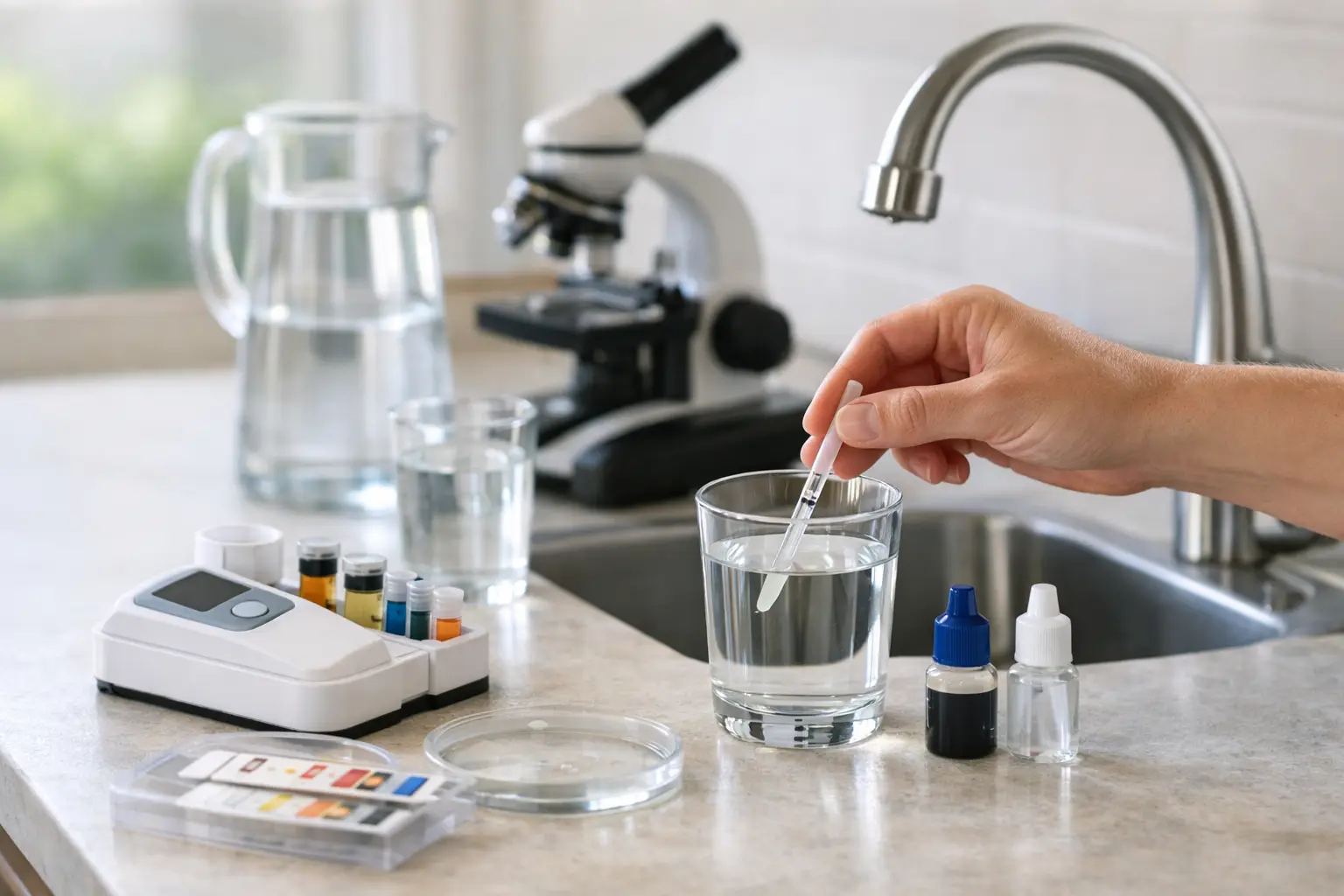
A glass of water can look clear and still carry problems you cannot see. That is why home water quality testing matters. If your water smells like chlorine, leaves scale on fixtures, stains sinks, tastes metallic, or simply raises questions, testing gives you a factual starting point instead of guesswork.
For homeowners, property managers, and facility operators, the real value is not just knowing whether something is wrong. It is knowing what is wrong, how serious it is, and what action actually fits the issue. Water treatment is not one-size-fits-all. The right answer for hard water is different from the right answer for sediment, chlorine, bacteria, or elevated metals.
What home water quality testing actually tells you
At its best, home water quality testing identifies the specific characteristics of your water and helps separate nuisance issues from health-related concerns. Some findings affect comfort and plumbing performance, such as hardness, high iron, or sediment. Others can affect safety, such as bacterial contamination, nitrates, or lead.
That distinction matters. Hard water may not be an immediate health hazard, but it can shorten the life of water heaters, reduce appliance efficiency, and leave heavy buildup on faucets, shower doors, and pipes. Bacteria or lead require a different level of urgency and a different treatment plan.
Testing also helps avoid unnecessary equipment. Many people assume a bad taste means they need reverse osmosis. Sometimes they do. Sometimes the issue is chlorine, aging plumbing, or a water softener that needs service. A test result gives you a better basis for spending money wisely.
Common signs your water should be tested
Some properties show obvious warning signs. White scale on fixtures, soap that does not rinse well, orange or brown staining, sulfur odors, cloudy water, or a sudden change in taste are all strong reasons to test. If you rely on private well water, regular testing is even more important because you do not have the same municipal oversight that city water systems provide.
There are also situations where testing makes sense even without a visible symptom. If you have moved into an older home, completed plumbing work, installed a new filtration unit, or noticed recurring appliance issues, a baseline test is useful. Commercial properties and multi-unit buildings benefit from the same approach because water quality problems often show up first as maintenance costs.
What should be tested in residential water
The right panel depends on your water source, property age, plumbing materials, and symptoms. Municipal water and private well water come with different risk profiles.
For many homes, the core starting points include pH, hardness, total dissolved solids, chlorine, iron, manganese, and sediment. These indicators help explain scale buildup, staining, taste issues, and wear on plumbing systems.
If there are safety concerns, testing may also include coliform bacteria, E. coli, lead, copper, nitrates, arsenic, and other contaminants relevant to your region or plumbing setup. Older homes deserve special attention for lead and copper, especially if pipes, solder, or fixtures predate current standards.
A good test is not about checking every possible contaminant by default. It is about checking the right ones based on the property and the complaint. That is where expert guidance becomes useful.
DIY kits vs professional home water quality testing
DIY water test kits can be a practical first step for basic screening. They are useful when you want a quick read on hardness, chlorine, pH, or a few common indicators. They are also convenient for homeowners who want a rough sense of whether a problem exists before booking service.
But convenience has limits. Many strip tests offer broad ranges rather than precise measurements, and some are sensitive to storage conditions, handling, and timing. A result that reads "high" may tell you something is off without telling you enough to choose the right treatment system.
Professional home water quality testing is usually the better fit when symptoms are persistent, when health-related contaminants are a concern, when a property uses well water, or when you are investing in filtration or softening equipment. Better testing leads to better recommendations. It also reduces the risk of installing equipment that does not solve the actual issue.
For example, a softener can address hardness but will not fix bacterial contamination. A carbon filter can improve chlorine taste and odor but may not remove dissolved minerals. Reverse osmosis can be highly effective for certain dissolved contaminants, but it should be matched to the water profile and maintained properly.
Why test results should shape the solution
Water treatment works best when it is based on evidence. Without test data, it is easy to oversimplify the problem. A homeowner may focus on taste while the larger issue is corrosive water damaging plumbing. A property manager may notice scale in one unit without realizing the whole building has hardness levels that are hurting water heaters and increasing maintenance calls.
Testing gives structure to the decision. If hardness is the main issue, a water softener may be the logical fix. If chlorine and odor are the concern, carbon filtration may be enough. If drinking water quality at the tap is the priority, reverse osmosis may be the right targeted upgrade. If there is a bacterial issue, disinfection and source evaluation become more urgent.
This is also where service quality matters. Treatment equipment should be sized correctly, installed correctly, and serviced on schedule. Even a strong system underperforms if filters are overdue, settings are wrong, or plumbing conditions have changed.
Water source changes the testing strategy
Municipal water users often assume the city has already handled water quality, and in many cases municipal treatment does reduce major public health risks. But that does not mean every home receives water in identical condition. Water can change as it travels through aging infrastructure, building plumbing, or specific fixture lines. Chlorine residual, lead exposure from older plumbing, and taste or odor complaints can still exist at the tap.
Well water carries a different level of responsibility. Because the property owner is effectively managing the final water quality, regular testing is part of routine maintenance, not a one-time task. Seasonal shifts, nearby land activity, flooding, and equipment wear can all affect results. If you have a well, periodic testing is not optional in the practical sense. It is part of protecting the property and the people using the water.
When to test again
One water test is not always enough for the life of a property. Retesting makes sense after installing treatment equipment, after major plumbing repairs, after a change in water taste or appearance, or after events that may affect the source, such as flooding or well disturbance.
There is also value in periodic monitoring even when no new issue is obvious. Water quality can shift slowly. Catching that change early can prevent larger repair costs and help keep treatment systems working as intended.
For commercial and multi-unit settings, retesting supports operational consistency. It helps identify whether a known issue has returned, whether equipment is still performing, and whether building occupants are likely to notice problems before management does.
Choosing a provider for home water quality testing
Not all testing services approach the job with the same level of precision. The best providers do more than hand over numbers. They explain what the results mean, which findings matter most, and which actions are necessary versus optional.
That is especially important when plumbing performance and water treatment overlap. A testing provider should understand how water chemistry affects pipes, fixtures, heaters, softeners, filters, and overall system life. In many cases, the best outcome comes from working with a team that can test, interpret, and service the solution rather than treating those as separate jobs.
For customers who want a clear path forward, that level of support matters. A service-led approach keeps the process efficient, especially when the next step may involve filter service, softener adjustment, reverse osmosis maintenance, or plumbing corrections tied directly to what the test reveals.
Plumingo supports this kind of practical, expert-led approach by combining water treatment knowledge with plumbing service, so the fix can match both the water issue and the system behind it.
Home water quality testing is about confidence, not just data
Most people do not test their water because they want more information for its own sake. They test because they want confidence in what their family, tenants, staff, or customers are using every day. They want to know whether the water is affecting health, taste, equipment, or operating costs. They want to solve the problem once and solve it properly.
That is the real point of home water quality testing. It turns uncertainty into a plan. And when the plan is based on accurate results, the next decision gets a lot easier.