A slow drip under the kitchen sink, a toilet that keeps running, or a water heater making new noises can seem minor at first. A practical home plumbing maintenance guide helps you catch those changes early, protect water quality, and make informed decisions about when professional service is worthwhile.
Good maintenance is not about replacing working equipment or turning every task into a weekend project. It is about giving visible parts of your plumbing system regular attention, using fixtures properly, and arranging expert care before a small concern becomes a disruptive repair.
Start With the Parts You Can See
Most homeowners do not need to inspect every pipe behind a wall. Begin with accessible areas: under sinks, around toilets, beside the water heater, near laundry connections, and at exposed shutoff valves. Look for moisture, corrosion, mineral buildup, staining, or a musty odor. These signs do not always mean a major issue, but they deserve follow-up.
Once a month, open the cabinet below each sink and run the faucet for a minute. Check the drain, supply lines, and shutoff valves with a dry paper towel. A small amount of moisture is easier to address than a cabinet base that has been damp for months.
Toilets also deserve a quick check. Listen for intermittent refilling after the tank has completed its fill cycle. A worn flapper or fill valve can waste water without producing a visible leak. If the toilet rocks when you sit down, avoid tightening it aggressively yourself. Movement can damage the wax seal at the base, so a professional inspection is the safer next step.
Protect Drains With Better Daily Habits
Drain problems often begin with materials that should not enter the plumbing system. Kitchen grease may look liquid when warm, but it cools and adheres to pipe walls. Coffee grounds, fibrous food scraps, rice, pasta, and eggshells can also collect in traps and drain lines, even when a garbage disposal is present.
In bathrooms, use a hair catcher in shower and tub drains and remove collected hair regularly. Only toilet paper and human waste belong in a toilet. Products labeled flushable may still move slowly through household plumbing or contribute to downstream blockages.
Avoid relying on harsh chemical drain cleaners as routine maintenance. They may provide a temporary opening in some clogs, but repeated use can be hard on certain pipes, fittings, and seals. For a slow drain, first clean the stopper or strainer and use a plunger correctly. If the issue returns, affects more than one fixture, or comes with gurgling sounds, a professional evaluation can identify whether the restriction is farther down the line.
Know Where Your Water Controls Are
Every adult in the household should know the location of the main water shutoff valve. In many homes, it is near the water meter, where the main line enters the building, or in a utility area. Test the valve gently once or twice a year so you know it operates, but do not force a stiff or corroded valve.
You should also identify local shutoff valves under sinks, behind toilets, and at the washing machine. These valves let you isolate a fixture when a supply line leaks or when a repair is needed. If a valve will not turn, leaks around the handle, or appears heavily corroded, schedule service rather than applying extra force.
For homes with washing machines, inspect supply hoses at least twice a year. Look for cracking, bulges, rust at the fittings, or signs of moisture on the floor. Reinforced hoses can be a sensible upgrade when existing hoses show wear, but replacement timing depends on the hose condition, age, and manufacturer guidance.
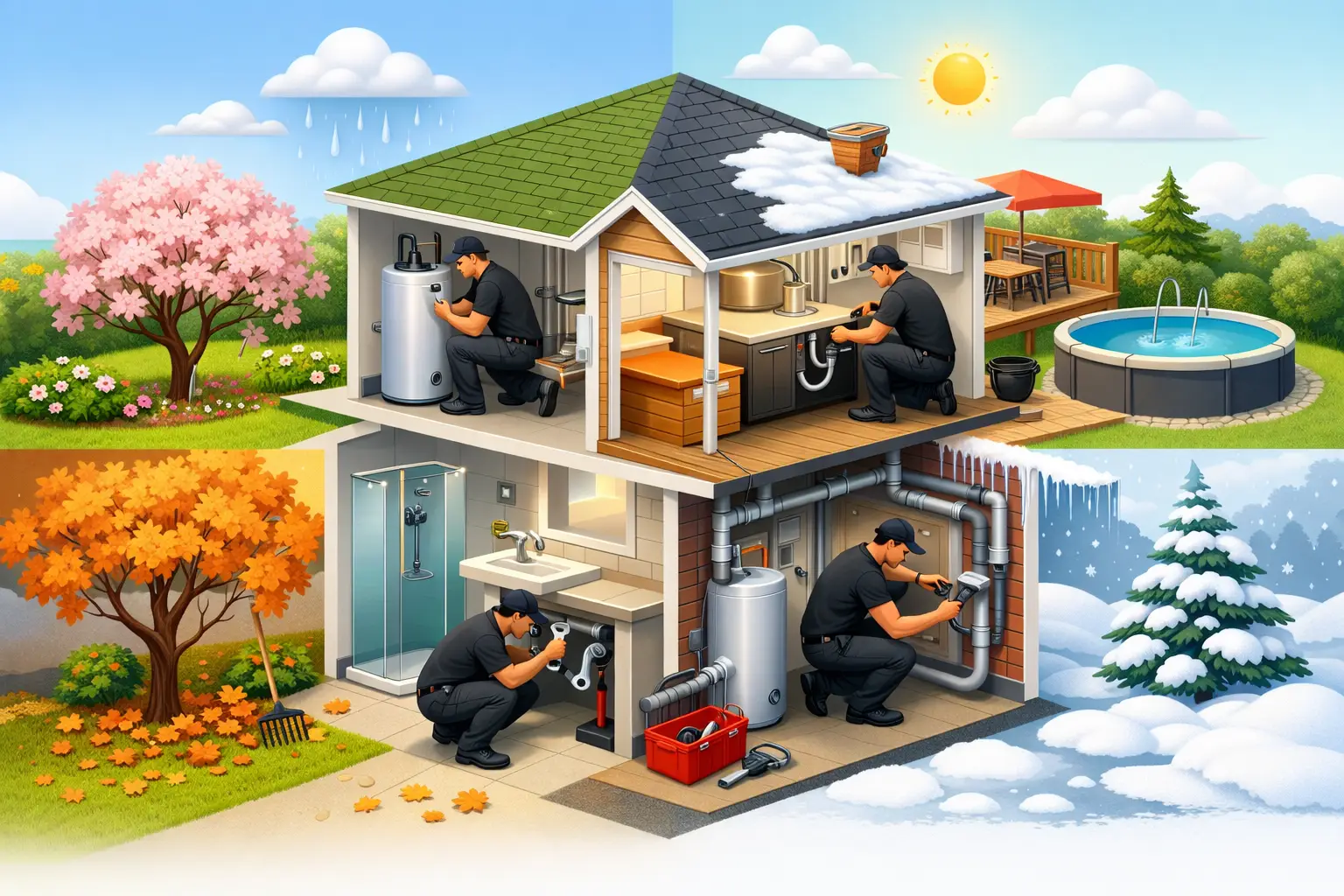
Your Seasonal Home Plumbing Maintenance Guide
Changing weather affects plumbing systems, particularly in areas with cold winters. A simple seasonal routine keeps maintenance manageable and helps property managers apply the same standard across multiple units.
Spring
After winter, inspect outdoor faucets and hose connections. Turn on each exterior tap and look for leaks at the connection or inside the home. If water appears indoors when the outdoor faucet is running, shut it off and arrange a repair. Check sump pump operation where applicable by testing it according to the manufacturer’s instructions and confirming the discharge route is clear.
Summer
Summer is a good time to check irrigation connections, outdoor spigots, and hose washers. Do not leave hoses under pressure for long periods if they are not designed for it. Inside, inspect air-conditioning condensate drains if your system has one. A blocked condensate line can create water damage that is mistaken for a plumbing leak.
Fall
Disconnect garden hoses before freezing temperatures arrive and drain exterior connections where your setup allows. If your home has an interior shutoff for outdoor faucets, close it and open the exterior tap to drain remaining water. Review insulation around exposed pipes in unheated areas, especially near garages, crawl spaces, and exterior walls.
Winter
Keep indoor temperatures consistent, including in rooms that are not used often. Open cabinet doors beneath sinks on very cold days when pipes run along exterior walls, allowing warmer room air to circulate. If a pipe freezes, do not use an open flame to thaw it. Turn off the water if you can identify the affected section, then contact a qualified plumbing professional for safe guidance.
Give Your Water Heater Planned Attention
Your water heater works quietly until it does not. A brief visual check every few months can reveal useful information. Look for water around the base, corrosion at connections, unusual rust-colored staining, or a temperature setting that has been changed too high.
Sediment can collect in tank-style water heaters, particularly where water has a higher mineral content. Flushing may help maintain efficiency in some systems, but it is not a universal do-it-yourself task. Older units, heavily scaled tanks, and unfamiliar drain valves require care because disturbing sediment can reveal existing weaknesses. A professional can advise whether flushing, adjustment, repair, or monitoring makes the most sense for your equipment.
Tankless systems also need maintenance, often including descaling at intervals based on water conditions and usage. Keep the area around any water heater clear, accessible, and free of stored chemicals or combustible materials.
Include Water Quality in Your Maintenance Plan
Plumbing care and water quality are connected. Mineral scale can affect fixtures, water heaters, dishwashers, and filtration equipment. Changes in taste, odor, clarity, or pressure are worth noting, especially if they are sudden or appear at multiple fixtures.
If your home uses a water softener, check the salt level and look for salt bridging, where a hardened layer forms above the water in the tank. Adding more salt without breaking up the bridge will not restore normal operation. Follow the system manufacturer’s guidance and arrange service if regeneration cycles seem irregular.
Reverse osmosis systems need filter and membrane changes on a schedule that depends on the model, incoming water quality, and household use. Delaying replacement filters can reduce flow and affect performance. Keep a dated service record for filters, softener service, water heater work, and plumbing repairs. It makes future troubleshooting clearer and supports consistent care in rental or commercial properties.
When a Professional Inspection Makes Sense
Some maintenance is simple observation. Other work requires the right tools, parts, and diagnosis. Arrange professional plumbing support when you see recurring drain backups, reduced pressure throughout the home, unexplained increases in water use, persistent odors, water staining, or a leak that continues after a basic fixture adjustment.
A planned inspection is also useful before buying a home, after an extended vacancy, or when renovating kitchens, bathrooms, or utility spaces. The goal is not to replace equipment prematurely. It is to understand the condition of the system, correct active concerns, and plan sensible maintenance around the equipment you already have.
For homeowners and property managers in Kitchener, Plumingo can support routine plumbing care, water softener service, and RO filter maintenance with clear service recommendations and transparent pricing.
A Better Routine Starts With Small Checks
Set a recurring reminder for a monthly visual inspection and a seasonal walk-through. Keep notes on what you find, even when nothing needs repair. Over time, that simple record helps you recognize what is normal for your home and gives a plumbing professional better information when service is needed.
Consistent attention is the most useful part of any maintenance plan: notice changes early, avoid shortcuts that can damage the system, and bring in qualified help when the cause is not clear.