
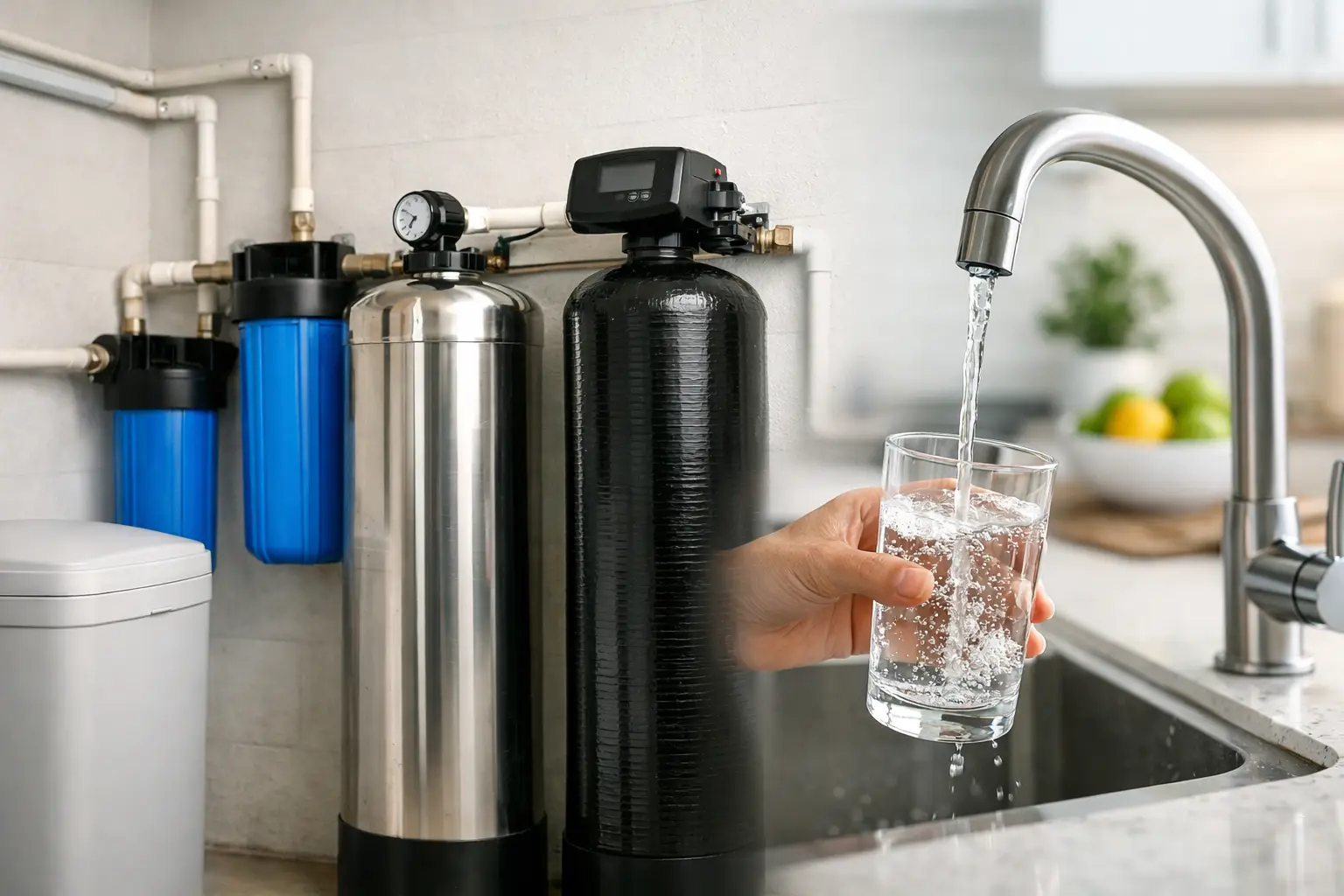
If your shower leaves mineral residue on the glass, your tap water has a noticeable taste, or your building plumbing sees repeated scale-related wear, a guide to whole home water filtration is not just helpful - it is a smart starting point. Point-of-use filters solve one problem at one fixture. Whole-home systems address water quality at the main line, before it reaches faucets, appliances, and water-using equipment across the property.
For homeowners, that can mean better-tasting water, less sediment, and more protection for fixtures. For property managers and commercial operators, it can also mean more stable equipment performance, fewer service issues tied to water quality, and a clearer maintenance plan. The right setup depends on what is actually in your water, how much water you use, and what level of treatment your property needs.
What a whole-home filtration system actually does
A whole-home filtration system is installed where water enters the building. Instead of filtering only kitchen drinking water, it treats water before it reaches bathrooms, laundry, water heaters, dishwashers, and other downstream plumbing.
That sounds simple, but the term covers several different technologies. Some systems remove sediment like sand, silt, and rust. Others reduce chlorine, certain odors, and organic compounds. Some are designed to address specialty concerns such as iron, manganese, sulfur smells, or high hardness when paired with softening equipment.
This is where many buying decisions go off track. A whole-home filter is not one universal box that fixes every water issue. If you choose a system for chlorine reduction when your real problem is sediment and iron, results will be disappointing. Good equipment starts with accurate water testing and proper system matching.
Guide to whole home water filtration by water issue
The most effective way to choose a system is to work backward from the problem. Water treatment is highly specific. Municipal water and private well water often require very different approaches.
Sediment filtration
Sediment filters are often the first stage in a whole-home system. They capture visible particles such as dirt, rust, and debris that can affect water clarity and wear down valves, cartridges, and appliances.
For homes with aging municipal supply lines or well systems, sediment removal is often essential. It can also improve the performance and lifespan of other treatment equipment installed downstream.
Carbon filtration
Activated carbon is commonly used to reduce chlorine taste and odor. It may also help with certain volatile organic compounds, depending on the media and system design. For many city-water properties, carbon filtration is the feature people notice most in daily use because it changes the smell and taste of the water.
That said, carbon is not a fix for hardness, bacteria, or dissolved minerals. It is best for improving general water aesthetics and reducing specific chemical concerns, not for handling every water quality issue on its own.
Water softening
Hard water is one of the most common issues in residential and commercial plumbing. It causes scale buildup in water heaters, leaves spotting on fixtures and glass, reduces soap performance, and can shorten the life of water-using appliances.
A softener is not technically the same as a filter, but in many properties it is a critical part of a whole-home water treatment plan. If your main concern is scale or mineral buildup, filtration alone may not solve the problem.
Specialty media systems
Some water problems require more targeted treatment. Iron staining, sulfur odor, manganese, or tannins in well water usually call for specialty media and, in some cases, multiple treatment stages. These systems need careful sizing and setup. A generic off-the-shelf solution often underperforms when the issue is more complex.
How to size a whole-home system correctly
Sizing matters as much as filtration type. An undersized system may cause pressure drop, poor performance, and faster media exhaustion. An oversized system can add unnecessary cost without delivering meaningful benefit.
The two main factors are flow rate and water quality load. Flow rate is the amount of water moving through the property at peak use. A larger home with multiple bathrooms, a laundry room, and irrigation demands will need a different system than a small single-bath property. Commercial spaces can vary even more depending on occupancy and use patterns.
Water quality load refers to what the system has to remove. Heavy sediment, high chlorine demand, or strong iron concentration affects how the equipment should be configured and how often it will require service.
This is one reason professional assessment matters. Buying based only on home size or online reviews can lead to pressure issues or treatment gaps that are expensive to correct later.
Installation factors many buyers miss
A quality system is more than the tank or housing itself. Installation conditions affect performance, service access, and long-term reliability.
The main water entry point must have enough space for proper equipment layout and future maintenance. Shutoff valves, bypass valves, drains for backwashing systems, and pressure considerations all need to be reviewed. In colder climates, installation environment matters too. Equipment should be protected from freezing temperatures and placed where service can be completed safely and efficiently.
For commercial properties or multi-unit buildings, there may also be code, access, and continuity-of-service considerations. Planned installation becomes especially important when water treatment cannot interrupt operations for long.
Cost expectations and where the real value comes from
Whole-home water filtration costs vary widely because the category includes everything from a basic sediment and carbon setup to a more advanced multi-stage treatment system with softening and specialty media.
The lowest upfront option is not always the best value. If a system does not match the water conditions, you may still deal with scale, staining, odor, cartridge overuse, or appliance wear. On the other hand, not every property needs a highly customized treatment train. The right answer depends on the water profile and the building's actual demands.
A practical way to think about value is to look beyond purchase price. Better water treatment can reduce fixture staining, help protect water heaters and plumbing components, improve consistency at taps and showers, and create a more predictable maintenance cycle. For facilities and managed properties, that operational stability often matters as much as water quality itself.
Maintenance is part of the system, not an extra
Every whole-home filtration system needs maintenance. Cartridges need replacement. Media can require replenishment or periodic service. Backwashing systems must remain properly programmed and operational. Softeners need salt management and inspection. Without ongoing care, even a well-designed system will gradually lose effectiveness.
This is where many property owners underestimate the commitment. A system that looks good on day one can become inefficient if service intervals are missed. Pressure drop, poor taste control, or the return of staining can all signal that the equipment needs attention.
For busy homeowners and commercial operators, service support often makes the difference between a useful investment and an ignored piece of equipment. Clear scheduling, transparent pricing, and access to qualified technicians matter just as much as the original installation.
A practical guide to whole home water filtration choices
If you are comparing options, start with testing, not assumptions. Water that smells like chlorine needs a different solution than water that leaves orange staining. Well water requires a different mindset than municipal supply. If your concern is protecting plumbing equipment, your priorities may differ from someone focused mainly on drinking water taste.
It also helps to separate whole-home treatment from point-of-use purification. A whole-home system improves water entering the property, but some owners still add reverse osmosis at the kitchen sink for a higher level of drinking water treatment. That combination is common because each system serves a different purpose.
The best provider will explain trade-offs clearly. Some systems have lower maintenance but narrower treatment capability. Others solve more complex water issues but require more space, service, and budget. Straight answers are more valuable than broad promises.
For customers who want one provider for plumbing performance and water quality support, an experienced service partner can simplify the process from diagnosis to installation to routine maintenance. That is especially useful when filtration, softening, fixture protection, and emergency plumbing concerns overlap.
Good water treatment should feel straightforward once it is set up properly. You should know what the system is treating, what maintenance it needs, and what results to expect. If you are evaluating next steps, the smartest move is not to chase the most features - it is to match the right system to your water, your property, and the level of reliability you expect every day.