
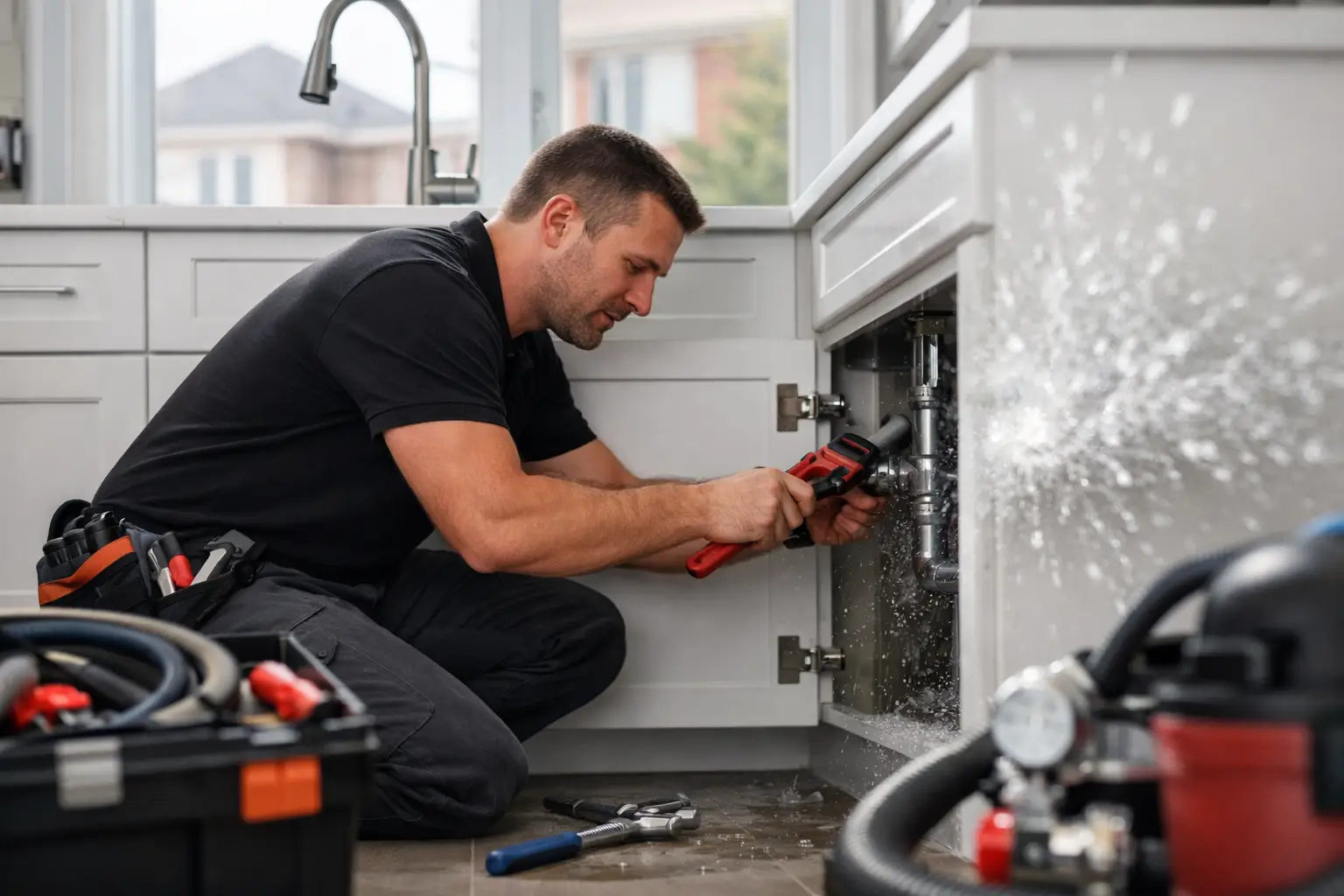
A burst supply line under the sink, water spreading across a utility room floor, or a toilet that will not stop overflowing can disrupt a home or business in minutes. This emergency plumbing response guide helps you take calm, practical action before professional help arrives. The goal is not to diagnose every issue yourself. It is to protect people, limit damage, and give the plumber clear information when they assess the problem.
First, Decide Whether the Situation Needs Urgent Care
Not every plumbing concern requires an immediate response. A slow drain, a dripping faucet, or a toilet that occasionally runs may be appropriate for a scheduled service visit. They still deserve attention, especially if they are raising water bills or affecting daily use, but they do not always require urgent action.
A plumbing issue needs faster attention when water is actively escaping, sewage is backing up, a fixture cannot be shut off, or a loss of water affects essential operations. In a commercial setting, the impact may also include customer areas, food preparation spaces, washrooms, equipment rooms, or tenant access. The right response depends on the source, the volume of water, and whether the issue is contained.
Treat the situation as urgent if you see water near electrical equipment, smell gas, notice wastewater coming back through drains, or cannot stop a major leak. If there is a possible gas leak, leave the building, avoid switches and open flames, and contact the appropriate emergency utility service from a safe location. A plumbing professional can address plumbing-related causes, but gas concerns require their own safety response.
Start With Safety and Water Control
Before reaching for tools, make sure the area is safe. Keep children, customers, and staff away from wet floors. If water is approaching outlets, appliances, panels, or extension cords, do not step into the water or attempt electrical repairs. Turn off power only if you can do so safely from a dry location.
For a leak at a single fixture, close the local shutoff valve first. Sink valves are usually located beneath the cabinet. Toilets typically have a valve on the wall or floor behind the fixture. A washing machine has supply valves nearby, while an ice maker or refrigerator water line may have a small dedicated valve.
If the leak continues, the valve is inaccessible, or the source is unclear, shut off the main water supply. Homeowners should know where this valve is before a problem occurs. In many properties, it is located near the water meter, in a basement, utility room, mechanical area, or close to where the service line enters the building. Property managers should ensure site staff know its location and have access when needed.
Do not force a valve that has not moved in years. A damaged valve can make a manageable situation worse. If it turns easily, close it. If it resists, stop and explain that detail when you request service.
Match the Response to the Problem
Overflowing Toilet
Remove the tank lid and lift the float if the toilet continues filling. Then close the shutoff valve behind the toilet by turning it clockwise. Do not keep flushing to test whether the blockage has cleared. If wastewater has overflowed, keep the area isolated and avoid using nearby plumbing fixtures until the system is assessed.
A plunger may clear a simple blockage if the water level is safe and contained. Avoid chemical drain cleaners. They can damage pipes, create hazardous splashing, and make later service more difficult.
Burst or Leaking Pipe
Turn off the local valve or the main water supply. Place a bucket, towels, or absorbent materials below the leak if it is safe to do so. Move furniture, inventory, electronics, and stored items away from the area. Take a few photos of the leak and visible damage for maintenance records or insurance documentation.
A temporary clamp or repair tape can sometimes reduce a small leak, but it should not be treated as a permanent repair. Pipes can fail because of corrosion, freezing, pressure issues, loose fittings, or hidden movement in the system. The repair should address the cause, not only the visible opening.
Drain or Sewer Backup
Stop using sinks, toilets, dishwashers, and washing machines connected to the affected drainage system. Water pushed into a blocked line has to go somewhere, and continued use can worsen the backup. If sewage is present, avoid direct contact and keep pets away from the area.
A backup from one fixture may point to a local obstruction. Multiple slow drains, gurgling toilets, or water rising in a lower-level drain can indicate a larger drainage issue. This is where a professional inspection is especially valuable, since the proper solution may range from clearing a branch line to investigating the main sewer connection.
No Hot Water or a Water Heater Leak
No hot water is inconvenient, but it is not always an urgent plumbing event. A water heater that is leaking, making unusual sounds, or releasing water from its pressure relief valve deserves prompt attention. Turn off the water supply to the heater if you can identify the valve safely. For electric units, switch off power at the breaker. For gas units, follow the manufacturer’s shutdown instructions or wait for a qualified technician if you are unsure.
Do not attempt to remove panels, adjust gas controls, or cap a relief valve. Those components are safety-related, and a professional should inspect them.
What Not to Do During a Plumbing Emergency
Quick action helps, but rushed DIY repairs can add cost and risk. Avoid using chemical drain products, especially if water is already backing up. Do not pour boiling water into fixtures with plastic piping or a porcelain toilet bowl. Do not use a torch, open flame, or improvised electrical equipment near a leak.
It is also wise to avoid repeatedly turning the water on and off to see if a repair has worked. Once the source is controlled, leave the system off until it can be evaluated. For businesses, document the closure of affected restrooms, kitchens, or service areas so staff do not unknowingly resume use.
Give the Plumber Useful Details
A clear service request helps the right professional arrive prepared. Describe where the problem is located, when it started, whether water is still running, and which shutoff steps you have already taken. Mention whether the issue involves clean water, a drain backup, a water heater, a filtration system, or a water softener.
Photos and short videos can be helpful when they are safe to capture. For commercial properties, include access instructions, the name of an on-site contact, and any operating restrictions. A restaurant, office, rental property, or retail space may need a response plan that considers both the repair and the safe use of the area afterward.
Transparent service communication matters here. You should understand the immediate repair recommendation, any testing required, and whether a follow-up visit is needed for a lasting solution.
After the Leak Is Stopped
Once the water source is controlled, begin drying affected surfaces as soon as practical. Remove standing water with towels, a wet vacuum, or professional restoration equipment when appropriate. Open doors and improve airflow if conditions allow. Wet drywall, insulation, flooring, and cabinetry can hold moisture long after the visible water is gone.
Watch for swelling, staining, musty odors, or changes in flooring. These signs do not automatically mean major replacement is needed, but they do indicate that the area may need further assessment. In a commercial property, document affected spaces and notify the appropriate facilities or insurance contact according to your internal procedure.
If the issue involved a water treatment unit, do not assume water quality is unchanged after a repair. A technician can confirm whether an RO filter, softener, connection, or bypass setting needs inspection before regular use resumes.
Prepare Before the Next Problem
The most useful emergency plumbing response guide is one you can act on without searching for information under pressure. Label the main water shutoff and individual fixture valves. Keep a flashlight, towels, a bucket, and a basic plunger where they are easy to reach. Property managers can also keep a current plumbing contact list and clear site access instructions for staff.
Seasonal checks are worthwhile in areas with freezing temperatures. Protect exposed pipes, disconnect outdoor hoses when appropriate, and address drafts near plumbing lines. A small maintenance visit can often identify aging valves, weak supply hoses, or water pressure concerns before they become disruptive.
Plumingo supports homeowners and commercial operators with expert plumbing and water treatment care when a problem needs professional attention. The best next step is usually simple: stop the water if you can do so safely, protect the affected area, and arrange qualified service with a clear description of what happened.