
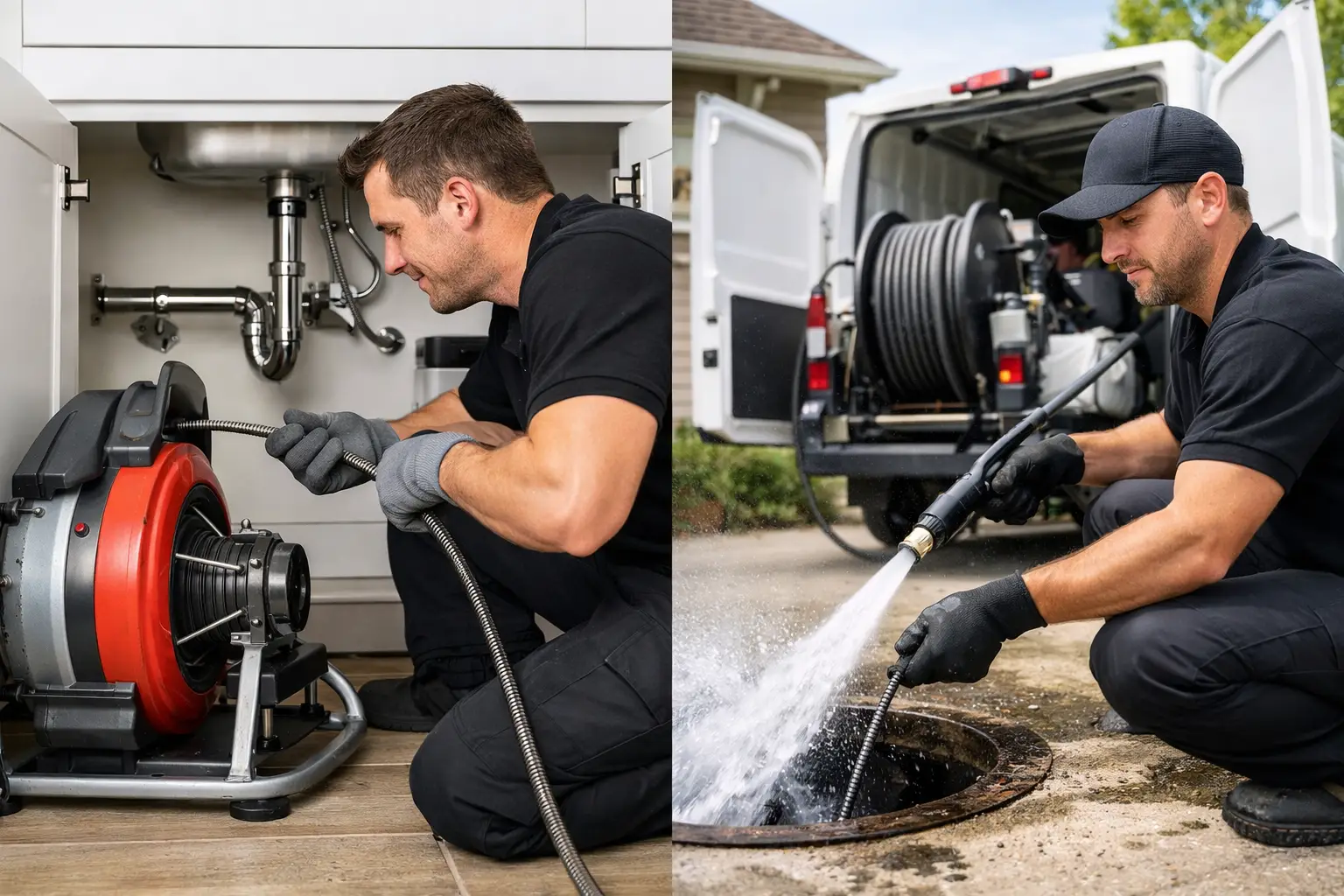
A sink that drains slowly after dinner, a recurring toilet backup, or a commercial floor drain that starts holding water can all point to the same question: drain snaking versus hydro jetting, which service is the right fit? The answer depends on what is inside the line, how often the issue returns, and the condition of the pipe itself. Both methods are proven tools, but they solve different versions of a drain problem.
A professional assessment keeps the decision practical. The goal is not to use the most powerful method by default. It is to restore reliable drainage while protecting the plumbing system and addressing the source of the blockage.
What Drain Snaking Does Best
Drain snaking uses a flexible metal cable with a specialized cutting or retrieval head. A technician feeds the cable into the drain line and works it through the obstruction. Depending on the type of head used, the cable can break apart a clog, bore through packed material, cut through minor root intrusion, or pull out debris.
This approach is often effective for localized clogs. Hair, soap buildup, food waste, wipes, and small foreign objects may create a blockage in one area of a branch drain. A snake can open a path through that material quickly, allowing water to flow again.
Snaking is commonly the first choice when the problem appears isolated. For example, one bathroom sink that drains slowly while the rest of the home is working normally may have a nearby hair and soap clog. A kitchen line with a recent food-related blockage may also respond well to cable cleaning.
The main limitation is that a snake typically creates an opening through the blockage rather than cleaning the full inner wall of the pipe. If grease, scale, or sludge is coating a wider section of the line, water may begin flowing after snaking but the remaining buildup can collect new debris over time. That can lead to another service call sooner than expected.
When Hydro Jetting Is the Better Choice
Hydro jetting uses pressurized water and a purpose-built nozzle to scour the inside of a drain or sewer line. The nozzle directs water forward to help move through material and backward to propel the hose while cleaning pipe walls. It is especially effective for widespread buildup rather than one compact obstruction.
For drain snaking versus hydro jetting, hydro jetting is usually the stronger option when repeated backups suggest that the line is dirty along its length. Grease accumulation in kitchen waste lines, mineral scale, soap residue, sediment, and organic sludge are examples of material that may be better removed with water pressure than with a cable alone.
This matters in both homes and businesses. A busy kitchen, multi-unit property, salon, restaurant, or facility with frequent drain use can develop buildup that is not limited to one spot. Hydro jetting can provide a more thorough cleaning that helps restore the pipe's carrying capacity.
It can also be useful as planned maintenance for systems with a known pattern of buildup. In those cases, cleaning before a line closes completely can reduce disruption and help property managers plan service around operations.
Hydro jetting is not automatically appropriate for every pipe. Older lines, pipes with known cracks, severely deteriorated materials, or lines affected by major root damage need careful evaluation. A qualified technician may recommend a camera inspection first to verify the pipe condition and locate the issue. This is how the service is matched to the system rather than treated as a one-size-fits-all solution.
The Key Difference: Opening a Path vs. Cleaning the Line
The simplest way to understand the two methods is this: drain snaking is designed to penetrate or retrieve a blockage, while hydro jetting is designed to clean accumulated debris from the pipe interior.
That distinction affects long-term results. If a child has dropped a small object into a fixture drain, or if hair has created a dense plug near a shower drain, a cable may be the most direct solution. If a kitchen line has narrowed over years of grease and residue, hydro jetting may be more likely to remove the material that is causing frequent slow drainage.
Neither service replaces good drain habits. Grease should be collected and discarded rather than rinsed into a kitchen sink. Wipes, paper towels, hygiene products, and other non-flushable materials do not belong in toilets, even when packaging suggests they are flushable. These habits reduce avoidable clogs and help protect municipal sewer connections and septic systems.
How Pipe Condition Changes the Recommendation
The visible symptom does not always reveal the full problem. Water backing up from a floor drain, multiple fixtures draining slowly, or a toilet that gurgles when another fixture runs can indicate an issue farther down the system. In those situations, the technician needs to determine whether the cause is buildup, roots, a sagging pipe, a damaged section, or a blockage in a shared or main line.
A drain camera inspection can provide that clarity. It allows the technician to see where the blockage sits, assess the pipe walls, and identify concerns such as offsets, cracks, or substantial root intrusion. When the pipe is structurally sound, hydro jetting may be a suitable cleaning option. When there is physical damage, cleaning may still be part of the immediate response, but repair planning may be needed to prevent continued trouble.
For property managers, this distinction is particularly valuable. Repeatedly treating the same line without identifying why it clogs can increase downtime and maintenance costs. Documentation from an inspection supports better decisions about cleaning schedules, repairs, and tenant communication.
What to Expect During Professional Drain Cleaning
A professional visit should start with questions about the symptoms: which fixtures are affected, when the issue began, whether it has happened before, and what may have entered the drain. This information helps determine whether the likely concern is a local branch line or a larger drainage issue.
The technician may test fixtures, access a cleanout, and recommend camera inspection when the problem is recurring or the pipe condition is uncertain. From there, the appropriate equipment can be selected. Snaking may be enough for a straightforward obstruction. Hydro jetting may be recommended where heavy buildup is limiting flow through an otherwise serviceable line.
Transparent pricing should also include a clear explanation of the proposed work. Customers should understand whether the service is intended to clear an immediate clog, clean a larger section of pipe, investigate a recurring issue, or support preventive maintenance. A reliable recommendation is based on the evidence in the line, not on a standard upsell.
Choosing Between Drain Snaking and Hydro Jetting
Choose drain snaking when the clog is likely localized, a solid item may need to be retrieved, or a fast mechanical opening is appropriate for the line. Choose hydro jetting when grease, sludge, scale, or recurring buildup affects a broader section of pipe and an assessment confirms that the line can safely handle the process.
There are also cases where both methods have a role. A technician may use a cable to establish access through a difficult obstruction, then use hydro jetting to remove remaining buildup. Conversely, a camera inspection after snaking may show that the immediate blockage is gone but a structural problem needs separate attention.
For homeowners and commercial operators, the most useful question is not which tool is better in general. It is what is causing this drain to fail now, and what will help it perform reliably after service. When the cause is properly identified, the right drain-cleaning method becomes a straightforward decision rather than a guess.