
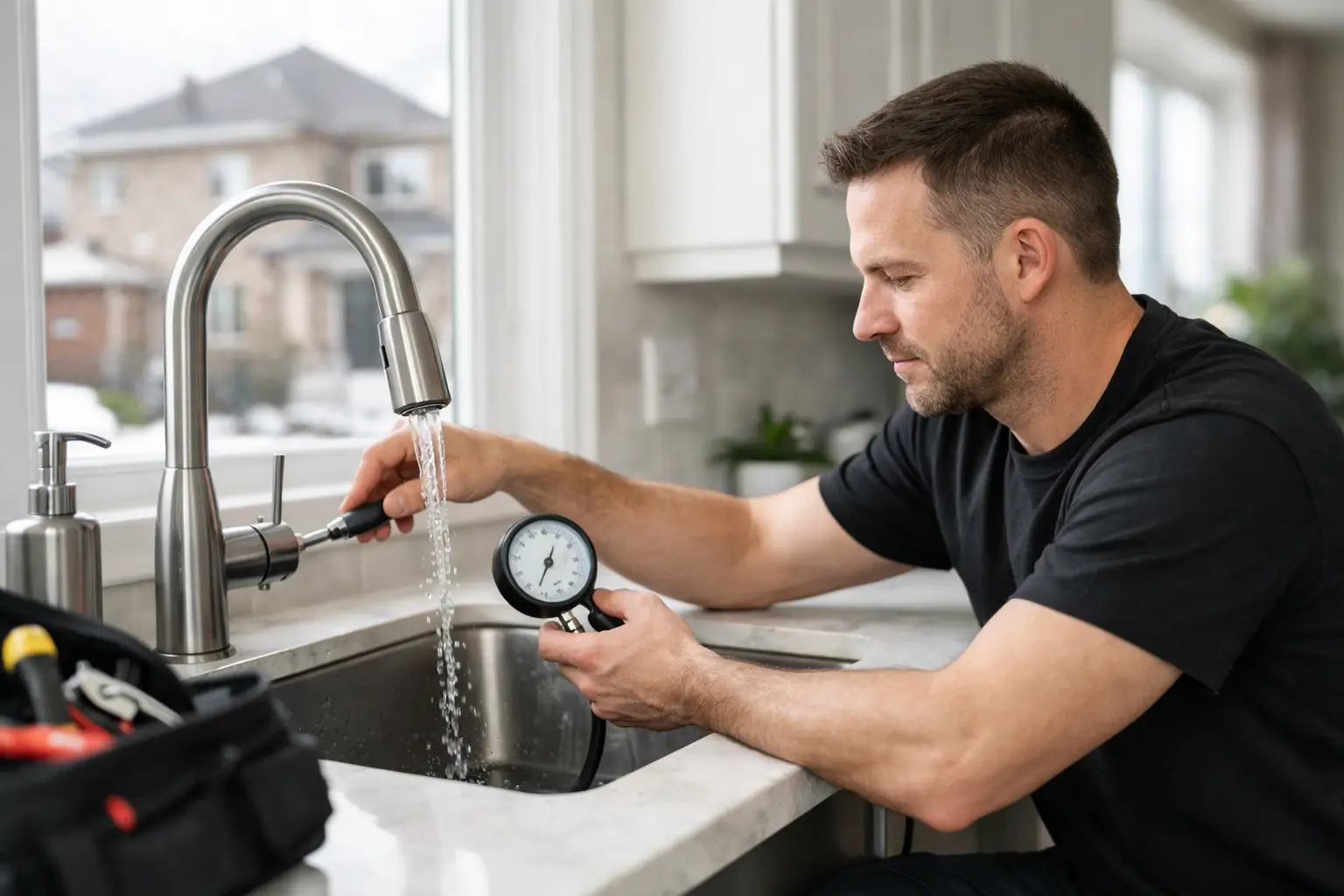
A shower that drops to a trickle when someone starts the dishwasher is more than an inconvenience. It is a useful clue. To diagnose low home water pressure, first determine whether the problem affects one fixture, one area of the property, or every water outlet. That distinction narrows the cause quickly and helps avoid spending money on the wrong repair.
Low pressure can come from a simple clogged aerator, a partly closed valve, aging supply piping, or an issue with a pressure regulator. In homes with water treatment equipment, filter condition and bypass settings can also affect flow. A careful check lets homeowners explain the symptoms clearly when professional service is needed.
Start by separating pressure from flow
Pressure and flow are connected, but they are not the same. Water pressure is the force pushing water through the plumbing system. Flow is the volume of water that actually reaches the faucet, showerhead, or appliance.
A faucet with mineral buildup may have normal pressure in the pipe but poor flow at the spout. A house with a failing pressure regulator, on the other hand, may have weak performance at several fixtures even when screens and showerheads are clean. This is why the location and timing of the issue matter.
Start with a short test. Run cold water at a kitchen or bathroom faucet, then test hot water at the same fixture. Next, check a second fixture on another floor or at the opposite end of the home. Note whether the problem is limited to hot water, cold water, one room, or the entire property.
If only one fixture has low pressure
A single weak faucet or shower usually points to a local restriction rather than a whole-home supply issue. The most common source is a clogged aerator or showerhead, especially in areas with hard water. Sediment and mineral scale collect in the small openings over time.
Remove the aerator carefully, rinse it, and soak it in a suitable descaling solution if mineral deposits are visible. Reinstall it and test the flow. For a showerhead, check the screen at the inlet as well as the spray openings. If cleaning does not help, the fixture cartridge or its local shutoff valve may need attention.
A faucet that delivers weak hot water but normal cold water can indicate debris in the faucet cartridge, a restricted hot-water stop valve, or an issue further back on the hot-water line. Do not force a stiff shutoff valve. Older valves can fail when disturbed and may require a plumber to service or replace them.
Check the simple whole-home causes first
When several fixtures are weak, begin with components that affect the entire home. These checks are straightforward, but they should be done gently. A valve that has not moved for years can be damaged by excessive force.
Confirm the main water shutoff is fully open
The main shutoff valve is often located near the water meter, where the service line enters the house, or in a utility room. A partially closed valve can restrict water to the whole property. This sometimes happens after plumbing work, a leak repair, winterization, or a period when the house was vacant.
Gate-style valves should generally be fully open during normal use. Ball valves are open when the handle is parallel to the pipe. If the valve position is unclear or the handle resists movement, leave it alone and arrange professional assessment rather than risking a leak.
Consider recent work or changes in water use
Ask what changed before the pressure dropped. A newly installed water softener, reverse osmosis system, whole-home filter, appliance, or plumbing repair may be relevant. It does not automatically mean the new equipment is faulty, but it can help identify where to inspect first.
For example, a whole-home sediment filter with a heavily loaded cartridge can reduce flow throughout the house. A water softener in regeneration or a unit left in an incorrect bypass position may also produce noticeable changes. Reverse osmosis systems usually affect only their dedicated drinking-water faucet, not the shower or the rest of the home.
If pressure falls mainly during high-demand periods, the issue may be capacity rather than a constant restriction. Multiple showers, laundry, irrigation, and dishwasher use can exceed what the plumbing system comfortably supplies. Older or undersized piping makes this more noticeable. Changing the timing of high-demand activities may help, but a professional can assess whether the system needs repair, adjustment, or a more substantial upgrade.
Use a pressure gauge for a clearer answer
A simple pressure gauge that attaches to an outdoor hose connection or laundry faucet can provide useful information. Test when no water is running in the home, then test again while a faucet or shower is operating. Record the results and the time of day.
Many homes operate within a typical residential pressure range of about 40 to 80 psi, though the appropriate reading depends on the property and local supply conditions. Pressure that is consistently low can point to a supply, regulator, valve, or piping concern. A large drop once water starts running can indicate a restriction, undersized piping, or limited supply capacity.
Avoid adjusting a pressure regulator without proper diagnosis. The regulator may be worn, but changing settings can mask another restriction or create excessive pressure elsewhere in the system. A plumber can test static and flowing pressure, inspect the regulator, and verify that the home is operating within a safe range.
Look for signs of a piping or supply-line problem
Low pressure that has developed gradually over months or years often suggests buildup or deterioration inside the plumbing system. Older galvanized steel pipes can corrode internally, reducing the available opening until water flow becomes noticeably limited. This can affect the entire home or only certain branches.
Other signs include rusty water after periods of nonuse, pressure that varies by fixture, recurring clogged aerators, or a clear difference between newer and older parts of the plumbing system. Pipe replacement is not always the first answer. A professional inspection can identify whether the restriction is isolated to a valve, connector, treatment device, or specific section of pipe.
A sudden whole-home pressure drop deserves more prompt attention. Check for obvious leaks, including wet areas near appliances, utility rooms, ceilings, and exterior hose connections. Also check whether neighbors are experiencing a similar issue, which may indicate municipal work or a local supply condition. If there is evidence of an active leak, water damage, or no usable water service, contact a qualified plumbing professional promptly.
Do not overlook the water heater
If low pressure occurs only on the hot side, the water heater and its connected piping should be considered. Sediment, a restricted valve, a deteriorated connector, or scale in the hot-water distribution lines can all reduce hot-water flow.
Water-heater concerns require care. Do not remove components or drain a tank without understanding the equipment, especially if it is gas-fired or if the shutoff valves are unreliable. A service technician can inspect the system, address restrictions where appropriate, and advise whether maintenance or repair is the sensible next step.
When professional diagnosis saves time
Call for professional help when low pressure affects multiple fixtures, returns after basic cleaning, appears suddenly, or is paired with leaks, unusual pipe noise, discolored water, or inconsistent hot-water performance. A property manager should also act early when several suites or common areas are affected, since the source may be in shared infrastructure.
An experienced technician can test pressure under load, inspect shutoff valves and regulators, evaluate water treatment equipment, and trace restrictions without guesswork. This is particularly valuable when a home has a softener, whole-home filtration, or an RO system that needs to be checked alongside the plumbing.
For homeowners who want clear findings and practical repair options, Plumingo can assess both plumbing performance and water treatment components. The goal is not to replace equipment by default, but to identify the restriction and recommend the appropriate repair, maintenance, or adjustment.
Keep a brief record of which fixtures are affected, whether hot or cold water is weaker, and when the issue began. Those details turn a frustrating symptom into a useful diagnostic path and help move the right repair forward with confidence.